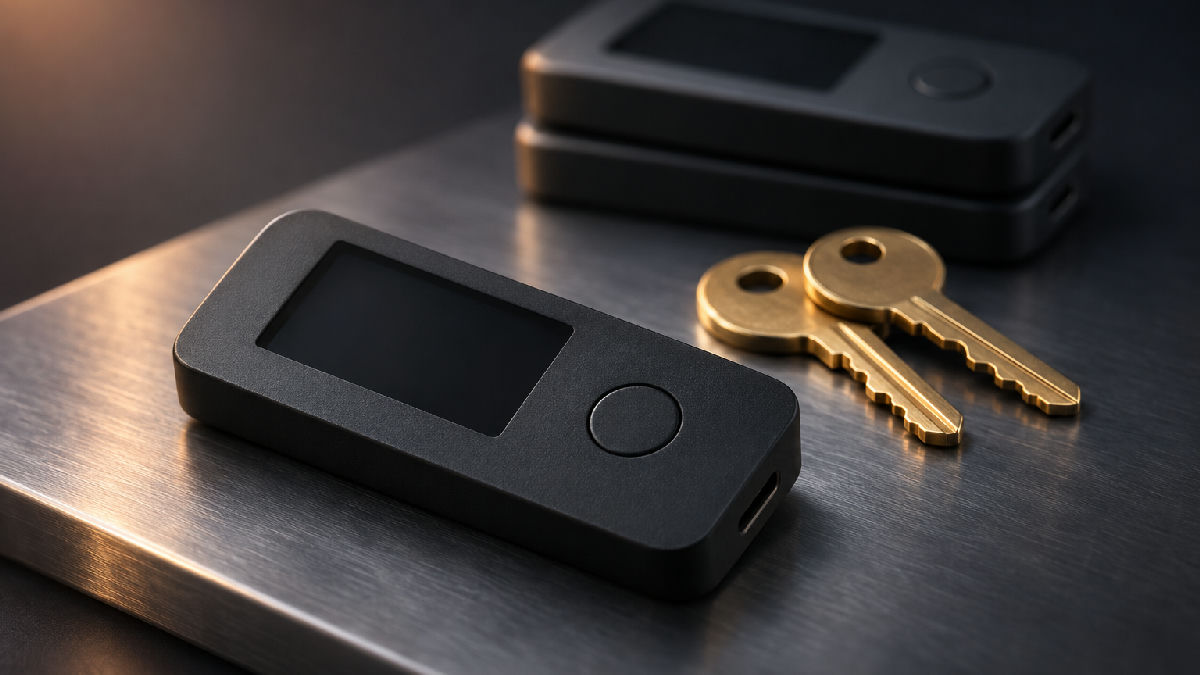
Are you an advanced crypto user haunted by the specter of a single point of failure? The constant worry of lost keys, compromised exchanges, or stolen devices can cast a long shadow over your digital wealth. Imagine a world where your crypto is not just stored, but *fortified* – protected by a distributed network of keys, resilient against even the most sophisticated threats. Welcome to the era of the multisig wallet, your ultimate "Digital Fortress" for sovereign control and ironclad protection.
This comprehensive guide will demystify multisig technology, transforming a complex security concept into an actionable blueprint for enhancing your digital asset protection. By the end, you'll be equipped to set up your own ironclad digital vault, manage it effectively, and secure your crypto with confidence.
📋 What You'll Learn
- Understand the core principles and benefits of multisig technology.
- Select the appropriate multisig scheme and wallet solution for your specific security needs.
- Successfully set up a functional multisig wallet (e.g., 2-of-3 or 3-of-5) using clear, step-by-step instructions.
- Implement robust key management and recovery strategies.
- Perform a test transaction to verify functionality.
⏱️ Estimated Time: 45-60 minutes
📊 Difficulty: Advanced
Section 1: The Imperative of Multisig – Why Your Digital Wealth Demands a Fort Knox
The fundamental vulnerability in standard crypto wallets lies in their single point of failure: a single private key controls all funds. If this key is lost, stolen, or compromised, your assets are gone, often irreversibly. This is the Achilles' heel that multisig technology aims to overcome.Revisiting Single Points of Failure: The Achilles' Heel of Standard Wallets
Whether you're using a hot wallet on your phone or a cold storage device, the core principle remains: one key, one point of control. While convenient, this design inherently exposes you to risks like device theft, malware, phishing attacks, or even accidental loss. Your digital wealth, secured by a single key, is akin to a treasure chest protected by a single lock – robust, perhaps, but ultimately vulnerable if that one key falls into the wrong hands.Introducing Multisig: A Digital Vault
Multisig, short for multi-signature, fundamentally changes this security paradigm. Instead of a single key, a multisig wallet requires multiple keys to authorize a transaction. This distributed control transforms your digital assets from a single treasure chest into a heavily fortified "Digital Vault," where no single individual or device can unilaterally move funds.A Team of Guardians: How Multisig Works
Think of multisig as a "Team of Guardians" or a "Council of Keys." To execute any transaction, a predefined number of these guardians must sign off. For example, in a "2-of-3" multisig setup, there are three keys, but any two of them are sufficient to authorize a transaction. This creates resilience against loss or compromise. If one key is lost, the other two can still recover or move funds. If one key is compromised, it cannot authorize a transaction on its own.The Multisig Blueprint: How it Works and Why it's Better
Multisig wallets are typically implemented using smart contracts on blockchains like Ethereum, where the logic for requiring multiple signatures is embedded directly into the wallet's code. For example, Ethereum smart contracts define the rules for a multisig account, requiring N signatures out of M possible acceptable signatures (where N ≤ M, and M > 1) to execute. Bitcoin Cash also supports multisig functionality with its signature scheme. This contrasts with traditional single-signature wallets where only one private key is needed to sign transactions. The core mechanism of a multisig wallet involves:- Key Generation: Multiple private keys are generated by different entities or stored in different locations.
- Wallet Creation: A multisig address is created on the blockchain, associated with these public keys and the specific M-of-N signature requirement.
- Transaction Initiation: When a transaction is initiated, it requires a certain number (N) of the M associated private keys to sign it.
- Transaction Execution: Once the required number of signatures are collected, the transaction can be broadcast to the network and executed.
Benefits Beyond Security: Multisig for Collective Management and Inheritance Planning
While security is paramount, multisig offers benefits beyond simply protecting against theft:- Enhanced Security: Eliminates single points of failure.
- Shared Control: Ideal for joint accounts, family trusts, or business operations where multiple individuals need to approve transactions.
- Resilience Against Loss: Losing one key doesn't mean losing your funds, as long as enough other keys are available.
- Operational Security: Prevents rogue employees or partners from making unauthorized transactions.
- Inheritance Planning: Allows for predefined conditions where heirs can access funds with multiple keys, preventing funds from being locked forever.
- DAO Treasury Management: Decentralized autonomous organizations (DAOs) often use multisig to manage their treasuries, requiring a vote (signatures) from a certain number of governance token holders or designated signers for transactions.
The Different Multisig Flavors: M-of-N Schemes Explained
The "M-of-N" scheme defines the number of signatures required (M) out of the total possible keys (N). Common configurations include:- 2-of-2: Requires both keys to sign. High security, but losing one key means funds are inaccessible. Good for two-party agreements.
- 2-of-3: Requires any two of three keys to sign. Excellent balance of security and redundancy. If one key is lost or compromised, the other two can still act. Ideal for personal use (e.g., hardware wallet, backup hardware wallet, trusted friend).
- 3-of-5: Requires three out of five keys to sign. Offers even greater redundancy and is often used by businesses or DAOs for treasury management.
- 1-of-N: Not a true multisig in the security sense, as any one key can sign. However, it can be useful for distributing watch-only access or for complex recovery schemes.
Wallet Options: Hardware, Software, and Hybrid Solutions
Multisig can be implemented using a variety of wallet types:- Hardware Wallets: Provide the highest level of security for individual keys. Ideal for keys held by different individuals or stored in diverse locations. Popular choices include Ledger and Trezor. Learn more about choosing secure hardware wallets in our guide: Comparing hardware wallets for advanced security features.
- Software Wallets: Provide flexibility and convenience. Software solutions like Gnosis Safe (now Safe) are specialized smart contract wallets that offer robust multisig capabilities, often on networks like Ethereum. Ethereum smart contracts enable these advanced functionalities.
- Hybrid Solutions: Combine hardware and software wallets for optimal balance. For instance, using hardware wallets to secure the individual keys that control a software multisig wallet.
Section 2: The Decision Matrix – Choosing Your Ironclad Configuration
Selecting the right multisig setup is crucial. It depends on your specific needs, risk tolerance, and the amount of digital wealth you're protecting. This section helps you navigate these choices to find your optimal configuration.Assessing Your Risk Profile and Security Needs
Before diving into setup, consider:- Value of Assets: Higher value assets justify more complex and secure multisig setups.
- Threat Model: Are you guarding against individual loss, theft by a single attacker, or internal collusion?
- Technical Proficiency: Some setups require more technical comfort than others.
- Number of Stakeholders: How many individuals or entities need access or approval?
Factors to Consider: Number of Signers, Key Custody, Transaction Frequency, Budget
- Number of Signers (M-of-N): As discussed, choose based on redundancy and trust. A 2-of-3 is often a good starting point for individuals. Businesses might opt for 3-of-5 or more.
- Key Custody: Where will each key be stored? Options include:
- Dedicated hardware wallets (e.g., Ledger, Trezor)
- Separate computers/devices
- Physical security boxes
- Trusted third parties (with caution)
- Transaction Frequency: If you transact frequently, a setup with more accessible keys might be preferred, balancing convenience with security.
- Budget: Hardware wallets incur a cost, as do potential service fees for some software solutions. The primary chain for Ambire Wallet, for instance, is Ethereum, where gas fees can apply to smart contract interactions.
Hardware Wallet Compatibility and Integration
Many hardware wallets, like those from Ledger and Trezor, are designed to work seamlessly with multisig software. They sign transactions offline, adding a critical layer of security by preventing your private keys from ever touching an internet-connected device. When selecting hardware, ensure it supports the specific blockchain and multisig implementation you intend to use.Software Wallet Features and Trust Models
Dedicated multisig software wallets, often smart-contract-based like Gnosis Safe, offer advanced features. These include transaction batching, spending limits, module integration for DeFi protocols, and easy integration with various dApps. They operate on supported chains like Ethereum and Arbitrum One. When choosing a software solution, evaluate its audit history, community support, and the trust model of its development team.Hybrid Approaches: Maximizing Security and Convenience
A highly recommended approach is a hybrid model where individual keys are secured by separate hardware wallets, which then act as signers for a smart-contract-based multisig wallet. This combines the superior cold storage security of hardware with the flexibility and advanced features of software multisig.Decision Matrix: Finding Your Optimal M-of-N and Wallet Type (Interactive Tool Concept)
While an interactive tool isn't part of this static guide, you can consider the following questions to guide your decision:- How many people/devices need control? (Determines N)
- How many signatures do I need to feel secure, while also allowing for recovery if one key is lost? (Determines M)
- What is the total value of assets to be secured? (Influences complexity and cost)
- What is my comfort level with hardware vs. software?
- Do I need advanced features like spending limits or integration with dApps?
Case Studies: From Individual Safekeeping to Decentralized Autonomous Organizations (DAOs)
- Individual Safekeeping (2-of-3): You use a Ledger for key 1, a Trezor for key 2, and store a printed seed phrase (or a third hardware wallet) in a safe deposit box for key 3. Any two can sign. This protects against device loss/theft and a single compromise.
- Small Business Operations (3-of-5): Three business partners each hold a hardware wallet. The fourth key is held by a legal advisor, and the fifth is a cold storage backup. Requires three partners to authorize payments, preventing single-person fraud.
- DAO Treasury Management (N-of-M): A DAO might have a large number of signers (M) representing its community or core contributors. A high threshold (N) is set, perhaps requiring a majority or supermajority of designated signers to approve the use of treasury funds. This ensures broad consensus for significant spending, embodying the principles of decentralized governance, which often involves the use of Governance Tokens for voting.
Section 3: The Blueprint – Step-by-Step Setup of Your Multisig Digital Vault
This section provides concrete, actionable steps to set up your multisig wallet. We'll offer two common paths: a hardware wallet-centric 2-of-3 setup and a software-centric 3-of-5 setup using a popular solution like Gnosis Safe (now Safe).🔒 Option A: 2-of-3 Multisig with Hardware Wallets
Best for: Individuals or small groups prioritizing maximum hardware-level security and redundancy against single points of failure. Ideal for securing significant personal assets.
Cost: Cost of 3 hardware wallets (e.g., Ledger, Trezor) + transaction fees.
📱 Option B: 3-of-5 Multisig with Dedicated Software (e.g., Safe)
Best for: Businesses, DAOs, or sophisticated users needing flexible multi-party control, advanced features (like spending limits), and potentially a larger number of signers. Often integrates well with DeFi protocols.
Cost: Transaction fees for smart contract deployment and interactions.
Pre-Setup Checklist: Essential Preparations and Best Practices
Regardless of the path you choose, these preparatory steps are vital:- Secure Environment: Perform setup on a clean, offline computer if possible.
- Fresh Hardware Wallets: If using hardware, ensure they are brand new, purchased directly from the manufacturer, and properly initialized with new seed phrases. Do not use pre-configured devices.
- Understand Seed Phrases: Each key in your multisig (especially if hardware-based) will have its own seed phrase. Treat each as a distinct, critical backup.
- Recovery Planning: Envision scenarios of lost keys, compromised devices, or unavailable signers. Your setup should be resilient.
- Small Test Funds: Never send large amounts of funds to a new multisig until it has been thoroughly tested with minimal amounts.
Key Generation and Storage: Distributing Your Council of Keys
This is the most critical phase. The security of your multisig rests entirely on the secure generation and distributed storage of your individual keys. Each key is a unique "guardian" in your "Council of Keys."Wallet Initialization and Configuration
This refers to the process of setting up the multisig contract itself, defining the M-of-N rules, and linking the public keys of your chosen signers.Backup and Recovery Planning: Building Resilience from Day One
For every key (whether hardware or software-generated), you must have a robust backup of its seed phrase. These backups should be physically secure, ideally in different geographic locations, and resistant to environmental damage. Never store all seed phrases together.Option A: Setting Up a 2-of-3 Multisig with Hardware Wallets (e.g., Ledger/Trezor)
This method involves using a combination of hardware wallets and a desktop application that supports multisig (e.g., Electrum for Bitcoin, or specific tools for Ethereum-based chains). For this example, we'll outline a generic process applicable to most hardware wallet multisig setups.- Step 1: Prepare Your Hardware Wallets
- Action: Initialize three separate hardware wallets (e.g., two Ledger devices, one Trezor device). Ensure each device generates a unique seed phrase and you have securely backed up each seed phrase independently.
- Expected Outcome: Each hardware wallet is set up with its own PIN and seed phrase, and you have securely stored three distinct seed phrases in separate, safe locations.
- Step 2: Install Necessary Software/Applications
- Action: Install the native applications for your hardware wallets (e.g., Ledger Live, Trezor Suite) on a secure computer. Additionally, install a compatible desktop multisig wallet application (e.g., Electrum for Bitcoin-like chains, or a specific Ethereum multisig app if available for hardware directly).
- Expected Outcome: All required software is installed and updated.
- Step 3: Generate and Record Keys Securely
- Action: For each hardware wallet, connect it to your computer and use the multisig desktop application to generate a unique public key (or xpub/ypub) that will be part of your multisig setup. The exact process varies by software; typically, you'll select "create new wallet" and then "multisig," importing the public key from the hardware device.
- Expected Outcome: You have extracted and recorded the three public keys (or xpubs) from your hardware wallets. Ensure these are accurately copied.
- Step 4: Create the Multisig Wallet Address
- Action: In the multisig desktop application, select "create new multisig wallet." Input the number of required signatures (M=2) and the total number of keys (N=3). Then, input the three public keys (or xpubs) you generated in the previous step. The application will then generate your unique multisig wallet address.
- Expected Outcome: A new multisig wallet address is displayed and confirmed by the application. This is the address where you will send funds.
- Step 5: Verify the Setup and Addresses
- Action: Double-check the generated multisig address against the public keys you provided. Some applications allow you to re-verify the setup. Also, ensure you can "watch" the wallet in the application without connecting any hardware wallets, confirming it recognizes the multisig address.
- Expected Outcome: You are confident that the multisig address was correctly generated and linked to your three public keys.
Option B: Setting Up a 3-of-5 Multisig with Dedicated Software (e.g., Safe, formerly Gnosis Safe)
Safe is a smart contract wallet widely used on Ethereum and EVM-compatible chains like Arbitrum One, Palm, Moonbeam, and Klaytn, offering robust multisig capabilities. Its primary chain is Ethereum. This method typically involves deploying a smart contract on-chain.- Step 1: Choose Your Network and Deploy the Safe
- Action: Go to the Safe web interface (e.g., app.safe.global). Connect your preferred standard wallet (e.g., MetaMask) to the network where you want to deploy your multisig (e.g., Ethereum Mainnet, Arbitrum One). Click "Create new Safe."
- Expected Outcome: The Safe interface guides you through naming your new Safe and selecting the blockchain.
- Step 2: Add Required Owners (Key Holders)
- Action: You will be prompted to add "owners" to your Safe. These are the addresses that will hold the individual keys. Add five distinct wallet addresses (e.g., from separate hardware wallets, software wallets, or even trusted individuals). It's highly recommended that these be connected to hardware wallets for maximum security.
- Expected Outcome: Five owner addresses are listed in the Safe setup interface.
- Step 3: Set the Confirmation Threshold
- Action: Define your M-of-N scheme. For a 3-of-5 setup, you will set the "Confirmations" required to 3. This means at least three of the five owner addresses must sign any transaction for it to execute.
- Expected Outcome: The threshold is set to 3.
- Step 4: Fund Your Multisig Wallet
- Action: Review all details and confirm the deployment. This will initiate a transaction from your connected wallet to deploy the Safe smart contract on the blockchain. You will incur gas fees for this deployment.
- Expected Outcome: The transaction is confirmed on the blockchain, and your new Safe (multisig wallet) address is created. You can now send funds to this address.
- Step 5: Verify Deployment and Configuration
- Action: Navigate to your newly created Safe in the web interface. Verify that the correct owner addresses are listed and the confirmation threshold is set to 3. Perform a small test transaction (see Section 4).
- Expected Outcome: The Safe is correctly configured, and you have confirmed its details.
Section 4: Operational Security – Wielding Your Multisig Shield Effectively
Setting up your multisig is just the beginning. Effective operational security is vital to maintain the integrity of your "Multisig Shield" and ensure your digital assets remain protected.Performing a Test Transaction: Verifying the Team of Guardians
This is a non-negotiable step after setting up any multisig.- Action: Send a minimal amount of crypto (e.g., $5 worth) to your new multisig address.
- Action: Initiate a transaction from the multisig wallet back to one of your known addresses.
- Action: Using the required number of signing keys (M), sign the transaction. For a 2-of-3, connect two of your hardware wallets and approve the transaction. For a 3-of-5 Safe, connect three owner wallets and confirm the transaction.
- Expected Outcome: The transaction is successfully broadcast and confirmed on the blockchain. This verifies that your "Team of Guardians" is functional and you can move funds.
Key Management Best Practices: Rotation, Secure Storage, and Inheritance
- Distributed Storage: As emphasized, never store all your keys or seed phrases in one location. Geographic and environmental separation is key.
- Regular Audits: Periodically check the state of your multisig setup, especially if using a smart contract wallet. Review owner addresses and thresholds.
- Key Rotation (Advanced): For extremely high-value assets, consider rotating one of your keys periodically by removing an old owner and adding a new one. This adds another layer of defense against long-term compromise.
- Inheritance Planning: Incorporate your multisig into a broader crypto estate plan. Clearly document instructions for your trusted designees (who hold the other keys) on how to access and manage assets in case of your incapacitation or death.
Understanding Transaction Signing and Execution
When initiating a transaction from a multisig wallet:- The transaction details are constructed (recipient, amount).
- The transaction is sent to each required signer.
- Each signer uses their individual private key (often on a hardware device) to cryptographically sign the transaction.
- Once the minimum number of signatures (M) is collected, the complete, signed transaction can be broadcast to the blockchain for execution.
Dealing with Lost or Compromised Keys: Contingency Planning
This is where the redundancy of multisig shines.- Lost Key (within M-of-N threshold): If you lose a key, but still have enough keys to meet the M-of-N threshold, you can initiate a transaction from your multisig to a new multisig wallet. In the new setup, replace the lost key with a fresh one. This is a critical recovery mechanism.
- Compromised Key (within M-of-N threshold): If one key is compromised but the attacker cannot reach the M-of-N threshold, use your remaining secure keys to immediately move funds to a new, secure multisig wallet.
- Loss/Compromise exceeding threshold: If you lose or compromise too many keys (e.g., two keys in a 2-of-3 setup), your funds may become permanently inaccessible. This underscores the importance of proper key management and distributed backups.
Regular Audits and Security Checks
Periodically review your multisig setup. Check the activity log, verify owner addresses, and ensure all associated keys and their backups are secure. For smart contract-based multisigs, stay updated on any protocol changes or security advisories related to the underlying contract.Advanced Features: Transaction Batching, Spending Limits, Module Integration
Sophisticated multisig solutions like Safe offer features that enhance operational efficiency and security:- Transaction Batching: Group multiple transactions into a single on-chain transaction, saving on gas fees and streamlining approvals.
- Spending Limits: Set daily or weekly spending limits for certain accounts or types of transactions, requiring fewer approvals for small, routine operations.
- Module Integration: Integrate with specialized modules or plugins for features like automated payments, role-based access control, or even direct interaction with DeFi protocols.
Common Pitfalls to Avoid: Transaction Replay, Social Engineering, Incomplete Backups
- Transaction Replay: Be aware of potential replay attacks, especially if you're using a raw transaction signing approach. Modern multisig solutions usually mitigate this.
- Social Engineering: Attackers might try to trick individual key holders into signing malicious transactions. Educate all signers about phishing and social engineering tactics.
- Incomplete Backups: Not properly backing up all seed phrases, or storing them insecurely, can lead to irreversible fund loss.
- Loss of Too Many Keys: If M keys are lost in an M-of-N setup, funds are irrevocably lost. Maintain sufficient redundancy.
- Unsecured Individual Keys: A multisig is only as strong as its weakest key. Each key must be secured to the highest possible standard.
Emergency Access and Succession Planning: Ensuring Continuity
For any significant amount of crypto, formalize an emergency plan. Who needs to know what, and under what circumstances? Consider legal frameworks or trusted third parties to help execute your plan without compromising security.Section 5: Beyond the Vault – Advanced Strategies and Future Outlook
As you master the fundamentals of multisig, consider exploring advanced applications and the evolving landscape of this crucial security technology.Further Enhancing Security: Time Locks, Role-Based Access Control
- Time Locks: Implement smart contract logic that requires a certain time delay between a transaction being approved and its execution. This provides a window to reverse malicious transactions if detected.
- Role-Based Access Control (RBAC): Assign different roles to signers within a multisig, allowing some to initiate transactions and others to only approve, or setting different spending limits for different roles.
Exploring Different Blockchain Multisig Implementations
While we focused on Ethereum-based smart contract multisigs and generic hardware wallet setups, multisig implementations vary across blockchains:- Bitcoin Cash: Utilizes a scripting language for its multisig capabilities, allowing for various M-of-N schemes with its ECDSA and Schnorr signatures.
- Cardano: As a Proof-of-Stake chain with its Ouroboros consensus, Cardano's multisig often involves smart contracts that leverage its native asset capabilities.
- Filecoin: With its Storage Power Consensus, Filecoin's multisig features are designed for its storage-focused ecosystem, often managing storage provider collateral.
Integrating Multisig with DeFi Protocols
Many smart-contract-based multisigs can directly interact with decentralized finance (DeFi) protocols. This allows DAOs, institutions, or power users to collectively manage assets within lending platforms, liquidity pools, or yield farming strategies, all while maintaining the security benefits of multisig. This can be complex, and thorough understanding of both multisig and DeFi protocols is crucial.Layer 2 Multisig Solutions
With the rise of Layer 2 solutions for scalability (like Arbitrum One on Ethereum), multisig can also be implemented on these layers. This offers faster, cheaper transactions for multisig operations while still benefiting from the security of the underlying Layer 1.The Evolving Landscape of Multisig Technology
The future of multisig is bright, with ongoing developments in:- Account Abstraction: Ethereum's EIP-4337 for Account Abstraction aims to make smart contract wallets (like multisigs) feel like regular externally owned accounts, simplifying user experience and enabling more advanced features natively.
- Cross-Chain Multisig: Solutions are emerging to manage assets across multiple blockchains with a single multisig interface.
- Hardware Wallet Integration: Continued improvements in how hardware wallets integrate with multisig software, making the process even more seamless and secure.
Community Resources and Support
Engage with communities around your chosen multisig solution. Forums, Discord servers, and official documentation are invaluable resources for troubleshooting, learning best practices, and staying updated on security.Conclusion: Your Empowered Journey to Self-Custody Mastery
You've now embarked on the journey to master multisig technology, transforming your approach to digital asset security from passive to proactive. By understanding the principles, selecting the right "Ironclad Configuration," meticulously following the "Blueprint" for setup, and adhering to "Operational Security" best practices, you've erected a "Digital Fortress" around your crypto. Multisig offers transformative power, moving beyond the inherent risks of single points of failure to provide resilient, distributed control. This significantly enhances your crypto security and deepens your understanding of advanced self-custody practices. Remember, vigilance is key; ongoing review and adherence to best practices will ensure your digital wealth remains secure. Take control of your digital destiny and elevate your security posture today.Frequently Asked Questions
What is a multisig wallet?
A multisig (multiple-signature) wallet is a type of cryptocurrency wallet that requires more than one private key to authorize a transaction. This enhances security by eliminating single points of failure. As an Ethereum smart contract explains, multisig contracts require N signatures out of M possible acceptable signatures (where N ≤ M, and M > 1) to execute.How is multisig different from a regular wallet?
A regular wallet (single-signature) requires only one private key to authorize transactions. A multisig wallet requires a predefined number of keys (M-of-N) to sign off on a transaction, distributing control and significantly improving security against loss or theft of a single key.Why do I need a multisig wallet?
You need a multisig wallet to enhance the security of your digital assets by eliminating single points of failure. It protects against theft, accidental loss of a single key, and can facilitate shared control for businesses or families. The distributed responsibility prevents the loss of a single private key from leading to irreversible loss of funds.What are the risks of using a multisig wallet?
While highly secure, multisig wallets have risks: increased complexity, higher transaction fees (due to more data), and the potential for losing access to funds if too many keys (exceeding the M-of-N threshold) are lost or compromised. It's crucial to manage each individual key securely.Can I recover my funds if I lose one of my multisig keys?
Yes, typically. In an M-of-N multisig setup (e.g., 2-of-3), if you lose one key but still have enough remaining keys to meet the "M" threshold, you can use those keys to move funds to a new multisig wallet where the lost key is replaced.What is an M-of-N multisig scheme?
An M-of-N multisig scheme specifies that a transaction requires 'M' number of signatures out of a total of 'N' possible keys to be authorized. For example, a 2-of-3 scheme means any two of three keys can authorize a transaction.Which M-of-N scheme is right for me?
The best M-of-N scheme depends on your risk profile, number of participants, and desired redundancy. A 2-of-3 is often a good balance for individuals (e.g., using two hardware wallets and one securely stored backup key). Businesses or DAOs might use 3-of-5 or higher for greater decentralization of control.Do I need a hardware wallet for multisig?
While not strictly required, using hardware wallets for individual keys in a multisig setup is highly recommended. Hardware wallets provide superior cold storage security, ensuring your private keys never leave the device during signing. For further details, consider reading our guide on comparing hardware wallets for advanced security features.Can I use multisig for any cryptocurrency?
Multisig support varies by cryptocurrency. Bitcoin Cash supports multisig through its scripting capabilities. Ethereum and EVM-compatible chains (like Arbitrum One, Palm, Moonbeam, Klaytn) widely support smart contract-based multisig solutions like Safe. Other chains like Filecoin and Cardano also have multisig capabilities, often integrated with their specific protocol features.What if one of the signers becomes unavailable?
If a signer becomes unavailable but you still have enough remaining signers to meet the 'M' threshold, you can collectively propose and sign a transaction to replace the unavailable signer's key with a new one. This ensures continuity and access to funds.How do I perform a transaction with a multisig wallet?
To perform a transaction, you initiate it from the multisig wallet interface. Then, the required number of signers (M) connect their respective wallets (e.g., hardware wallets) and approve the transaction. Once enough signatures are collected, the transaction can be executed on the blockchain.Are multisig wallets more expensive to use?
Yes, multisig transactions typically incur higher network fees (gas fees) compared to single-signature transactions. This is because they involve more complex on-chain logic (especially smart contract-based multisigs) and require more data for multiple signatures, increasing the computational cost for the network.How can I secure my multisig keys?
Secure each individual multisig key as if it were a standalone single-signature wallet. Use hardware wallets, strong unique PINs, and store seed phrases in physically separate, secure, and resilient locations. Never store multiple seed phrases together or digitally.What are some common multisig wallet providers?
For Ethereum and EVM-compatible chains, Safe (formerly Gnosis Safe) is a widely used and highly respected smart contract multisig solution. Other options exist, and the landscape is constantly evolving.Is multisig only for businesses or large organizations?
No. While businesses and DAOs extensively use multisig for shared treasury management, it is highly beneficial for individuals seeking enhanced security for significant personal holdings. A 2-of-3 setup is a common choice for personal use, providing redundancy against loss or compromise.How often should I review my multisig setup?
It is recommended to review your multisig setup periodically, at least once a year, or whenever there are significant changes to your asset holdings, key custody arrangements, or if any of your keys have been exposed to potential risk. This includes verifying owner addresses and threshold settings.What's Next?
Now that you've completed this guide on how to create a multisig wallet for enhanced crypto security, you might want to delve deeper into related advanced topics to further solidify your knowledge and protection:- Learn more about the intricate details of hardware wallet security models and how they protect your private keys in our guide: Comparing hardware wallets for advanced security features.
- Explore other advanced features available in crypto wallets to enhance your overall security and asset management: Exploring advanced features in crypto wallets for enhanced security and management.
- Understand the fundamental concepts of securing your digital assets by reading: Understanding and Using Multi-Signature Wallets for Enhanced Security.
- Deepen your understanding of setting up multisig wallets with clear, actionable steps by revisiting or exploring further with this guide: Setting Up a Multi-Signature Wallet for Enhanced Security.
- Learn how to monitor your assets and detect unusual activity by setting up transaction alerts: How to set up transaction alerts and notifications for your crypto wallet.
Sources
- Bitcoin Cash — primary documentation
- Filecoin — primary documentation
- Cardano — primary documentation
- BIP-0039: Mnemonic code for generating deterministic keys
- Crypto Wallet — primary documentation
- Cardano — primary documentation
- CoinGecko — Ambire Wallet
- BIP-0032: Hierarchical Deterministic Wallets
- Ethereum — official documentation site
- CoinGecko — Arbitrum
- Cardano — primary documentation
- L2Beat — Arbitrum One
- Decentralized Autonomous Organizations
- Moonbeam — primary documentation
- Cardano — official documentation site