Minting is how a digital file—like a digital painting of a futuristic city, a catchy song, or even a ticket to an online event—is officially recorded on a blockchain. Imagine the Royal Mint creating a brand new £1 coin; a simple piece of metal is transformed into official, provable money. In much the same way, minting turns a regular computer file into a permanent and verifiable digital asset.
What Does It Really Mean to Mint Something?
The word "minting" is a perfect throwback to its real-world origin. Governments "mint" money by stamping metal to produce an official coin, giving it a verified value and authenticity. Digital minting takes this very same concept and applies it to the world of bits and bytes.
It is the very first moment in a digital asset's life on the blockchain. Whether it’s a unique digital painting (an NFT), a new batch of cryptocurrency tokens for a new project, or a digital pass for a special online concert, it all kicks off with minting. Before this, your creation is just a file on your computer, which can be copied and shared endlessly. After minting, it becomes something else entirely.
Turning Files into Permanent Assets
At its heart, minting "stamps" your digital file onto the blockchain, which is like a secure, shared, and public digital record book. This action is permanent. It creates a record of the asset’s origin that can't be changed, proving who created it and exactly when. This is what gives a minted item its value and authenticity.
A good comparison is an author signing a first-edition book. The signature doesn't change the story inside, but it makes that specific copy special and much more valuable. Minting does the same for digital files. This is the key change that helps us grasp what minting really means.
Key Outcomes of Minting
Minting isn’t just a technical step; it totally changes what a digital item is and what you can do with it.
Here’s what it achieves:
- Shows It's the Original: It’s like a digital birth certificate, proving your version is the one and only original.
- Creates Rarity: You can decide whether to mint a single, unique piece—like the famous Everydays artwork by Beeple—or a limited series of 100 copies, making your creation verifiably scarce.
- Makes Ownership Possible: Once it's on the blockchain, the asset can be truly owned, bought, sold, and traded by anyone, anywhere.
- Offers Full Transparency: Every detail of the asset's history—from its creation to every single sale—is publicly viewable on the blockchain.
By recording a digital file on the blockchain, minting transforms it from an infinitely copyable piece of data into a unique, ownable asset. This crucial first step is what makes true digital ownership possible.
This process is the engine behind non-fungible tokens (NFTs), letting artists and creators turn their digital work into verifiable, collectible items. To get a better idea of what happens after an asset is minted, you can learn more about how NFTs work in our detailed guide. In short, minting is the moment a digital asset is officially born.
Connecting Digital Minting to its Rich Physical History
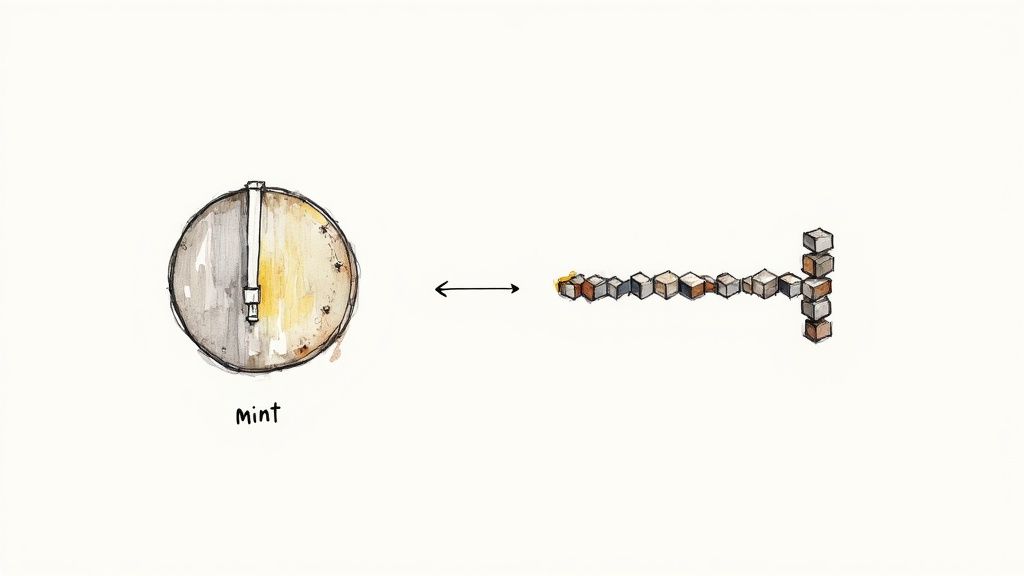
To really wrap your head around digital minting, it's useful to take a trip back in time. The term isn't some fresh crypto slang; it’s borrowed straight from the age-old process of making physical money. This link is more than just a clever name—it makes the whole idea feel more solid and familiar.
For thousands of years, governments have operated official mints to make coins. These places weren't just factories pressing designs onto metal discs. They were creating trust. Each coin was carefully made to a specific weight and purity, which guaranteed its value and made it a dependable tool for trade.
When someone handed you a coin from a trusted mint, you knew it was genuine. This system solved a huge problem: how to prove something is valuable and real, not just a cheap copy. This physical method of verification is a perfect parallel for what the blockchain does for digital items today.
The Historical Fight Against Fraud
The problems that early mints faced are amazingly similar to the issues that digital minting solves now. Counterfeiting was a constant danger. One of the most famous people in this battle was none other than Sir Isaac Newton, who became the Warden of the Royal Mint in 1696.
Newton wasn't just a desk worker; he actively chased down counterfeiters to protect the nation’s currency. He understood that if people stopped believing in their money, the entire economy could fall apart.
His work shines a light on a timeless idea that is just as important in the digital age:
- Verification is crucial: Just like Newton made sure every coin was legit, the blockchain verifies every single digital asset.
- Trust is the main goal: The Royal Mint's official stamp was the 17th-century version of the blockchain's permanent, unchangeable record. Both build a system people can count on.
- Authenticity builds value: A guaranteed, official coin was valuable. A minted digital asset holds value for the exact same reason—its origin and ownership are proven without a shadow of a doubt.
From Ancient Mints to Modern Blockchains
The history of making currency is a long one. In the UK, minting goes back over 2,000 years to early Celtic tribes. As trade grew, so did the need for reliable money, leading to mints being set up all over the country, including one in Bristol as early as the year 1016. This long history shows our continuous need for secure, standard assets to power an economy. You can dive deeper into the long history of British mints on BullionByPost.co.uk.
Much like a historical mint stamped metal to create a trusted coin, the blockchain "stamps" a digital file to create a trusted asset. Both systems are designed to guarantee authenticity and prevent fraud.
By understanding how societies have always needed a way to create and check valuable items, you can see why minting on a blockchain is such a revolutionary idea. It’s a smart, modern solution to an ancient problem, giving us a secure and trustworthy system for our digital economy.
How Minting on the Blockchain Actually Works
So, what is really happening when you click that ‘mint’ button? It might feel a bit like magic, but it's actually a very logical process run by automated code. Understanding this journey is the key to knowing what digital ownership really means.
The whole operation is managed by a smart contract. The easiest way to picture a smart contract is like a super-smart vending machine. It has a strict set of rules built into its code. You put in the right things—your digital file and a small fee—and it automatically follows its programming to give you your new asset on the blockchain. There are no middlemen and no dodgy business—just clear, automated action.
But this isn't just any old vending machine spitting out random snacks; it follows a precise recipe. In the crypto world, these recipes are known as token standards.
The Role of Token Standards
Token standards are basically the universal blueprints for creating digital assets. They ensure that every item created in a certain category, like NFTs, shares the same basic features. This is super important because it lets different apps, wallets, and marketplaces recognise, understand, and interact with your assets smoothly.
Without these standards, the digital world would be chaotic. Think of trying to play a modern Blu-ray disc in an old DVD player—they just aren't designed to work together. Token standards fix that compatibility issue.
You'll most often hear about these two:
- ERC-721: This is the original, classic blueprint for NFTs on the Ethereum blockchain. It's designed to make sure every token is 100% unique and cannot be swapped for another. It's the perfect standard for things like a one-of-a-kind digital artwork, a special collectible, or a unique event ticket.
- ERC-1155: This is a more flexible, multi-purpose standard. It allows a single smart contract to manage lots of different kinds of tokens at once. For instance, a game developer could use an ERC-1155 contract to mint one legendary sword (a unique item) and 1,000 identical healing potions, all from the same contract.
If you want to explore this more, our beginner's guide to ERC-20 and ERC-721 token standards breaks down how these digital blueprints work. Ultimately, these rules are what give your digital asset its power and universal value.
The Minting Process Step by Step
From your point of view, minting might seem like a single click. But behind the scenes, it’s a well-coordinated dance between you, the platform you're using, and the blockchain itself.
Here’s a simple look at how it works:
- File Upload and Data Prep: It all starts with you. You upload your file—maybe a JPEG image, an MP3 song, or a funny GIF—to a marketplace or minting platform. The platform then wraps this file up with its details (like the title and description) so it’s ready for the smart contract.
- Transaction Request: Next, you’ll use your crypto wallet to sign and approve the transaction. This is you giving the green light, your official command telling the blockchain that you want the smart contract to mint the asset for you.
- Paying the Gas Fee: To get anything done on the blockchain, you need to pay a gas fee. This is a small payment that goes to the network validators—the people running the computers that check your transaction and add it to the blockchain’s permanent record book.
- The Smart Contract Does Its Thing: With the fee paid, the smart contract wakes up and starts its job. It takes your file's information, creates a brand-new token following the rules of the chosen standard (like ERC-721), and officially gives ownership of that new token to your wallet's address.
- Confirmation on the Blockchain: Finally, your transaction is packed into a new "block" with other recent transactions and sealed onto the public ledger. And you're done! Your digital asset is officially minted. Its existence, and the fact that you own it, can now be checked by anyone, forever.
Your Step-by-Step Guide to Minting an NFT
So, you feel ready to turn your digital creation into a one-of-a-kind asset on the blockchain? Brilliant. This guide will walk you through the whole process, step by step, making your first minting experience feel much less daunting. Think of it as your friendly checklist for bringing your art, music, or collectible to life.
The path from a simple computer file to a full-blown NFT involves a few key choices and a little bit of setup. Let's break it down.
1. Choose Your Blockchain and Wallet
First things first, you need to pick a home for your NFT. In the crypto world, this means choosing a blockchain. Ethereum is the big, established platform, but because it's so popular, its transaction fees can be high. For newcomers, newer options like Solana or Polygon are often a smarter choice, as they are known for their speed and much lower costs. For example, on a blockchain like Solana, minting can cost as little as £0.01 per NFT.
Once you've chosen a blockchain, you'll need a digital wallet. This is your bank account, ID, and key all rolled into one. For Ethereum and similar chains, MetaMask is the most popular choice. If you decided on Solana, Phantom is the wallet for you. Setting one up is simple and gives you a secure place to store your digital assets.
2. Connect to a Marketplace and Upload Your File
With your wallet set up and good to go, it's time to visit an NFT marketplace. These are the online art galleries and auction houses of the Web3 world, where NFTs are created, bought, and sold. OpenSea is one of the largest and supports several blockchains, which makes it a great starting point.
After making an account, you'll be asked to connect your digital wallet. This simple step allows the marketplace to communicate with your wallet, letting you pay fees and, most importantly, receive your newly minted NFT. Once you're connected, look for a "Create" button. This is where you'll upload your digital file—whether it's an image, a video, or a sound clip.
This diagram shows the main process in three simple stages, from uploading your file to the final record on the blockchain.
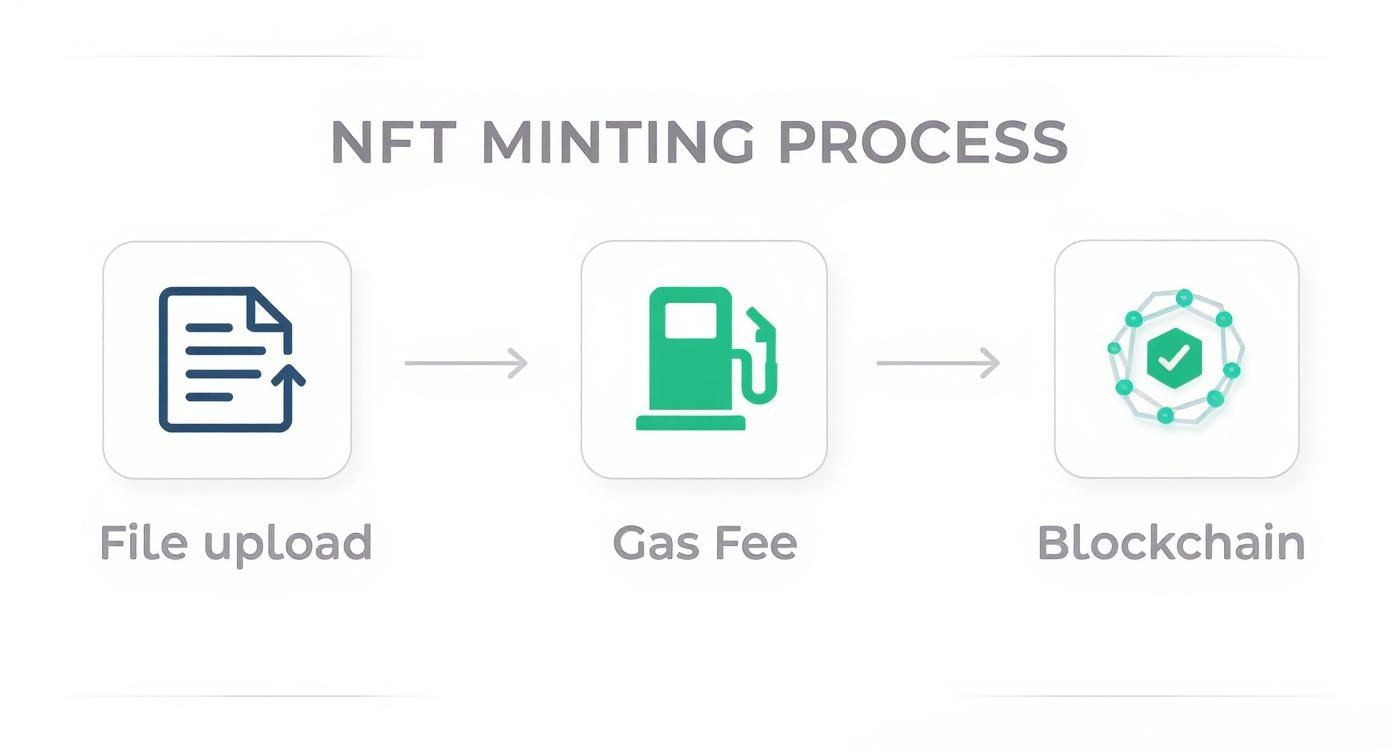
As you can see, minting is a straight line: it begins with your creative file, requires a transaction fee, and finishes with being confirmed on the blockchain.
3. Finalise and Mint Your NFT
This is where you give your NFT its identity. You'll need to add all the key details that tell its story: a name, a description, and any special features or traits it might have. For example, if you're minting a digital character, you could add traits like "Hat: Red" or "Eyes: Glowing." A great description can make a huge difference and help your creation stand out to potential buyers.
Once you’re happy with all the details, you’ll press the "Mint" button. Your wallet will then pop up, asking for your final confirmation to pay the transaction fee (often called a "gas fee"). After you confirm, the smart contract jumps into action. In just a few moments, your NFT is officially created on the blockchain and will show up in your wallet.
Congratulations! You’ve just learned what minting means by doing it yourself. You have successfully turned a digital file into a verifiable asset that you truly own.
For a deeper look, check out our beginner's guide to designing and minting your own NFT for more tips and tricks.
What Does Minting Really Cost? A Look at the Fees and Risks
Minting a new token or NFT is an exciting step, but it's important to go into it with your eyes wide open. While you might see offers for "free" minting, there are almost always costs and security risks to consider. Understanding these is part of figuring out what minting actually means in the real world.
The first and most common cost you'll run into is the gas fee. The best way to think of this is like a delivery charge for the blockchain. To get your minting transaction processed and permanently written on that public ledger, you have to pay the people who run the network (validators or miners). This fee isn't fixed; it changes based on how busy the network is. If thousands of people are all trying to make transactions at the same time, the cost of "delivery" goes up.
You can be smart about it, though. If you mint during a quieter time, like late at night or on a weekend, you can often get a much cheaper gas fee. It also really depends on the blockchain you use. Some, like Solana, are famous for their consistently low fees, often costing just a few pence. Others, like Ethereum, can get very expensive during busy periods.
Beyond Gas: The Other Costs to Watch For
Gas fees are usually the main cost, but they're not the only expense you might encounter. Depending on the platform you use to mint, a few other charges can appear.
- Marketplace Fees: Most popular NFT marketplaces, such as OpenSea, take a small cut. They might charge a service fee when you first list an item or, more often, when it sells. For example, a platform might take a 2.5% cut of the final sale price.
- Account Setup Fees: Some platforms also require a small, one-time fee to set up your account before you can start creating or listing anything.
These small costs can add up, so it's always a good idea to read a platform's fee information before you start.
The Bigger Picture: Environment and Security
Money isn't the only thing to keep in mind. The environmental impact of blockchain technology has been a huge topic of discussion for years. Early systems like the original version of Ethereum used a method called proof-of-work, which was known for using a lot of energy.
The good news is the industry is actively moving towards greener alternatives. Many major blockchains have now switched to much more energy-efficient systems, reducing their environmental footprint by over 99%.
Finally, and most importantly, you have to think about security. The crypto world can be a playground for scammers, so you need to be careful all the time. Always, always double-check that you're on the official marketplace website and not a convincing-looking fake. Phishing scams, where criminals copy a real site to trick you into sharing your wallet details, are very common.
Here’s how to stay safe:
- Bookmark official sites: Don't click on random links you see in emails or on social media. Go directly to the sites you trust and save them as bookmarks.
- Guard your private key: Your "secret recovery phrase" is the master key to everything in your wallet. Never, ever share it with anyone for any reason.
- Use a hardware wallet: For an extra layer of protection, consider storing your valuable assets on a physical device like a Ledger or Trezor. This keeps your keys offline and safe from hackers.
By understanding the real costs, being aware of the environmental situation, and putting your security first, you can get involved with minting safely and responsibly.
Exploring Creative Uses for Minting Beyond Digital Art
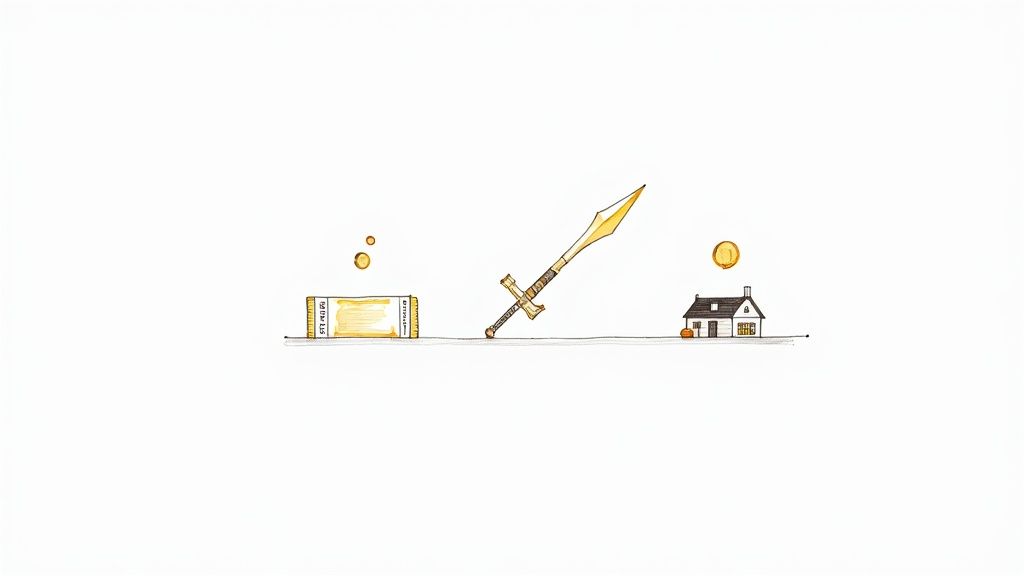
When most people hear about NFTs, they picture digital art or quirky cartoon avatars. While those get a lot of the spotlight, the true power of minting goes far beyond JPEGs. At its heart, minting is just a way to create a provably unique digital item, and that simple idea has some seriously powerful, real-world uses.
Once you understand what minting means in these wider situations, you begin to see how it could change the way we own and prove ownership of almost anything. These examples show that minting isn't just for artists; it’s a core technology for a more transparent and secure future.
Redefining Ownership in Gaming and Events
Video games are one of the most exciting areas. For years, players have spent real money on in-game items—like a rare sword or a cool character outfit—without ever really owning them. The game company always had the final say. Minting turns that idea on its head.
Now, developers can mint those in-game items as NFTs, giving players real, provable ownership. A player can now securely trade their hard-earned sword with another player or even sell it on a marketplace outside of the game. It’s a complete game-changer, creating a genuine player-run economy where one didn't exist before.
The events industry is also starting to use minting to solve old problems like fake tickets and scalping.
- Secure Digital Tickets: A ticket for a concert can be minted as a unique NFT, creating a fraud-proof pass that’s easy to check at the entrance. For instance, a band could issue 1,000 NFT tickets for a small gig, each one unique.
- Controlled Resale: Smart contracts can be programmed to control the ticket’s resale price, making it incredibly hard for scalpers to buy up tickets and sell them for huge profits.
- Digital Souvenirs: After the concert, that ticket stub doesn't just get forgotten. It becomes a permanent digital collectible for the fan, a memory of the event.
By transforming items like game assets and event tickets into unique digital tokens, minting provides a verifiable and secure way to prove ownership that simply didn't exist before.
Connecting Physical Items to the Digital World
Minting also builds a strong bridge between physical objects and the blockchain through a process called tokenisation. This is where a digital certificate representing ownership of a real-world item is created on the blockchain.
Think of it like this: say you own a rare bottle of vintage wine. A digital token can be minted to act as its official, unforgeable certificate of authenticity and ownership. This token can be traded much more easily and safely than the physical bottle, with the blockchain providing a perfect, unbreakable record of its history. This same idea is already being used for luxury watches, designer clothes, and even property deeds.
These creative uses show that minting is about much more than just digital files. It’s about creating an undeniable record of ownership for anything valuable, whether it exists on a computer screen or in the real world.
Common Questions About Minting NFTs and Crypto
Even when you understand the basics, a few questions often come up. Let's clear up some of the most common queries people have about minting. This should help connect all the dots so you can feel more confident about the subject.
Is Minting an NFT the Same as Buying One?
Not at all – they are two completely different actions.
Minting an NFT is the act of creation. It’s the moment a digital file is published on the blockchain for the very first time, becoming a unique, verifiable asset. Picture an artist signing a new painting and officially adding it to a gallery's collection for the first time.
Buying an NFT, on the other hand, is about getting something that already exists. You are buying an asset that someone else has already minted. In this scenario, you are the art collector adding a piece to your collection, not the artist who created it.
Can I Mint Anything I Find Online?
While you technically could turn any digital file into an NFT, this is where legal and ethical rules come in. The most important rule is simple: you must own the rights to the content you are minting.
Minting someone else's art, music, or photography without their permission is not just poor form – it's illegal and breaks the rules of every respectable NFT marketplace. Before you even consider minting something, make sure you are the original creator or have clear, definite permission to use the work.
The whole purpose of minting is to certify authentic ownership. Minting something you don't own completely destroys that trust and is a clear violation of intellectual property rights.
What Is the Difference Between Minting and Mining?
These two words get confused all the time, but they describe totally separate jobs in the crypto world.
Minting: This is all about creating new assets. It’s the process of bringing a brand-new NFT or a fresh set of crypto tokens into the world and recording them on the blockchain.
Mining: This is the hard work of securing the network. On blockchains like Bitcoin, miners use powerful computers to check transactions and keep the whole system safe. Think of them as the digital security guards of the blockchain, who get rewarded with new crypto for their work.
Ready to put this knowledge into practice? At The Coin Course, we create clear, expert-led guides to help you navigate the world of cryptocurrency and NFTs safely. From setting up your first wallet to mastering advanced security, we're here to help.