Gamble with Bitcoin: A UK Guide to Risks & Rewards in 2026
You've probably seen the pitch already. A casino or sportsbook says you can gamble with bitcoin for faster payouts, more privacy, and a smoother experience than using a bank card. It sounds modern and convenient. It also sounds a bit murky, especially if you live in the UK and don't want to stumble into tax trouble, payment problems, or a platform that looks slick but isn't built to protect you.
That caution is healthy.
Bitcoin gambling isn't just “normal betting, but with crypto”. The payment rail changes a lot. It changes how deposits work, how withdrawals work, what records you need to keep, what a licensed operator can ask you, and how easily hidden costs can eat into your bankroll. It also changes your risk. You're not only taking gambling risk. You're adding crypto price risk, wallet risk, and platform risk at the same time.

There's also a clear user pattern. Statista's 2024 survey on crypto use in gambling found that cryptocurrencies were more likely to be used as a payment method for gambling by younger consumers, with male respondents using them more often than female respondents. The same source also notes that one study found the average crypto-gambler was 37 years old and over 75% male. That doesn't mean everyone who uses bitcoin for betting fits that profile. It does suggest this activity has grown first among people who are already comfortable with digital finance.
An Introduction to Gambling with Bitcoin
A UK bettor buys bitcoin on an app, sends it to a gambling site, places a few wagers, wins a little, then notices the balance has changed before the next spin even starts. The game did not cause that shift. The price of bitcoin did. That small moment explains why crypto gambling confuses so many beginners.
People who want to gamble with bitcoin usually mean something quite specific. They are using Bitcoin as the payment method for deposits and withdrawals on slots, blackjack, roulette, sports betting, or similar products. The goal is gambling, not investing, even though the money being used is a volatile digital asset.
That difference matters because one activity can easily blur into the other. If you stake £100 in pounds, you are mainly exposed to the outcome of the bet. If you stake the bitcoin equivalent, you may also be exposed to exchange-rate swings, conversion charges, blockchain fees, and wallet mistakes. A site can advertise low-house-edge games and still cost you more overall if the payment chain is expensive.
Why people try it
The appeal is easy to see. Bitcoin payments can feel faster, more private, and less tied to traditional banking checks. For some users, that sounds convenient. For others, it sounds like more control over their own money.
The hidden part is less attractive.
“Fast” often means fast only after the site has approved the transaction. “Private” usually means your bank statement may show less detail, not that your activity is invisible. “Lower fees” can shrink quickly once you include the spread when buying bitcoin, network fees when sending it, and any charge for converting winnings back into pounds.
For UK readers, that last point deserves more attention than it usually gets. A narrow gambling margin can disappear before the first real wager is settled. If a platform promotes a near-zero-edge game but you lose money entering and leaving the system, the maths has already turned against you.
Practical rule: If a site presents bitcoin gambling as anonymous, effortless, or cheap by default, treat that as a sales pitch, not a fact.
What makes it different from ordinary online betting
Standard online betting in the UK is relatively straightforward. You deposit pounds, your balance is shown in pounds, and withdrawals usually return through familiar banking rails.
Bitcoin gambling adds extra steps and extra failure points. You normally need to buy bitcoin first, send it to the right address, wait for the platform to credit it, and later decide whether to keep your balance in bitcoin or convert it back to pounds. Each step has its own cost and risk. Sending to the wrong wallet can be irreversible. A delayed network confirmation can leave funds in limbo for a while. A price move during play can change the actual pound value of your bankroll even if your betting balance looks unchanged.
A simple analogy helps here. Using a debit card at a UK bookmaker is like paying with notes at the till. Using bitcoin is closer to changing money before you enter, carrying it in your own wallet, and discovering that the exchange rate and transfer cost can change while you are still inside.
That is why sensible caution matters. You are not only judging the odds of the game. You are also judging the quality of the platform, the safety of your wallet setup, the cost of moving funds, and the record-keeping you may need later if HMRC asks questions about your crypto activity.
How Bitcoin Gambling Actually Works
A UK player usually starts with pounds, not bitcoin. That means bitcoin gambling is rarely a single transaction. It is a chain of actions: buy BTC, move it, wait for it to arrive, place bets, withdraw it, then often convert it back into pounds. Each link in that chain can add cost, delay, or risk.
That point gets missed a lot. A game may advertise low house edge, but the payment route around the game can wipe out the advantage.
The basic flow
Here is the usual sequence from start to finish:
Buy bitcoin through an exchange or app
You open an account, complete any identity checks the provider requires, and buy BTC with pounds.Store it in a wallet or leave it on the exchange
Some users move funds to a personal wallet for more control. Others send straight from an exchange, though some gambling sites dislike that and may ask questions later.Send bitcoin to the gambling site
The site gives you a deposit address. You send the BTC there and wait for enough blockchain confirmations before your balance appears.Bet using the site's balance system
Some sites show everything in BTC. Others convert your deposit into pounds, dollars, or an internal unit. That conversion rate matters.Withdraw after play
The site sends BTC back to your wallet. If you want pounds again, you usually sell the BTC on an exchange and withdraw to your bank account.
On paper, that flow looks simple. In practice, it works a bit like changing money for a trip, paying venue entry, swapping chips at the table, then changing leftover cash back at the end. If each stop takes a fee or uses its own exchange rate, your final result can be worse than the headline betting odds suggest.
Where the hidden costs appear
Beginners often focus on one number, such as a game's advertised edge, and miss the wider bill. The wider bill can include:
- exchange buying fees or spreads when you purchase BTC
- blockchain network fees when you send deposits or withdrawals
- site minimum deposit and withdrawal rules
- conversion spreads if the platform accounts in a non-BTC unit
- exchange selling fees when you cash back out to pounds
A small fee at each stage can matter more than people expect. If you are making modest bets, payment friction can eat a meaningful share of your bankroll before luck or skill has much chance to show up.
For that reason, comparing sites means more than checking game choice or bonuses. A practical review of top crypto casino platforms and their payment models is useful only if you also check fees, withdrawal terms, and whether the operator accepts UK users on clear terms.
Why people use bitcoin for gambling
The attraction is easy to understand. Bitcoin can offer a faster route in and out than some banking methods, and some users prefer not to share card details with gambling sites.
Privacy is often overstated, though. Bitcoin is better described as pseudonymous than anonymous. Your wallet address is visible on a public blockchain, and the points where you buy or sell BTC often involve identity checks. If a platform asks for documents before a withdrawal, the process can start to look much closer to ordinary online finance than the marketing suggests.
Where beginners get confused
The first confusion is who controls the funds. If your BTC sits on the gambling platform, the platform controls the wallet keys, not you. Your balance is partly a promise from that site.
The second is what “fast” means. Blockchain settlement can be quick, but your experience depends on more than the network. A site may wait for extra confirmations. It may pause withdrawals for checks. It may ask for ID after you have already deposited.
The third is what your result really was in pounds. You might finish a session with the same amount of BTC you started with and still be down once you account for price movement, spreads, and withdrawal costs.
A simple example
Suppose you buy bitcoin with pounds, send some to a casino, place a few bets, and withdraw what is left. Your betting outcome might be close to flat. Your money outcome may not be.
If bitcoin falls against the pound while you are playing, your bankroll is worth less when you cash out. If the site charges a fixed withdrawal fee, that takes another slice. If your exchange gives you a poor sell rate back into GBP, the gap gets wider again.
That is why “zero-edge” or low-edge games do not tell the whole story. The game might be mathematically competitive while the payment path around it is expensive enough to turn a decent proposition into a poor one.
The Main Types of Bitcoin Gambling Sites
Not every site that lets you gamble with bitcoin works the same way. Some feel close to a standard online casino. Others are much more experimental and ask you to trust code, smart contracts, or thinly regulated operators. If you don't separate these categories, it's easy to compare the wrong things.
Four common platform types
Here's the broad overview.
| Platform Type | Best For | Example Activity | Primary Risk |
|---|---|---|---|
| Bitcoin casino | Players who want slots or table games | Playing blackjack, roulette, or slot-style games with BTC deposits | Withdrawal issues, hidden fees, weak licensing |
| Bitcoin sportsbook | Sports fans who want to bet using crypto | Backing a football match, horse race, or tennis market | Odds quality, account limits, payment friction |
| Prediction market | Users interested in event-based outcomes | Betting on whether a public event happens or not | Thin liquidity, unclear legal position, settlement disputes |
| DeFi wagering | Advanced crypto users comfortable on-chain | Using a decentralised app to place bets through a wallet | Smart contract risk, wallet drains, no practical support |
Bitcoin casinos
This is the most familiar category. A bitcoin casino usually offers the same broad menu you'd see on a traditional site: slots, blackjack, roulette, baccarat, and quick in-house games.
A beginner might choose this route because the interface feels familiar. The risk is that “familiar” can hide important details. Some sites look polished but say very little about licensing, KYC, or withdrawal procedures. If you're comparing options, broad review round-ups like this guide to top crypto casino platforms can help you build a checklist, but you still need to verify each operator for yourself.
Bitcoin sportsbooks
A sportsbook is often easier for someone who already follows sport closely. Instead of learning a new game, you're applying crypto to a format you already understand, such as match odds or in-play betting.
The danger here isn't just the bet itself. It's the total payment journey. You may spot an attractive market, then lose some of that value through exchange spread, transfer costs, or awkward withdrawal terms. A good-looking price on a football match can be less appealing once the whole chain is included.
Prediction markets
Prediction markets sit between betting and speculation. They let users back outcomes tied to real-world events, such as political developments or major public milestones.
These can look clever and data-driven, which gives them an air of legitimacy. But beginners should be careful. Markets may be thin, settlement rules may be complex, and support can be limited when something goes wrong.
DeFi wagering
This is the most technical category. Instead of creating an account and logging in with email and password, you often connect a crypto wallet directly to an on-chain app.
For experienced users, that can feel efficient. For newcomers, it can be dangerous. If you approve the wrong contract, sign the wrong transaction, or use a poorly designed app, there may be no realistic way to reverse the damage.
The more a platform promises “no friction”, the more carefully you should inspect where the friction has actually gone. It may have been shifted onto you.
Which type suits which user
A casual player usually understands a casino or sportsbook fastest. A technically curious user may be tempted by DeFi or prediction markets, but those formats demand stronger wallet discipline and a better grasp of smart contract risk.
The key question isn't which type looks most exciting. It's which type leaves you least exposed to risks you don't yet understand.
Understanding Provably Fair Games and On-Chain Betting
One of the biggest selling points in crypto gambling is provably fair. It sounds technical, but the core idea is simple. The platform gives you a way to check that the game outcome wasn't secretly changed after you placed your bet.
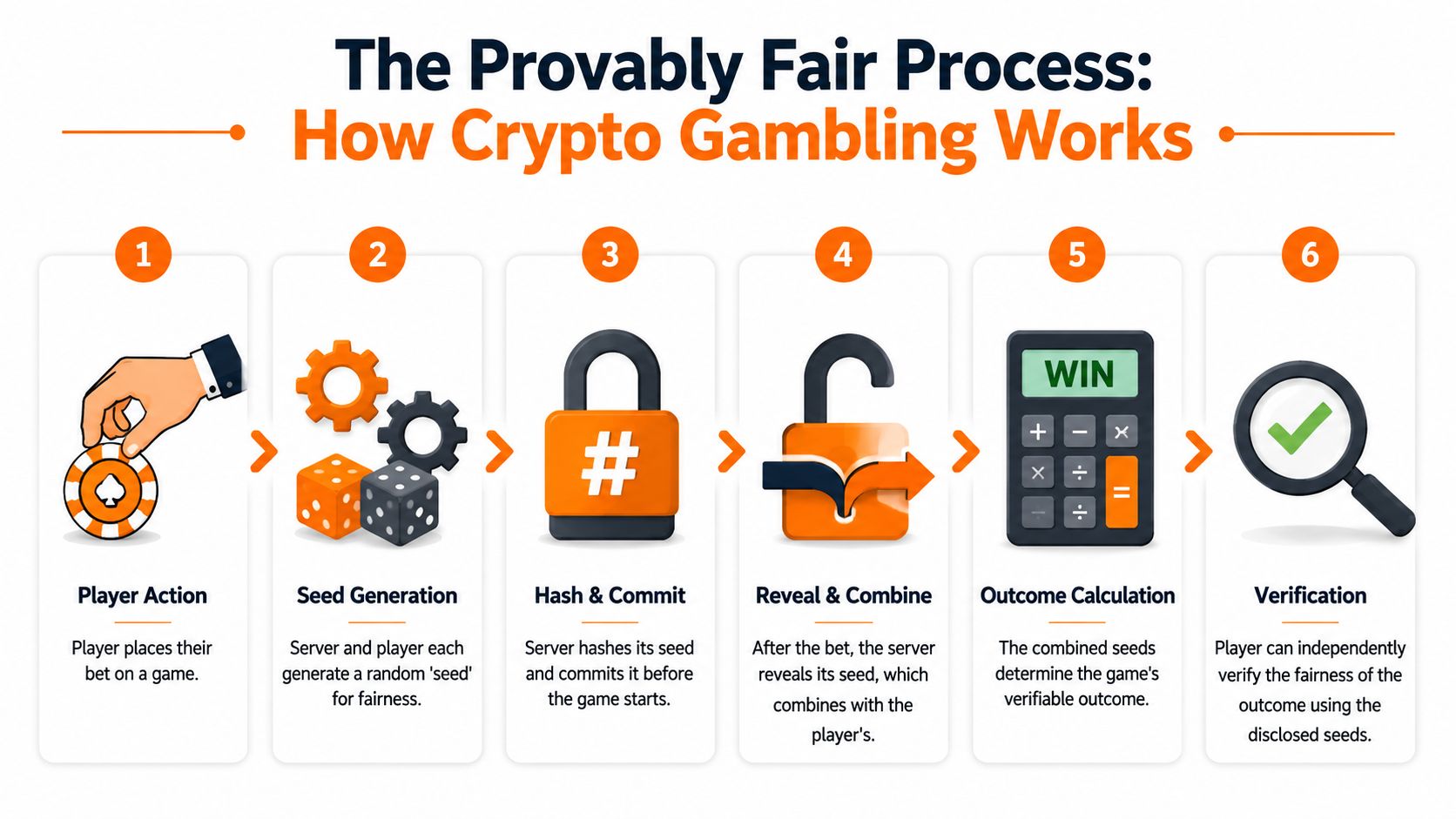
It's akin to a magician showing you the method after the trick. The reveal doesn't stop the trick from happening. It lets you test whether the result followed the promised rules.
What provably fair usually means
Most provably fair systems rely on a combination of random inputs, often called seeds, from the server and sometimes from the player as well. Before the bet, the site commits to a hidden value by publishing a cryptographic hash. After the bet, it reveals the underlying value so you can check that it matches the earlier commitment.
If the system is built with integrity, the operator can't secretly swap in a better result after seeing your wager.
That's useful. It isn't magic.
What it does not prove
Provably fair can help you verify a game result. It does not prove that the platform is financially sound, that it will pay withdrawals promptly, or that its bonus terms are reasonable. It also doesn't rescue you from poor bankroll decisions.
Here's a visual walkthrough of the idea in action.
On-chain and off-chain betting
These terms trip people up.
- On-chain betting means the wager or settlement is recorded on a public blockchain.
- Off-chain betting means the actual betting activity happens on the platform's own systems, even if deposits and withdrawals use crypto.
On-chain systems can offer visibility, but they also expose more of the activity publicly. Off-chain systems may feel faster and cheaper to use, but they ask you to trust the operator more.
Neither model is automatically safer. They place trust in different places.
The trap in zero house edge claims
Some platforms now advertise zero house edge or 100% RTP games. That sounds unbeatable. MEXC's discussion of zero house edge games notes why that headline can mislead. A game may remove the mathematical house edge while the platform still earns through transaction fees, currency exchange spreads, bonus wagering requirements, and platform insolvency risk.
A simple UK example makes this clearer. Suppose a dice game itself is mathematically neutral, but you had to buy bitcoin first, send it, maybe pay network costs, then convert what remains back into pounds later. Your total expected cost may still be negative even though the game's displayed edge looks like zero.
A fair coin toss can still become an expensive activity if every toss involves conversion costs, payment fees, and the risk that the venue won't return your money.
UK Legal Rules and Tax You Cannot Ignore
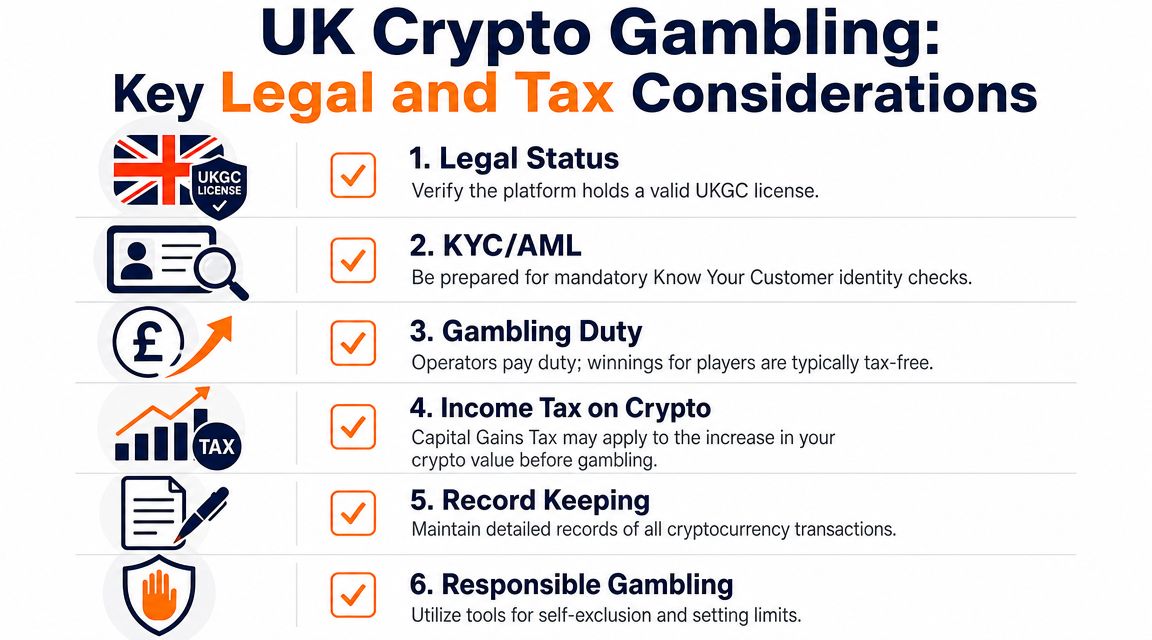
Many people approach bitcoin gambling as if the crypto part sits outside ordinary UK rules. It doesn't. In the eyes of the regulator, bitcoin is not a magic invisibility cloak. It's a payment mechanism that still has to fit inside licensing, anti-money-laundering checks, and consumer protection rules.
UK gambling rules in plain English
The UK Gambling Commission's guidance on blockchain technology and crypto-assets makes the position clear. The Commission treats crypto-assets like Bitcoin as a payment mechanism. Licensed operators must carry out identity checks, assess source of funds, and monitor for money laundering. In other words, UK-compliant crypto gambling is not anonymous.
That point matters because many offshore sites still market crypto betting as private or no-questions-asked. A UK-licensed operator can't ignore compliance because you paid in bitcoin instead of pounds.
What “anonymous” usually means in practice
People often confuse pseudonymous with anonymous.
A bitcoin address doesn't automatically show your name. But once your wallet activity touches an exchange account, a licensed operator, or any service that verifies your identity, the transaction history can become easier to connect to you. That's why privacy and anonymity aren't the same thing.
If a platform advertises full anonymity while also claiming to be fully compliant with UK rules, treat that as a contradiction that needs checking.
The tax angle many guides skip
The tax issue catches beginners off guard. A lot of gambling content talks about games, bonuses, or no-KYC claims and barely mentions record-keeping. That omission is risky for UK users.
If you want a broader primer on the subject, this guide to UK crypto tax basics is a useful starting point. The critical point is simple: with crypto, the act of moving value can matter for tax even before you think about whether a bet won or lost.
Why records matter
If you deposit bitcoin into a casino wallet, swap it for another token, or cash out back into pounds, you may need to know what the asset was worth at each step. Without records, it becomes hard to reconstruct what happened later.
Keep a log that includes:
- Date and time of each transfer
- Wallet addresses involved
- Amount of bitcoin sent or received
- Pound value at the time
- Fees or spreads paid
- Screenshots or confirmations for deposits and withdrawals
This isn't admin for the sake of admin. It's how you avoid trying to rebuild your activity months later from fragments.
Avoiding Common Security and Privacy Risks
The biggest myth in bitcoin gambling is that crypto automatically keeps you safe and hidden. It doesn't. It changes the shape of the risk. Sometimes it increases it.
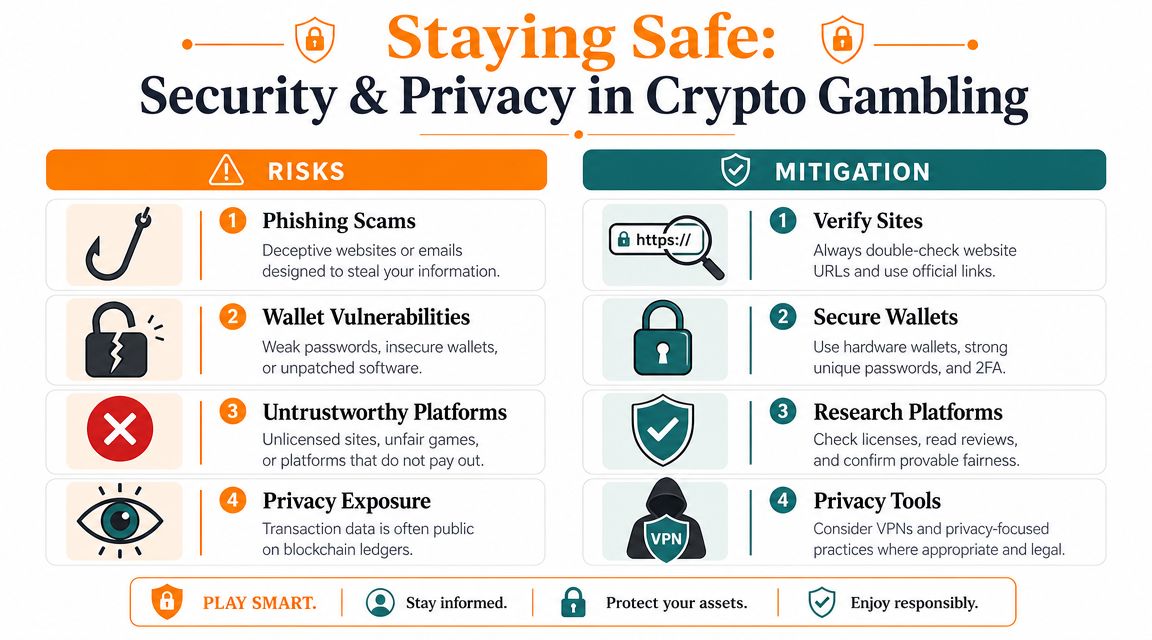
When you use bitcoin, you take more responsibility for the payment side yourself. That can be liberating. It also means mistakes are less forgiving.
The most common ways users get caught out
A frequent problem is the fake site. A phishing page can copy a real casino's branding, colours, and layout closely enough that a rushed user won't notice the difference. Once you enter credentials or send funds, recovery may be impossible.
Practical anti-phishing habits matter. A good place to build those habits is this guide on how to protect yourself from crypto phishing scams.
Another common error is leaving too much crypto on the platform. If the operator freezes withdrawals, gets hacked, or fails, you are just another customer trying to get funds back.
Why privacy is thinner than it looks
Bitcoin transactions are public on the ledger. Your name isn't written on-chain, but your activity trail can still reveal a lot once it connects to accounts or services tied to your identity. If you used a regulated exchange to buy the coins and then sent them to a gambling platform, that chain may be easier to map than many users assume.
That doesn't mean every payment is instantly attached to your passport. It means “nobody can trace this” is a dangerous assumption.
Security should come before secrecy. A secure, boring setup beats a clever-looking anonymous setup that can't protect your funds.
A safer working routine
Use a clean routine every time you interact with a platform:
- Check the exact web address before logging in or sending funds.
- Use two-factor authentication where available.
- Keep gambling funds separate from long-term holdings.
- Test withdrawals early instead of waiting until a larger balance builds up.
- Avoid wallet approvals you don't understand on DeFi-style platforms.
A quick example
Suppose you hold savings in one wallet and gambling funds in the same wallet. You connect that wallet to an on-chain betting app, approve a contract too casually, and the contract turns out to be malicious. You haven't just risked your betting budget. You may have exposed everything in that wallet.
That's why experienced users separate functions. One wallet is for storage. Another is for activity. Mixing them is like keeping your house deposit, holiday cash, and pub money in the same coat pocket.
How to Gamble with Bitcoin More Safely
If you still want to gamble with bitcoin after weighing the risks, the goal should be harm reduction, not optimisation. You're not looking for a clever trick. You're trying to avoid predictable mistakes.
A practical checklist
- Use a separate wallet: Keep gambling funds away from your main holdings. If something goes wrong on the platform side, the damage stays contained.
- Start with a tiny test: Make a small deposit first. Then test a withdrawal before sending more. This tells you more about a platform than any glossy homepage will.
- Think in pounds, not just bitcoin: Set your limit in sterling before you begin. Bitcoin price moves can distort your sense of what you're risking.
- Avoid borrowed money: If the funds are meant for rent, bills, food, or debt repayment, they aren't gambling funds.
- Set both time and money limits: Crypto gambling can feel faster because deposits and in-house games move quickly. That speed can blur your judgement.
- Read the withdrawal terms: Some sites are generous on the way in and awkward on the way out.
Treat volatility as part of the stake
This is one of the easiest points to miss. With ordinary betting, your bankroll usually stays in pounds. With bitcoin gambling, the payment asset itself can change in value while you play or while you wait to cash out.
That means you can be right about the bet and still dislike the final result. Or you can lose the bet but later see the remaining bitcoin rise or fall. The moving parts make it harder to judge your true outcome in real time.
Use support tools early
If gambling stops feeling like entertainment and starts feeling compulsive, act early. Use the platform's own limits if they're available. Step away from the wallet. Speak to someone. UK support services such as GamCare and BeGambleAware can help you think clearly before the problem grows.
A strong safety habit is simple: decide your stop point before the first deposit, not after the first loss.
Frequently Asked Questions
Is bitcoin gambling legal in the UK
Using Bitcoin for gambling isn't a separate gambling category in the UK. The key issue is whether the operator is compliant and how it handles regulation, identity checks, and anti-money-laundering duties. Crypto doesn't exempt a platform from those rules.
Is it anonymous if I gamble with bitcoin
Not in the full sense commonly imagined. A bitcoin address is pseudonymous, but your activity can become easier to connect to you once it touches an exchange, a licensed operator, or other verified services. “Private” and “anonymous” are not the same thing.
Are winnings taxed in the UK
The point many users miss is that crypto tax and gambling outcomes aren't the same question. According to the explanation based on HMRC's cryptoassets approach to disposals in gambling contexts, moving Bitcoin into a casino wallet, exchanging it for another token, or cashing it out into pounds can all be potentially taxable disposal events for Capital Gains Tax purposes, separate from any tax treatment of gambling winnings themselves.
What's the biggest hidden cost
Usually it's not one big charge. It's the stack of smaller frictions. You may face exchange spread when buying bitcoin, network costs when sending it, platform fees when withdrawing, and another spread when converting back into pounds. A “zero-edge” game can still become expensive after all that.
Should I keep funds on the gambling site
Only what you need for near-term play. Keeping large balances on any platform increases your exposure to hacks, freezes, insolvency risk, or withdrawal disputes. If you're not actively using the funds, your own wallet is generally the safer place.
Is provably fair the same as safe
No. Provably fair relates to whether a game result can be independently checked. It does not guarantee good custody, responsive support, solvency, or fair withdrawal handling. A platform can offer a verifiable game and still be a poor place to keep money.
Is bitcoin gambling better than using pounds
For some users, it can be more convenient. For others, it adds layers they don't need. If you value self-custody, cross-border flexibility, and crypto-native tools, it may appeal. If you want simplicity, clear records, and fewer moving parts, pounds are often easier.
If you want to understand crypto before you risk real money with it, The Coin Course is a strong place to start. It offers beginner-friendly and advanced guides on wallets, security, blockchain basics, DeFi, and risk management, so you can build the habits that matter before you move funds, place bets, or trust a platform with your coins.