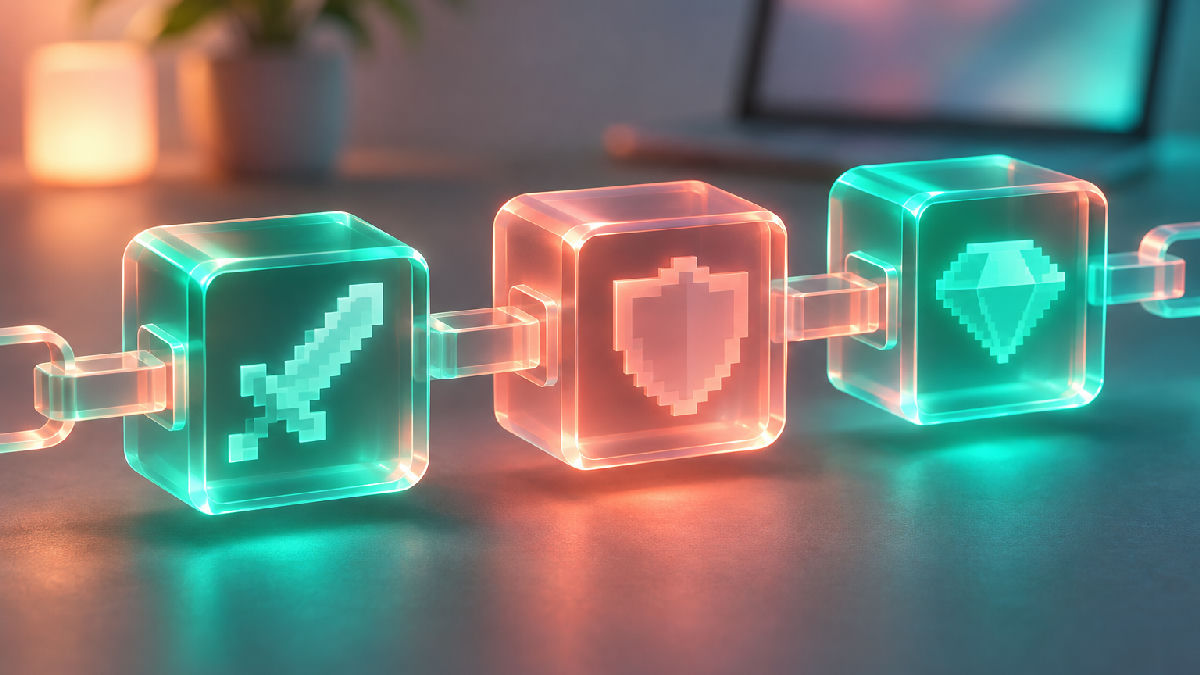
Exploring Play-to-Earn Games with NFTs for Beginners: Your Trusted Guide
Are you curious about Play-to-Earn (P2E) games and Non-Fungible Tokens (NFTs), but feel lost in a sea of confusing jargon? Do you worry about making a misstep or losing your way in this exciting new digital world? You're definitely not alone. Many aspiring players feel the same hesitation and uncertainty.
This guide is your personal "treasure map" to confidently navigate the thrilling landscape of P2E. We're here to transform that confusion into clarity, and hesitation into empowered action. By the end, you'll be well-equipped to embark on your P2E adventure with a clear understanding of the basics, a grasp of security best practices, and the ability to spot legitimate opportunities.
Why does this matter? Because the world of P2E and NFTs offers exciting new ways to interact with digital entertainment and potentially earn tangible rewards. Without clear guidance, it can indeed feel daunting. Consider us your knowledgeable friend, ready to help you understand this new frontier and empower you to make informed decisions for a safe, engaging, and potentially rewarding experience.
📋 What You'll Learn
- Clearly explain what P2E games and NFTs are, and how they interact.
- Confidently choose a beginner-friendly P2E game based on your interests.
- Understand the basic steps required to start playing a P2E game (e.g., wallet setup, acquiring NFTs).
- Identify potential risks and security best practices in the P2E space.
- Be equipped with the knowledge to explore further and make informed decisions in the P2E ecosystem.
⏱️ Estimated Time: 25 minutes
📊 Difficulty: Beginner
Section 1: Demystifying P2E and NFTs – Your First Stepping Stones
1.1 What Exactly is Play-to-Earn? More Than Just "Playing Games"
You’ve probably played games for fun your whole life, right? Perhaps you bought a game, completed its story, and earned achievements or in-game c that stayed locked within that specific game. Play-to-Earn (P2E) takes this concept a giant step further.
Imagine playing a game where the items you earn – like a unique sword, a powerful character, or even a piece of virtual land – aren't just lines of code on a developer's server. Instead, they truly belong to *you*, provably and permanently. That's the core idea of P2E.
In P2E games, you can earn real-world value by actively participating. This value often comes in the form of cryptocurrencies or irreplaceable digital assets called NFTs. Unlike traditional games where developers control everything, P2E games are powered by blockchain technology, giving players genuine ownership and agency. It's like shifting from renting game assets to owning them outright, giving you the power to sell, trade, or use them as you wish, even outside the game itself.
1.2 NFTs: The Digital Building Blocks of P2E Economies
If you've already read our guide on What are NFTs and How Do They Work?, you'll have a good grasp of this concept. For a quick recap: an NFT, or Non-Fungible Token, is a unique digital item recorded on a blockchain. Think of it like a digital certificate of authenticity and ownership for something one-of-a-kind. Unlike regular cryptoc units (where one Bitcoin is interchangeable with any other Bitcoin), each NFT is unique and cannot be swapped directly for another identical token.
In the P2E world, NFTs are the "digital building blocks" that give value to your in-game achievements and purchases. These could be unique characters, rare cosmetic items, powerful weapons, virtual plots of land, or anything the game developers decide can be uniquely owned and traded. Because they are NFTs, their ownership is recorded on a public blockchain, making them transparent and verifiable. They aren't just database entries controlled by a single company; they are assets you genuinely own.
1.3 How P2E and NFTs Interact: A Symbiotic Relationship Explained
So, how do these "building blocks" fit into the P2E picture? NFTs are the cornerstone of the Play-to-Earn model. They are what allow you to truly "own" your in-game assets and turn your time and effort within the game into tangible value. Here’s how they work hand-in-hand:
- Player Ownership: When you earn or buy an item in a P2E game, it's often "minted" as an NFT. This means it’s recorded on the blockchain as yours. You're not just borrowing it; you own it.
- Scarcity & Value: NFTs can be intentionally made scarce or unique, which helps give them value, much like rare physical collectibles. A particularly powerful character or a limited-edition skin, when represented as an NFT, can be bought, sold, and traded with other players.
- Marketplace Economy: Dedicated marketplaces exist where players can buy and sell their NFTs for cryptoc. This creates a real, player-driven economy around the game. Your efforts in farming rare items or leveling up characters can translate into digital assets that have monetary value.
- Interoperability (Future Potential): While still developing, the long-term vision for NFTs sometimes includes interoperability, meaning you might be able to use your NFT from one game in another, or sell it across different platforms. This concept further solidifies the idea of true digital ownership and expands its utility.
Essentially, P2E games provide the mechanism for earning rewards, and NFTs provide the form those earnings take – unique, verifiable, and tradable digital assets.
Section 2: Navigating the P2E Landscape – Your Treasure Map Begins to Unfold
2.1 Different Types of P2E Games: Finding Your Perfect Niche
Just like traditional gaming, the P2E world offers a diverse landscape of game genres. This is definitely not a one-size-fits-all experience! Finding a game that genuinely fits your play style and interests is key to enjoyment and long-term engagement. Here are a few common types, offering different P2E experiences:
- Collecting/Battling Games: Think Pokémon or card-battling games, but with NFTs. You collect unique digital creatures or cards (NFTs), train them, battle others, and can earn rewards (often cryptoc or valuable NFTs). Axie Infinity, which we'll use as an example later, falls into this category.
- Virtual Worlds/Metaverses: These are expansive digital spaces where you can own virtual land (NFTs), build structures, socialize, and create your own experiences. Games like Decentraland or Sandbox are prominent examples. Earning can come from developing on your land, hosting events, or even renting out your digital property.
- Role-Playing Games (RPGs): Traditional RPG elements are mixed with blockchain ownership. You explore worlds, complete quests, defeat monsters, and find rare items that are represented as NFTs, which you can then trade or sell.
- Strategy Games: Build armies, manage resources, and strategize against other players or AI. In these games, in-game units, resources, or even entire civilizations can be represented as NFTs.
- Art & Creative Games: Some platforms allow you to create digital art or items, mint them as NFTs, and then sell them on a marketplace to other players, empowering digital artists and creators.
Consider what kinds of games you already enjoy playing. If you love deep strategy, explore P2E strategy games. If you're a collector at heart, NFT collecting games might be your perfect match.
2.2 Key Elements of a P2E Game: What to Look For
When you're trying to decide if a P2E game is right for you – or even legitimate – it's helpful to evaluate some core components:
- Blockchain Integration: Which blockchain does it use (e.g., Ethereum, Polygon, Solana, BNB Smart Chain)? This choice significantly affects transaction fees (often called "gas fees") and transaction speed, which directly impacts your playing experience and potential earnings.
- NFTs as Core Assets: Are the valuable in-game items truly NFTs that you own and can freely trade on open marketplaces? Or are they just "blockchain-themed" items without real, verifiable ownership outside the game? This distinction is crucial.
- Tokenomics: This is a sophisticated term for how the game's economy works. Does it have one main token or two (often one for governance/investment, and one for in-game rewards)? How are tokens earned, spent, and "burned" (removed from circulation)? A well-designed tokenomics model is essential for a game's long-term sustainability.
- Community & Development: Is there an active and supportive community (on Discord, Twitter, etc.)? Is the development team transparent, regularly updating the game, and communicating with players? A strong community and active development are generally positive indicators.
- Gameplay Itself: Most importantly, is the game actually fun to play? If it feels like a chore, you're unlikely to stick with it, regardless of potential earnings. Enjoyment should be a primary factor!
2.3 Potential Earnings vs. Enjoyment: Balancing Your Goals
It's easy to get caught up in the "earn" part of Play-to-Earn, but remember the "Play" part is equally, if not more, important. Don't go into P2E games purely for financial gain. Here's why:
- Market Volatility: The value of cryptocurrencies and NFTs can change rapidly and unpredictably. What you earn today might be worth significantly less (or more) tomorrow.
- Sustainability Concerns: Not all P2E games are built for long-term sustainability. Some are hype-driven and can quickly lose value, leading to players losing their investments.
- Player Experience: If you're not enjoying the game, it quickly becomes a grind. This can lead to burnout, frustration, and make the entire experience unpleasant.
Aim for a healthy balance. Choose games that genuinely interest and entertain you. If you enjoy playing, any earnings become a bonus. This approach helps reduce the pressure of market fluctuations and makes your P2E journey far more fulfilling. Think of P2E as an opportunity to combine your love for gaming with potential digital asset ownership, rather than a guaranteed investment or income stream.
Section 3: Getting Started: Your 'Choose Your Own Adventure' Path to P2E!
The P2E world is vast and varied, and there's no single "right" way to dive in. Your ideal path depends on your interests, risk tolerance, and how much time you want to invest. Let's explore some common starting points, like diverging paths on your treasure map.
3.1 Path A: Easiest to Start (Low barrier to entry, minimal initial investment)
This path is perfect if you're cautious, want to test the waters without significant financial commitment, and prioritize simplicity. These games often involve straightforward mechanics or are easily accessible on mobile platforms, making onboarding very smooth.
- Characteristics: Often have free-to-play elements, readily available on mobile devices, feature simpler gameplay loops, and sometimes require minimal (or no) initial NFT purchase to start earning.
- Examples: Many newer P2E games are experimenting with free NFT giveaways, demo versions, or "scholarship" programs where you can play with borrowed assets. Mobile-first blockchain games are also often designed for ease of access.
- Why Choose This Path: It's an excellent choice for absolute beginners who want to learn the ropes of crypto wallets, NFT marketplaces, and basic P2E mechanics without much financial stress or complex setup.
3.2 Path B: Highest Earning Potential (Requires more research and potentially higher initial investment)
If you're willing to put in more research, understand market dynamics, and potentially invest more upfront for a higher potential return, this path might be for you. These games often boast more complex economies and demand strategic play.
- Characteristics: Tend to have deeper game mechanics, an active and liquid market for NFTs, an established player base, and often require a higher initial investment (e.g., buying multiple strong NFTs to compete effectively or owning virtual land).
- Examples: Games like Axie Infinity (especially during its peak), or virtual land games where strategic asset management and development can lead to significant gains.
- Why Choose This Path: You are comfortable with calculated risks, interested in game economics and trading, and seeking more substantial financial opportunities, understanding that higher potential reward often comes with higher inherent risk.
3.3 Path C: Most Social & Community-Driven (Focus on interaction and multi-player experiences)
Do you love interacting with other players, fostering communities, and participating in an evolving digital world? This path focuses on games with strong social elements, robust guild systems, and player-driven content.
- Characteristics: Strong emphasis on multiplayer interaction, integrated guild or clan systems, significant user-generated content, vibrant virtual social spaces, and games where collaboration and community building are highly rewarded.
- Examples: Metaverse platforms like Decentraland or The Sandbox, or certain MMORPG-style P2E games where social interaction and guild activities are central to the experience.
- Why Choose This Path: You enjoy multiplayer experiences, thrive on connecting with others, and see significant value in building digital communities and shared adventures.
3.4 Interactive Quiz: Which P2E Path is Right for You?
To help you decide, consider these questions and see which path resonates most with your preferences:
Which P2E Journey Calls to You?
Choose the answer that best describes you for each question:
1. Your primary goal for exploring P2E is...
- A) To understand how it works and try it out without spending much money.
- B) To maximize my potential financial returns, even if it means more risk and effort.
- C) To play with friends, meet new people, and be part of a vibrant online community.
2. How much are you comfortable investing initially?
- A) As little as possible; ideally, I want to start for free or with very minimal cost.
- B) A moderate to significant amount, if the potential rewards and sustainability seem promising.
- C) Enough to gain access and fully enjoy social features, not necessarily to invest heavily for passive income.
3. What kind of games do you usually enjoy playing in your free time?
- A) Casual mobile games, simple puzzle games, or games with clear, easy-to-understand objectives.
- B) Strategy games, RPGs with deep economics, trading simulations, or competitive titles.
- C) Massively Multiplayer Online Role-Playing Games (MMORPGs), virtual worlds, social simulation games, or co-op experiences.
4. How much time are you willing to spend researching a game's economy, team, and potential risks?
- A) Not much; I want something I can pick up and play without extensive pre-work.
- B) A lot; I enjoy analyzing data, strategizing, and digging deep into project details.
- C) A decent amount, especially to find good communities and learn from other experienced players.
Your Results:
- Mostly A's: Path A (Easiest to Start) is likely the best initial step for you.
- Mostly B's: Path B (Highest Earning Potential) aligns well with your ambitions.
- Mostly C's: Path C (Most Social & Community-Driven) seems like your ideal entry point.
(Remember, this is a general guide to help you find a starting point. You can always explore different paths and games as your confidence grows!)
To make things concrete and demonstrate the practical steps, let's walk through the basic process for getting into a well-known P2E game: Axie Infinity. While the specifics will vary for other games, the fundamental process (setting up a wallet, acquiring NFTs, engaging in gameplay, and understanding earning mechanisms) remains remarkably similar across the P2E space. This example will serve as critical "building blocks" for any P2E game you choose to explore.
Important Disclaimer: Axie Infinity has experienced significant market volatility. This example is purely for educational purposes to demonstrate the onboarding process and common P2E mechanics, *not* an endorsement for investment in the game itself.
4.1 Step 1: Setting Up Your Digital Wallets (e.g., MetaMask & Ronin)
Your digital wallet is your gateway to the world of P2E games and NFTs. It's where you'll securely store your cryptoc and digital assets. For Axie Infinity, you'll need two specific wallets:
- Download MetaMask: Start by installing MetaMask, a popular and widely used browser extension wallet. Visit the official MetaMask website (metamask.io) and download the extension for your browser (Chrome, Firefox, Brave, or Edge).
- Create a New Wallet: Follow the on-screen prompts to "Create a new wallet." Carefully read and understand each step.
- Secure Your Seed Phrase: This is arguably the MOST CRITICAL step in securing your digital assets. MetaMask will present you with a 12-word "seed phrase" (also known as a recovery phrase). You MUST write this down physically on paper, in multiple secure locations, and never store it digitally (e.g., on your computer, in an email, or in cloud storage). If you lose this phrase, you lose access to your funds forever. If someone else gets it, they can instantly steal all your assets.
- Create a Strong Password: You'll also set up a regular password for daily access to your wallet within your browser.
- Install Ronin Wallet (for Axie Infinity): Axie Infinity operates on its own specialized sidechain called Ronin, designed to reduce transaction fees for players. You'll need to install the Ronin Wallet browser extension (roninwallet.io). Follow similar setup steps for creating a new wallet and securing its seed phrase. After setup, you’ll typically link your MetaMask to your Ronin Wallet through the official Axie Marketplace.
Congratulations! You now have a secure foundation for managing your digital assets within the P2E ecosystem.
4.2 Step 2: Acquiring Your First NFTs (e.g., Your Axies)
To participate in Axie Infinity, you traditionally need at least three Axie NFTs, which serve as your in-game characters. Here’s a general process:
- Fund Your MetaMask Wallet: You’ll first need to transfer cryptoc (usually Ethereum (ETH) or a stablecoin like USDC) from a centralized exchange (such as Coinbase, Binance, or Kraken) to your MetaMask wallet.
- Bridge Funds to Ronin: Go to the official Axie Infinity marketplace (marketplace.axieinfinity.com). Connect both your MetaMask and Ronin wallets. Use the "Bridge" feature, typically found within the Ronin Wallet interface, to transfer your ETH (which will be "wrapped" as WETH on Ronin) from your MetaMask to your Ronin Wallet.
- Browse the Axie Marketplace: On the Axie Marketplace, you can browse available Axies. Each Axie is a unique NFT with distinct stats, body parts, and genetic potential. This is where research is key – understanding which Axie types are good for battling strategies.
- Purchase Axies: Once you've identified the Axies you wish to purchase, you can buy them using WETH directly from your Ronin Wallet. These newly acquired Axies will then appear in your Ronin Wallet and sync with your game account.
While some P2E games allow direct NFT purchases on universal marketplaces like OpenSea, games with dedicated sidechains usually require interaction with their specific marketplace for seamless integration and lower fees.
4.3 Step 3: Understanding Gameplay Mechanics
Every P2E game comes with its unique rules and mechanics. For Axie Infinity, the engagement flow typically involves:
- Download the Game Client: Install the Axie Infinity game application on your computer or mobile device.
- Log In with Ronin: Use your Ronin Wallet to log into the game client, which verifies your ownership of the Axie NFTs.
- Learn the Basics: Axie Infinity is primarily a turn-based card battling game. You'll need to learn your Axies' card abilities, elemental types, and strategic positioning for optimal performance. Most games provide in-game tutorials or have extensive community-created guides.
- Start Playing: Begin with the Adventure mode (Player vs. Environment, battling computer-controlled enemies) to learn the ropes and accumulate Small Love Potion (SLP), one of the game's earnable tokens. As you become more comfortable, you can progress to the Arena mode (Player vs. Player, battling other players).
4.4 Step 4: Earning and Cashing Out (or Reinvesting)
This is where the "earn" part of Play-to-Earn comes to fruition:
- Earn In-Game Rewards: By playing and winning battles in Axie Infinity, you earn Small Love Potion (SLP). Other games might reward you with their native token or even new NFTs.
- Claim Rewards: In Axie Infinity, you specifically "claim" your accumulated SLP from your in-game account to your Ronin Wallet. This crucial step moves the SLP from the game's internal system onto the public blockchain, giving you full ownership.
- Sell or Reinvest:
- Sell: You can trade your SLP (or other game tokens) for WETH on a decentralized exchange (DEX) such as Katana (which is built into the Ronin network). From there, you would "bridge" your WETH back to your MetaMask wallet on the Ethereum network, and finally, send it to a centralized exchange (like Coinbase or Binance) to sell for fiat c (USD, EUR, etc.).
- Reinvest: Many players choose to use their earned tokens to buy more powerful Axies, breed new Axies (which typically requires both SLP and AXS tokens), or upgrade existing ones. This strategy can increase their future earning potential within the game.
Always double-check transaction details and wallet addresses meticulously before sending any funds or NFTs. Mistakes in blockchain transactions are irreversible.
Section 5: Protecting Your Digital Treasure – Security Best Practices ('The Guard Dog' of Your Assets)
The decentralized nature of P2E games means you essentially become your own bank. This comes with immense power, but also immense responsibility. Think of robust security as your loyal "guard dog," constantly vigilant and protecting your digital treasure. No central authority can recover your funds if you make a mistake or fall victim to a scam.
5.1 Identifying Scams and Phishing Attempts
Scammers are unfortunately prevalent in the crypto space, employing various tactics to trick you. They primarily try to get you to reveal your seed phrase or connect your wallet to malicious sites:
- Phishing Websites: ALWAYS double-check the URL of any website you visit, especially if it asks you to connect your wallet or enter sensitive information like your seed phrase. A single letter difference in the URL can indicate a fake site designed to steal your assets. Bookmark official sites and use them consistently.
- Fake Support: Never trust unsolicited messages from "support staff" on platforms like Discord, Telegram, or social media. Official support teams will absolutely never ask for your seed phrase or private keys.
- Impersonators: Scammers frequently impersonate project founders, developers, or influential figures. Always verify identities through official channels (e.g., a project's official website) before engaging.
- "Free Money" Scams: If an offer sounds too good to be true (e.g., "send us 0.1 ETH to get 1 ETH back"), it is, without exception, a scam. Avoid these at all costs.
- Malicious Links: Be extremely wary of clicking on links from unknown sources, even if they appear within seemingly legitimate social media groups or channels. These can lead to phishing sites or download malware.
5.2 Wallet Security: Best Practices for Protecting Your Funds
Your wallet holds the keys to your crypto and NFTs. Guard it meticulously:
- Keep Your Seed Phrase OFFLINE: This is the absolute golden rule. Never type your seed phrase into your computer, take a photo of it, email it, use cloud storage, or store it in any digital format. Write it down on paper and store it securely (e.g., in a fireproof safe, a safe deposit box). If you lose it, your funds are gone. If someone else obtains it, your funds are gone instantly.
- Use a Strong, Unique Password: Create a complex, unique password for your wallet and for any associated exchanges or online accounts. Enable two-factor authentication (2FA) wherever this option is available for an extra layer of security.
- Hardware Wallets: For any significant amount of crypto or NFTs, seriously consider investing in a hardware wallet (e.g., Ledger, Trezor). These devices keep your private keys truly offline, making them incredibly secure against online threats. You physically confirm transactions on the device itself.
- Be Cautious with Permissions: When connecting your wallet to a new website or decentralized application (dApp), carefully review the permissions it requests. Never grant unlimited spending permissions ("unlimited approval") to smart contracts or applications you don't fully understand or trust completely.
- Regularly Revoke Permissions: Utilize tools like Revoke.cash to periodically review and revoke any unnecessary or old approvals you've granted to smart contracts. This minimizes potential risks from compromised dApps.
5.3 Understanding Risks: Volatility and "Rug Pulls"
Beyond direct scams, there are inherent and significant risks within the P2E and broader crypto space:
- Market Volatility: The value of cryptocurrencies and NFTs can rise and fall dramatically and quickly. What you earn or invest today might be worth significantly less (or occasionally, much more) tomorrow. Be prepared for price swings.
- "Rug Pulls": This is a sophisticated type of scam where deceptive developers launch a project, build substantial hype, attract significant investor funds, and then suddenly abandon the project, taking all the invested money with them. The value of the game's tokens or NFTs then plummets to zero.
- Smart Contract Vulnerabilities: The underlying blockchain code (smart contracts) can contain bugs or vulnerabilities that can be exploited by hackers, potentially leading to the loss of user funds or assets.
- Game Design Flaws: Poorly designed game economies can be inherently unsustainable. These often rely heavily on a constant influx of new players, leading to inflation of in-game tokens and an eventual collapse in value when the growth slows.
5.4 Due Diligence: Researching Games Before Investing
Your best defense against risks and scams is thorough research and skepticism. Be your own detective!
- Check the Team: Are the developers "doxxed" (publicly known and identifiable)? Do they have a verifiable track record in gaming or blockchain development? Anonymous teams carry a significantly higher risk profile.
- Roadmap and Whitepaper: Does the project have a clear, realistic, and detailed roadmap for future development? Is their whitepaper comprehensive, transparent about their game mechanics, and clearly explain their tokenomics?
- Community Sent: Join their official Discord, Telegram, and follow their Twitter. Is the community active, engaged, and seemingly healthy? Are there valid concerns being raised, or is it overly hyped without substance? Be wary of excessive shilling and ignore price predictions.
- Audits: Has the game's core smart contract code been audited by a reputable third-party blockchain security firm? While not a guarantee of absolute safety, an audit adds a crucial layer of scrutiny and can identify critical vulnerabilities.
- Tokenomics Review: Take the time to understand how the in-game c is generated, used, and burned (removed from circulation). Does the economic model seem sustainable, or does it rely solely on new players constantly joining to prop up prices?
Always treat P2E investments like any other high-risk investment – never put in more money than you can comfortably afford to lose, and always perform your own thorough research (DYOR – Do Your Own Research) before committing any funds.
Section 6: Beyond the Horizon: Next Steps and Further Exploration
Congratulations! You've taken your first confident "stepping stones" as a P2E explorer. The journey to understanding and participating in this innovative space doesn't end here; it's truly just beginning. The world of P2E and NFTs is dynamic and constantly evolving, with new games, technologies, and opportunities emerging regularly.
6.1 How to Stay Updated on the P2E Space
- Follow Reputable News Sources: Keep an eye on cryptogaming-focused news sites, broader blockchain news outlets, and tech blogs that frequently cover major developments in the P2E and NFT sectors.
- Join Communities: Actively engage with official Discord channels, Telegram groups, and subreddits for specific games you're interested in, as well as broader P2E trend discussions. While caution is needed to avoid scams, these communities are excellent places to learn quickly and stay informed.
- Follow Key Influencers (with caution): Some influencers genuinely provide valuable insights and analysis. However, always cross-reference information and be highly wary of those who only promote projects without critical review or transparency regarding their own holdings.
- Explore Aggregator Sites: Websites that list various P2E games and projects can be helpful starting points for discovering new opportunities (e.g., DappRadar, PlayToEarn.net).
6.2 Exploring Advanced P2E Strategies
Once you're comfortable with the basics and have gained some experience, you might want to delve into more advanced strategies:
- "Scholarship" Programs: In certain games (like Axie Infinity), asset owners can lend their NFTs to new players (often called "scholars") in exchange for a percentage of their earnings. This allows new players to start playing and earning without a significant initial investment.
- NFT Trading and Flipping: This involves learning to identify undervalued NFTs, acquiring them, and then selling them for a profit on secondary marketplaces once their value increases.
- Breeding/Crafting Mechanisms: Many games allow you to combine existing NFTs to create new ones (e.g., breeding Axies, crafting unique in-game gear). This can be a significant source of income or a way to acquire more powerful assets.
- Yield Guilds: Joining a gaming guild that pools resources, knowledge, and strategies to play P2E games more effectively. Guilds often provide capital (NFTs) to members and share earnings.
6.3 The Future of P2E and NFTs
The P2E space is arguably still in its nascent stages, but its potential for growth and innovation is enormous. We are already beginning to see significant trends and developments:
- Improved Gameplay: Games are becoming increasingly sophisticated, visually appealing, and genuinely enjoyable, moving beyond simplistic click-to-earn models that dominated early P2E.
- Broader Adoption: More traditional gaming companies and established brands are actively exploring or integrating NFT and blockchain technology into their ecosystems.
- Interoperability: The ambitious vision of truly using your NFTs across different games and platforms – or exchanging them fluidly between environments – is slowly but surely becoming a reality.
- Metaverse Development: P2E is a fundamental component of the emerging metaverse, where genuinely owned digital assets will play an absolutely crucial role in fostering vibrant virtual economies and experiences.
While challenges remain (particularly concerning sustainability, regulatory clarity, and user experience), P2E games offer an exciting glimpse into the future of digital ownership, virtual economies, and how we will interact with online entertainment. Keep learning, stay vigilant about security, and most importantly, enjoy the adventure!
⚠️ Common Mistakes to Avoid (Your "Guard Dog" Checklist)
- Rushing In Without Research: Not taking the time to understand a game's tokenomics, community, development team, or genuine gameplay before investing your time or money.
- Sharing Your Seed Phrase: This is the absolute biggest, most irreversible mistake you can make. Never, ever give it out to anyone, store it digitally, or type it into any website.
- Falling for "Too Good To Be True" Scams: Believing promises of guaranteed, unrealistic returns without any apparent risk. If it sounds impossible, it is.
- Ignoring Security Warnings: Clicking on suspicious links, connecting your wallet to unverified websites, or downloading files from untrusted sources.
- Neglecting Gas Fees: Forgetting about network transaction fees (gas fees) which can significantly eat into small earnings, especially on busy blockchains like Ethereum Mainnet.
- Only Focusing on Earnings: Choosing games based solely on perceived profitability without regard for whether you'll actually enjoy playing them. This leads to burnout.
- Over-Investing: Putting in more money than you can comfortably afford to lose. Only invest what you're prepared to see go to zero.
Frequently Asked Questions
What's the difference between Free-to-Play and Play-to-Earn?
In Free-to-Play (F2P) games, you generally download and play without an upfront cost. However, any in-game purchases (like cosmetic skins or power-ups) remain controlled by the game developers and stay within that game's closed ecosystem. You don't truly "own" them. In Play-to-Earn (P2E) games, you can earn digital assets (typically NFTs or cryptocurrencies) through gameplay that you genuinely own and have the freedom to sell, trade, or transfer outside the game, giving them real-world value and utility.
Do I need to be a tech expert to play P2E games?
Absolutely not! While there's new terminology and concepts, this guide aims to show you that with clear, step-by-step instructions (like setting up a MetaMask wallet), P2E is very accessible. You don't need to understand complex coding; you just need to follow basic digital hygiene practices and be willing to learn step-by-step.
How much money do I need to start playing P2E games?
This varies widely depending on the game. Some P2E games offer true free-to-play options or "scholarship" programs where you can start with zero or very minimal initial investment. Others, especially those with higher earning potential or more complex economies, might require an initial investment (e.g., to acquire specific NFTs) to begin. Always check the specific game's requirements and, crucially, only invest what you are comfortable losing.
Are P2E games sustainable in the long run?
The sustainability of P2E games is a significant and often debated topic. Many early models struggled because they relied heavily on a constant influx of new players. Sustainable P2E games require robust, balanced in-game economies, enjoyable gameplay that genuinely retains players, and effective mechanisms that remove tokens from circulation (like breeding fees, crafting costs, or burning mechanisms) to prevent rampant inflation. It's crucial to research a game's tokenomics and the development team's vision to assess its potential for longevity.
How do I know if a P2E game is legitimate and not a scam?
This is precisely where your "guard dog" of due diligence comes into play. Look for transparency from the development team (are they publicly known/doxxed?), a detailed and rational whitepaper and roadmap, an active and engaged community (but be wary of artificial hype), and ideally, audited smart contracts. Be extremely cautious of projects promising unrealistic, guaranteed returns or pressuring you to invest quickly. If it feels too good to be true, it almost certainly is.
Can I really make a living playing P2E games?
While some dedicated individuals have successfully generated a significant income from P2E games, it is by no means a guaranteed path to financial freedom. Earnings can be highly volatile, influenced by broader crypto market conditions, game popularity, economic design, and your individual skill level and time commitment. It's generally best to approach P2E as an engaging hobby with the potential for earning, rather than a primary source of income, especially when starting out. Never quit your day job based solely on P2E earnings or speculative potential.
What's Next on Your P2E Journey?
Now that you've completed this comprehensive guide, you're better equipped to confidently explore the P2E world. Here are some suggested next steps:
- Revisit our foundational guide on What are NFTs and How Do They Work? to further deepen your understanding of these crucial digital assets.
- Explore different P2E game types based on the "Choose Your Own Adventure" paths we discussed. Start with a game that genuinely excites you and comfortably matches your personal risk tolerance.
- Begin diligently researching specific P2E games that catch your eye. Remember to always prioritize security and thorough due diligence before making any investments of your time or money.
Happy exploring, and may your digital adventures be both fun and rewarding!