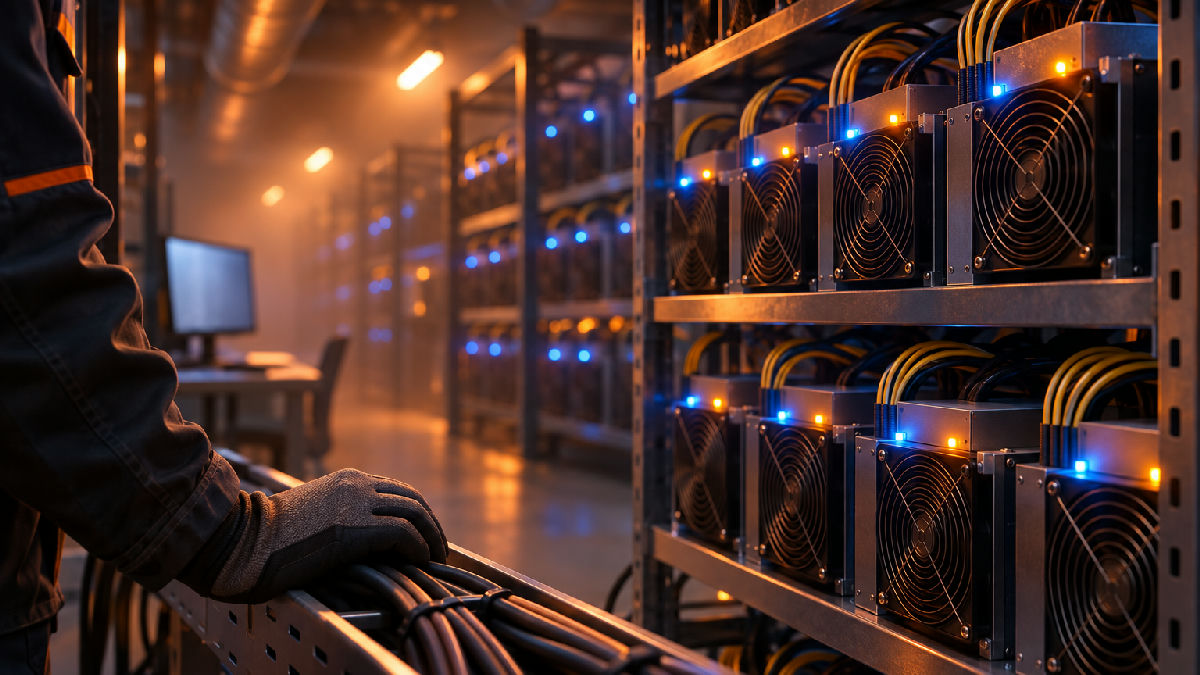
Are you curious about cryptocurrency mining but feel overwhelmed by the jargon, worried about scams, or unsure where to start? You're not alone. This guide will cut through the noise, demystifying crypto mining and empowering you to understand its core principles, evaluate its potential, and confidently distinguish fact from hype. Many newcomers perceive crypto mining as a complex, inaccessible endeavor, but by breaking down the fundamentals, anyone can grasp how it functions within the blockchain ecosystem.
This comprehensive guide aims to clarify the foundational aspects of crypto mining, from its essential role in network security to the practicalities of setting up a mining operation. You will learn about different mining mechanisms, the necessary equipment, and how to assess whether mining is a viable option for your individual goals and resources. Our goal is to provide a balanced and realistic perspective, enabling you to make informed decisions without falling prey to misinformation.
📋 What You'll Learn
- Clearly articulate the purpose and core mechanisms of cryptocurrency mining.
- Differentiate between Proof-of-Work and Proof-of-Stake mining concepts.
- Understand the essential hardware and software components required for mining.
- Evaluate the feasibility of starting your own mining operation based on cost, electricity, and expected returns.
- Identify common pitfalls and security risks associated with mining.
- Make informed decisions about whether to pursue mining and, if so, which approach to take.
⏱️ Estimated Time: 15 minutes
📊 Difficulty: Intermediate
The Foundation: Why Do We Even Need Crypto Mining? (The 'Why' Before The 'How')
At its heart, cryptocurrency mining is far more than just generating new coins; it's the fundamental process that secures and maintains decentralized digital currencies. Without mining, cryptocurrencies as we know them wouldn't function. To truly grasp "how crypto mining works," it's crucial to first understand "why" it exists.
The Blockchain as a Public Ledger: Securing a Decentralized Network
Think of the blockchain as an immutable public ledger, or a digital bank book. Every transaction ever made on a particular cryptocurrency network is recorded in this ledger. This ledger is not stored in one central location, like a traditional bank; instead, it's distributed across thousands of computers worldwide. This distribution is key to its security and resistance to censorship.
Miners as Accountants/Notaries: Verifying and Adding New Transactions
In this analogy, miners act as digital accountants or notaries. Their primary role is to verify the legitimacy of transactions (e.g., ensuring someone isn't spending the same coin twice) and then bundle these verified transactions into new "blocks." Once a block is verified and added, it becomes a permanent part of the blockchain, visible to everyone on the network. This process ensures that the ledger remains accurate and tamper-proof.
The Role of Mining in Maintaining Network Security and Integrity
Mining is the backbone of network security. By expending significant computational effort to add new blocks, miners make it extremely difficult and costly for malicious actors to alter past transactions. Any attempt to change a transaction would require re-doing all the computational work of subsequent blocks, a feat that is practically impossible on a large, active blockchain like Bitcoin. This mechanism ensures the integrity of the entire decentralized network.
Connecting Mining to the Issuance of New Cryptocurrency (Rewards)
Miners are not just selfless guardians of the network; they are also incentivized for their work. When a miner successfully adds a new block to the blockchain, they are rewarded with a certain amount of newly minted cryptocurrency (known as a block reward) plus any transaction fees from the transactions included in that block. This dual incentive structure—securing the network and earning rewards—is what drives miners to participate and continuously grow the network.
Solving the Digital Puzzle: How Cryptographic Hashing Secures Transactions
The core of many cryptocurrency mining processes, particularly for Proof-of-Work systems like Bitcoin, lies in cryptographic hashing. This is the "puzzle" that miners compete to solve.
Hashing as a Digital Lock and Key: The Core Mechanism of Proof-of-Work
Imagine a digital lock that requires an incredibly specific, random key to open. This key isn't something you can guess; you have to try countless combinations until you stumble upon the correct one. In crypto mining, hashing is this process of trying keys. It takes a block of transaction data and transforms it into a fixed-size string of characters, called a hash. Bitcoin, for instance, uses the SHA-256 algorithm for its hashing.
What is a Hash Function?
A hash function is a mathematical algorithm that takes an input (any data, like a block of transactions) and produces a fixed-size output, called a hash value or digest. Key properties of a good cryptographic hash function include:
- Deterministic: The same input will always produce the same output.
- Quick to compute: It's easy to generate the hash for any given input.
- Pre-image resistance: It's computationally infeasible to reverse the process and get the input from the output.
- Collision resistance: It's extremely difficult to find two different inputs that produce the same output.
- Avalanche effect: Even a tiny change in the input dramatically changes the output hash.
The 'Race' to Find the Nonce: How Miners Compete to Solve the Puzzle
For a block to be considered valid, its hash must meet certain criteria—specifically, it must start with a certain number of leading zeros. This is known as the "difficulty target." Since hash functions are deterministic, miners can't just choose the output; they must alter the input slightly until the output meets the target. They do this by adding a random number called a "nonce" (number only used once) to the block data and then hashing the entire package. The process is a brute-force race: miners repeatedly change the nonce and re-hash the block thousands, millions, or even billions of times per second until one of them finds a nonce that generates a hash meeting the difficulty target. The first miner to find this valid hash "wins" the right to add the next block to the chain.
Adding a New 'Block' to the Chain
Once a miner finds the correct nonce and generates a valid hash, they broadcast this new block to the rest of the network. Other nodes quickly verify the block's validity (which is easy to do, unlike finding the nonce). If it's valid, they accept it and add it to their copy of the blockchain. This new block now contains a record of all the recent transactions, permanently etched into the ledger. The miner who found the valid hash receives their block reward and transaction fees, completing the cycle and incentivizing continued participation in the network. This continuous process of finding, verifying, and adding blocks is central to how a blockchain actually works.
Proof-of-Work vs. Proof-of-Stake: Two Paths to Consensus
While the previous section focused on the mechanics of Proof-of-Work (PoW), it's important to understand that not all cryptocurrencies use this method. The blockchain world employs various consensus mechanisms to validate transactions and secure their networks. The two dominant approaches are Proof-of-Work (PoW) and Proof-of-Stake (PoS).
Proof-of-Work (PoW): The 'Marathon Race' of Computing Power
Proof-of-Work is the original consensus mechanism, pioneered by Bitcoin. It is a system where participants, called miners, compete by expending significant computational power to solve a complex mathematical puzzle. The miner who solves it first gets to add the next block of transactions to the blockchain and receives a reward.
- How PoW works: As described earlier, miners use specialized hardware to repeatedly guess a nonce until they find one that, when combined with the block data, produces a hash meeting a specific difficulty target. This intense computational effort makes it incredibly difficult for anyone to tamper with the network, as they would need to out-compute the entire network. Examples include Bitcoin and Bitcoin Cash, which uses Proof of Work (PoW) consensus.
- Pros of PoW:
- Security: The massive amount of computational power required makes PoW networks highly secure and resistant to attacks.
- Decentralization: Historically, PoW allowed anyone with computing power to participate, fostering a decentralized network of independent verifiers.
- Cons of PoW:
- Energy Consumption: The constant race for hash power consumes vast amounts of electricity, raising environmental concerns.
- Scalability: The inherent design limits transaction throughput, leading to slower transaction times compared to some alternatives.
- Hardware Centralization: The need for expensive, specialized hardware (ASICs) can lead to mining power concentrating in the hands of a few large entities.
Proof-of-Stake (PoS): A Greener, Alternative Approach
Proof-of-Stake emerged as an alternative to PoW, aiming to address its energy consumption and scalability challenges. In PoS, instead of miners competing with computing power, validators are chosen to create new blocks based on the amount of cryptocurrency they "stake" (lock up) as collateral.
- How PoS works: Participants lock up a certain amount of the network's native cryptocurrency as their "stake." This stake acts as a financial commitment to the network. The protocol then randomly selects validators to propose and validate new blocks based on the size of their stake and other factors (like age of stake or randomization functions). If a validator acts dishonestly, their stake can be penalized or "slashed." Networks like Ethereum (post-Merge), Cardano, Polkadot, and Solana utilize PoS or a variation of it. Ethereum moved from PoW to PoS in September 2022 and uses Casper the Friendly Finality Gadget (Casper-FFG) for finality. Cardano's Ouroboros consensus, for example, generates unbiased randomness for leader selection based on stake.
- Pros of PoS:
- Energy Efficiency: PoS consumes significantly less energy than PoW, as it doesn't rely on competitive computational puzzles.
- Scalability: Generally allows for higher transaction throughput and faster block finality. Ethereum, for instance, has a block time of 12s.
- Lower Barrier to Entry: Participation typically requires owning the cryptocurrency rather than investing in expensive mining hardware.
- Cons of PoS:
- Centralization Risks: A concern that large holders of the cryptocurrency (whales) could exert undue influence over the network due to their larger stakes.
- "Nothing at Stake" Problem: Early PoS designs faced challenges where validators had little to lose by validating on multiple chain forks. Modern PoS mechanisms address this with slashing penalties.
Key Differences and Evolution of Consensus Mechanisms
The primary difference between PoW and PoS lies in how they achieve decentralized consensus. PoW relies on computational work as its "cost" to participate and secure the network, while PoS relies on economic stake. The evolution towards PoS reflects a broader industry trend seeking more sustainable and scalable solutions for blockchain networks, yet PoW remains a robust and proven mechanism for security, particularly for foundational cryptocurrencies. Different blockchains may also employ unique consensus mechanisms, such as the XRP Ledger's novel Byzantine Fault Tolerant consensus algorithm or Tron's Delegated Proof of Stake (DPoS).
Getting Started: What You Need to Mine Cryptocurrency
If you're considering entering the world of crypto mining, understanding the necessary components is your first practical step. This section outlines the essential hardware, software, and supplementary tools you'll need.
1. Hardware Essentials: The 'High-Performance Calculator'
Your mining hardware is your workhorse, performing the complex calculations required to find new blocks.
- GPUs vs. ASICs: Understanding Your Options
- GPUs (Graphics Processing Units): These are the powerful processors found in gaming computers. GPUs were once popular for mining various cryptocurrencies, especially Ethereum (before its switch to PoS) and many altcoins. They offer flexibility as they can be repurposed for gaming or other tasks if mining becomes unprofitable.
- ASICs (Application-Specific Integrated Circuits): These are specialized hardware designed for one purpose: mining a specific cryptocurrency using a specific algorithm. For example, a Bitcoin ASIC is highly efficient at mining SHA-256 coins but useless for others. ASICs are significantly more powerful and energy-efficient for their target algorithm than GPUs, but they are expensive, generate a lot of heat and noise, and have no other use. Bitcoin mining primarily uses ASICs.
- CPU Mining (Historical Context, Current Viability):
- Early Bitcoin mining was done on standard computer CPUs. However, with the advent of GPUs and then ASICs, CPU mining for major cryptocurrencies like Bitcoin is no longer viable due to extremely low profitability. Some niche cryptocurrencies, like Monero, use algorithms (RandomX) that are more resistant to ASICs, making CPU mining (or GPU mining) still somewhat feasible for them.
- The Importance of Cooling and Power Supplies:
- Mining hardware generates substantial heat. Proper ventilation and cooling solutions (fans, air conditioning) are critical to prevent overheating, which can damage equipment and reduce efficiency.
- A reliable and sufficiently powerful power supply unit (PSU) is essential to safely and consistently deliver electricity to your mining rig. Miners consume a lot of power, so quality PSUs are a must.
2. Software Setup: Your Mining Brain
Beyond the physical hardware, you'll need software to orchestrate your mining efforts.
- Mining Software: How It Connects Your Hardware to the Network:
- This software (e.g., CGMiner, BFGminer for Bitcoin ASICs; various programs for GPU mining) instructs your hardware to perform the hashing operations and connects it to the blockchain network (or a mining pool). It manages the communication, sends your work, and receives potential rewards.
- Operating Systems for Mining:
- While standard operating systems like Windows can be used, many dedicated miners opt for specialized Linux-based distributions (like HiveOS, SimpleMining OS) designed for efficiency, stability, and remote management of multiple mining rigs.
3. The Digital Wallet: Your Secure Digital Vault
Once you start earning cryptocurrency, you need a safe place to store it.
- Purpose and Types of Crypto Wallets (Hot vs. Cold):
- A crypto wallet is a software application or physical device that stores the private keys necessary to access and manage your cryptocurrency. It's not a physical container for coins, but rather a tool to interact with the blockchain. Learn more about demystifying cryptocurrency.
- Hot Wallets: Connected to the internet (e.g., mobile apps, desktop software, exchange wallets). Convenient for frequent transactions but generally less secure.
- Cold Wallets: Not connected to the internet (e.g., hardware wallets, paper wallets). Offer superior security for long-term storage but are less convenient for daily use.
- How to Set Up and Secure Your Wallet:
- Choose a reputable wallet provider.
- Back up your seed phrase (a series of words that can restore your wallet) and store it securely offline.
- Enable two-factor authentication (2FA) if available.
- Never share your private keys or seed phrase with anyone.
4. Joining the Collective: Mining Pools
For most individual miners, solo mining is no longer a practical option due to the immense competition.
- What is a Mining Pool and Why Join One?
- A mining pool is a group of miners who combine their computational resources (hash power) to increase their chances of finding a block. When the pool successfully mines a block, the reward is split proportionally among all participants based on their contribution. This provides more frequent, albeit smaller, payouts compared to the rare, large payouts of solo mining.
- How Rewards Are Distributed in a Pool:
- Different pools use various reward distribution methods, such as Pay-Per-Share (PPS), Proportional (PROP), or Full Pay-Per-Share (FPPS). These algorithms determine how the block reward and transaction fees are shared among the pool members.
- Solo Mining vs. Pool Mining: Pros and Cons:
- Solo Mining:
- Pros: If you find a block, you get the entire reward.
- Cons: Extremely low probability of finding a block unless you have massive hash power.
- Pool Mining:
- Pros: More frequent, stable payouts; lower variance in income.
- Cons: You share the block reward with others, and pools often charge a small fee.
- Solo Mining:
Is Mining Right for You? A Realistic Look Beyond the Hype
While the idea of earning cryptocurrency by mining can be appealing, it's essential to approach it with a realistic perspective. The profitability and sustainability of mining have changed significantly over the years. This section provides a balanced view of the economic and environmental factors, alongside common risks.
1. The Economics of Mining: Calculating Profitability
Mining is essentially a business operation with costs and potential revenues. Calculating profitability is crucial before investing.
- Electricity Costs: The Biggest Factor:
- Electricity is the primary ongoing expense for Proof-of-Work mining. Mining rigs run 24/7 and consume substantial power. Your local electricity rate (cents per kilowatt-hour) will often be the make-or-break factor for profitability. Even slight differences in electricity costs can turn a profitable operation into a losing one.
- Hardware Investment: Initial Outlay and Depreciation:
- ASICs and high-end GPUs are expensive. You need to factor in the initial purchase price, shipping, and any import duties. Additionally, mining hardware depreciates over time as newer, more efficient models are released, and components wear out.
- Network Difficulty and Block Rewards:
- Network Difficulty: This metric adjusts periodically to ensure that new blocks are found at a consistent rate for Bitcoin. As more miners join the network, the difficulty increases, meaning it takes more computational power to find a block. This directly impacts your individual share of potential rewards. Bitcoin's difficulty adjusts every 2016 blocks.
- Block Rewards: The amount of cryptocurrency awarded for finding a block decreases over time through events like Bitcoin's halving, where the block reward is cut in half approximately every four years.
- Online Profitability Calculators: How to Use Them:
- Numerous websites offer mining profitability calculators. You input your hardware's hash rate, power consumption, electricity cost, and the current cryptocurrency price. These tools provide an estimate of your potential daily, weekly, or monthly earnings after deducting electricity costs. Always use current data and understand that these are estimates, as market conditions and difficulty change rapidly.
2. Environmental Considerations: Powering the Future Responsibly
The energy consumption of Proof-of-Work mining has drawn significant attention and concern.
- Energy Consumption of Different Mining Methods:
- PoW mining, especially for Bitcoin, requires massive amounts of energy. The continuous trial-and-error process of hashing consumes electricity on a global scale comparable to that of small countries.
- In contrast, Proof-of-Stake consensus mechanisms, like those used by Ethereum, Cardano, Solana, and Polkadot, consume vastly less energy as they don't rely on intensive computational competition.
- The Shift Towards Greener Alternatives and PoS:
- The industry is increasingly moving towards more energy-efficient solutions. Ethereum's transition to PoS was a landmark event in this regard. Many newer blockchains are designed with PoS or similar low-energy consensus mechanisms from the outset. This shift is driven by both environmental concerns and the desire for greater scalability.
3. Common Pitfalls and Security Risks
Mining, like any investment, comes with risks you need to be aware of.
- Scams and Fraudulent Mining Operations:
- Be wary of "cloud mining" services that promise guaranteed high returns with little effort. Many are Ponzi schemes. If an offer seems too good to be true, it almost certainly is. Always research companies thoroughly and look for verifiable proof of their operations.
- Hardware Failure and Maintenance:
- Mining equipment runs continuously under heavy load, leading to wear and tear. Components can fail, requiring replacement or repair. Dust, heat, and humidity can all shorten the lifespan of your expensive hardware.
- Price Volatility and Market Changes:
- The price of cryptocurrencies is highly volatile. A sudden drop in value can quickly render your mining operation unprofitable, even if your electricity costs remain stable. Conversely, a price surge can boost profitability. This market unpredictability adds significant risk.
- Cybersecurity: Protecting Your Mining Operation and Assets:
- Mining software can be targeted by malware. Ensure your systems are secured with strong passwords, two-factor authentication, and up-to-date antivirus software. Your cryptocurrency wallet is your "secure digital vault," and needs robust protection against hacking attempts. Learn more about digital signatures in blockchain transactions, which help secure your assets.
Making Your Decision: A Simple Decision Tree
Navigating the complexities of crypto mining requires careful consideration of your resources, goals, and risk tolerance. Use this simple decision tree to guide your choices:
- Step 1: Assess Your Resources (Budget, Electricity Cost, Technical Comfort).
- Budget: Do you have significant capital to invest in specialized hardware (ASICs) or a smaller budget for GPUs?
- Electricity Cost: What is your local electricity rate per kWh? Is it below the national average, or significantly higher?
- Technical Comfort: Are you comfortable troubleshooting hardware, configuring software, and managing a technical setup?
- Step 2: Define Your Goals (Profit, Learning, Supporting a Network).
- Pure Profit: Is your sole aim to generate maximum financial returns?
- Learning/Hobby: Are you primarily interested in the technical aspects and learning how mining works, with profit as a secondary concern?
- Network Support: Do you want to contribute to the security and decentralization of a particular blockchain?
- Step 3: Consider Your Risk Tolerance.
- Are you comfortable with the high volatility of cryptocurrency prices and the potential for hardware depreciation? Can you afford to lose your initial investment if market conditions turn unfavorable?
- Conditional Paths Based on Resources and Goals:
- If high budget & technical comfort, aiming for profit on established networks: Consider ASIC Proof-of-Work mining for currencies like Bitcoin. Research current ASIC models, their efficiency, and reputable mining pools.
- If moderate budget & technical comfort, interested in flexibility: Explore GPU mining for various altcoins. Be prepared to switch between coins as profitability changes.
- If low budget & green focus, interested in long-term participation: Look into Proof-of-Stake (PoS) staking for coins like Ethereum, Cardano, or Solana. This often involves delegating your coins to a validator or running your own validator node with a sufficient stake, and typically has lower electricity costs.
- If minimal budget & purely for learning: Experiment with CPU mining for very niche, ASIC-resistant coins, or focus on learning the theory and understanding the technology behind mining without significant financial investment.
- If wary of direct mining, but want to participate: Consider joining legitimate cloud mining contracts (with extreme caution and thorough due diligence) or simply investing directly in cryptocurrencies.
⚠️ Common Mistakes to Avoid
- Ignoring Electricity Costs: This is often the biggest oversight. Always calculate your potential electricity bill against expected earnings.
- Falling for Cloud Mining Scams: Many platforms promising guaranteed returns are fraudulent. Conduct extensive research and only use highly reputable services.
- Underestimating Hardware Costs: Beyond the miner itself, factor in power supplies, cooling, wiring, and potential repairs or replacements.
- Neglecting Security: Failing to secure your wallet or mining rig against cyber threats can lead to significant losses.
- Chasing the Hype: Don't invest in mining based purely on a coin's recent price surge. Understand the underlying technology, long-term viability, and current mining difficulty.
- Overlooking Network Difficulty: As more miners join, difficulty increases, reducing your individual share of rewards. Don't assume today's profitability will last indefinitely.
- Not Diversifying: Putting all your resources into mining one cryptocurrency can be risky due to price volatility.
Frequently Asked Questions
Is crypto mining still profitable for beginners?
For most major Proof-of-Work cryptocurrencies like Bitcoin, solo mining is generally not profitable for beginners due to the high cost of specialized hardware (ASICs) and substantial electricity expenses. Joining a mining pool can provide more consistent, smaller payouts, but profitability still depends heavily on electricity rates and the cryptocurrency's market price. For beginners, Proof-of-Stake (PoS) alternatives like staking might offer a lower barrier to entry and less capital outlay for hardware.
How much electricity does a mining rig use?
The electricity consumption of a mining rig varies widely depending on its components. A high-end ASIC miner for Bitcoin can consume several kilowatts, equivalent to a few refrigerators running simultaneously. A GPU mining rig will also consume significant power, typically ranging from a few hundred watts to over a kilowatt. These figures are crucial for calculating profitability, as electricity is a major operational cost.
What is the difference between Bitcoin mining and Ethereum mining?
Historically, both Bitcoin and Ethereum used Proof-of-Work (PoW) mining, but they differed in their hashing algorithms and required hardware. Bitcoin mining (SHA-256) primarily uses specialized ASICs due to the intense competition. Ethereum (Ethash algorithm) was mined primarily with GPUs. However, Ethereum transitioned from PoW to Proof-of-Stake (PoS) in September 2022, meaning it is no longer "mined" in the traditional PoW sense but rather "validated" through staking. Bitcoin Cash, another example, uses Proof of Work (PoW) consensus.
Can I mine cryptocurrency on my laptop or phone?
While technically possible to run mining software on a laptop or phone, it is almost never viable or recommended. Modern cryptocurrency mining, especially for profitable coins, requires immense computational power that standard consumer devices simply cannot provide efficiently. Attempting to mine on a laptop or phone would likely result in negligible earnings, excessive heat generation, rapid battery degradation, and potential damage to the device.
What are the legal implications of cryptocurrency mining?
The legal implications of cryptocurrency mining vary significantly by jurisdiction. In many regions, mining is legal but may be subject to specific regulations regarding energy consumption, environmental impact, or taxation of mining rewards. Some countries have imposed outright bans on cryptocurrency mining due to environmental concerns or financial control. It is crucial to research and understand the laws and regulations in your specific location before engaging in any mining activities.
How often do miners get paid?
The frequency of payments for miners depends on their mining strategy. Solo miners only get paid when they successfully find and validate an entire block, which can be very infrequent unless they have enormous computational power. Miners in a pool, however, receive smaller, more frequent payouts as the pool collectively finds blocks. The specific payout schedule (e.g., daily, weekly, or upon reaching a certain threshold) is determined by the mining pool's policies.
What's the future of crypto mining?
The future of crypto mining is dynamic. Proof-of-Work mining for coins like Bitcoin is likely to continue, but with increasing efficiency demands and potential geographical shifts based on energy costs and regulations. The trend towards Proof-of-Stake and other energy-efficient consensus mechanisms is expected to grow, offering different avenues for network participation and rewards (like staking). Innovation in hardware, renewable energy integration, and regulatory clarity will all shape the evolving landscape of crypto mining.
What's Next?
Now that you've completed this guide, you might want to:
- Explore specific cryptocurrencies and their mining or staking methods.
- Deep dive into decentralized finance (DeFi) and staking opportunities as alternatives to traditional mining.
- Stay informed by following reputable sources for crypto news and updates.
- Further your understanding of how decentralization underpins these systems by reading our guide on What is Decentralization in Crypto and Why Does it Matter?
- Learn more about the fundamental concepts of blockchain by exploring Blockchain Demystified: A Step-by-Step Guide to Core Concepts.
- Understand the distinctions between various network models with Centralized vs. Decentralized - Crypto Essentials.
Sources
- XRP Ledger — primary documentation
- Solana — primary documentation
- XRP Ledger — primary documentation
- Cardano — primary documentation
- Bitcoin Cash — primary documentation
- Cardano — primary documentation
- Bitcoin: A Peer-to-Peer Electronic Cash System, §4
- Ethereum.org: ERC-20 Token Standard
- Ethereum Whitepaper, §3.3
- Ethereum — official documentation site
- Tron — primary documentation
- Ethereum.org: Gas
- Decentralized Finance (DeFi) on Ethereum
- Cardano — primary documentation
- Bridges
- Ethereum.org: History of Ethereum
- Avalanche — primary documentation
- Cardano — official documentation site