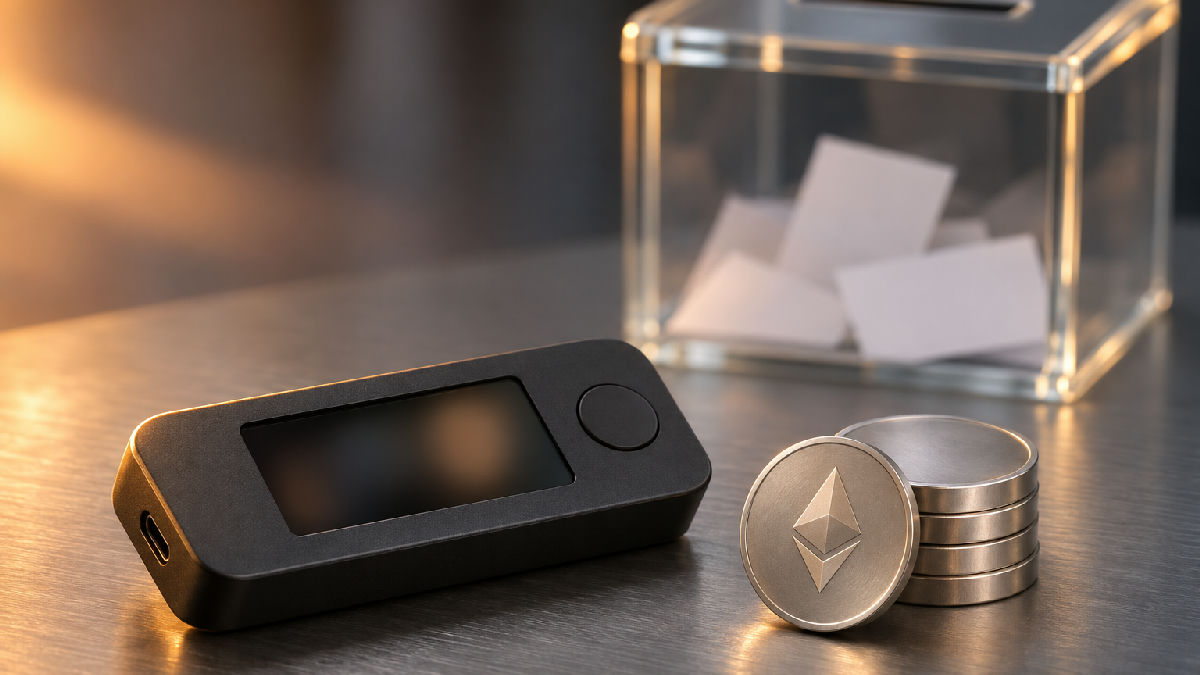
Picture this: it's 2:03 a.m. on a Saturday and the governance forum of a major DeFi protocol is on fire. Hundreds of users from around the world are fiercely debating a new proposal that could change the project's entire tokenomics model—and the tension rivals a hotly contested boardroom vote at a Fortune 500 giant. Only, there is no boardroom. No CEO wielding a golden gavel. Instead, thousands of governance token holders hold the power, weighing in from their laptops, their phones, or—true story I heard from a veteran at Compound—a hammock on the beaches of Bali. Welcome to the wild, sometimes messy, always fascinating world of DAO decision-making, where governance tokens put the levers of control directly into the hands of users. And in 2024, this isn't some fringe exper—it's a central pillar of how the most disruptive organizations in crypto are run.
Let me tell you why this matters. Everyday investors and protocol loyalists are moving from passive bystanders to active architects of billion-dollar ecosystems. On the surface, it's just another token you buy or earn. But peel back the layers and governance tokens are the engine behind a paradigm shift: community-driven organizations with global reach but no centralized boss. As of June 2024, CoinGecko reports DAOs manage over $45.7 billion in collective treasuries and facilitate daily governance volumes north of $2.3 billion. We're not talking about Jurassic altcoins here—these are the backbone of DeFi giants, NFT collectives, and some of the most ambitious experiments in digital democracy.
So how do governance tokens actually empower users in DAOs, and what happens when you give the keys of major financial protocols to your community? Spoiler: it's not all utopian voting and kumbaya. There are power struggles, governance attacks, protocol forks, and legendary late-night Discord sessions. But there's also unprecedented transparency, user-driven innovation, and a kind of ownership that's changing how we all think about organizations, from Silicon Valley to Seoul. In this comprehensive guide, I'm pulling back the curtain—with industry anecdotes, technical details, and war stories from DAO insiders—on how governance tokens put the people, not just the founders, in charge of the future of crypto.
DAOs and Governance Tokens: The Origin Story Everyone Should Know
If you want to understand why governance tokens have become the backbone of DAO power structures, you've got to start at the beginning—back when 'decentralized' was still whispered in the halls of Ethereum Foundation development meets, and most people thought DAOs were science fiction.
Back in 2016, just after the genesis block of Ethereum had sent shockwaves through the crypto world, a group of hackers and visionaries launched The DAO. Their mission? To build a decentralized venture fund, where anyone could buy DAO tokens and vote on what projects to back. Remember the hype? $150 million raised in weeks—a jaw-dropping figure for the era. But many also remember how it ended: a critical bug in The DAO’s smart contract led to a theft of $60 million, prompting the infamous Ethereum hard fork. I was on a call with a Solidity dev at the time—he just sighed and said, "We're rewriting the playbook, line by line."
But The DAO, flawed as it was, laid the foundation. It planted the idea that tokenized voting could put real power into community hands—no more corporate gatekeepers, just code and consensus. Over the next few years, we saw waves of projects exper with the model: MakerDAO launched its MKR governance token for managing DAI; Compound lit the DeFi fuse with COMP in 2020; and protocols like Uniswap, Aave, and Curve released governance tokens that turned users into stewards of their networks.
2020's "DeFi Summer" takes honorable mention here. It was a mad dash of yield farming, protocol launches, and sudden forks. If you held governance tokens then, you were more than a speculator—you were a potential kingmaker. Early COMP, UNI, and SNX holders made protocol-shaping votes, some of which continue to ripple through markets today. By 2021, DAOs were evolving fast, with new models for quadratic voting, delegated voting (shoutout to Snapshot), and off-chain signaling. Industry insiders tell me the real breakthrough was realizing DAOs needed not just governance tech, but also strong community cultures to thrive.
Fast forward to today. It’s not just about fancy voting mechanics. Governance tokens sit at the core of everything from game economies (Axie Infinity's AXS) to decentralized infrastructure (Aragon, Gnosis), legal entities, and even pop culture phenomena (hello, Friends With Benefits). And as major protocols hand off more power to their communities, these tokens are the backbone of a new, user-centric financial internet.
Technical Deep Dive: How Governance Tokens Actually Power DAO Decision-Making
On-Chain Governance: The Smart Contract Backbone
OK, let's get technical—because beneath the surface, the machinery of governance tokens is a tangled web of smart contracts, cryptographic voting, and consensus rules. The basic mechanism is simple enough: hold a governance token and you get to propose and/or vote on changes. Sounds democratic, right? But as any seasoned DAO participant knows, the devil is in the details.
Token Standards and Voting Rights
Most governance tokens are built on the ERC-20 (fungible) or ERC-721 (NFT-based) standards. Fungible tokens like UNI, COMP, and MKR grant voting rights proportional to your balance. Non-fungible tokens are used in smaller DAOs or for more nuanced voting (think NFT membership passes).
From there, voting can happen in a few ways:
- Direct on-chain voting: Votes are cast via transactions recorded directly on the blockchain. Secure, transparent, but often costly due to gas fees.
- Snapshot/off-chain voting: Users sign a message with their wallet (off-chain), and only the final outcomes are posted on-chain—courtesy of services like Snapshot. This is especially popular among DAOs seeking to avoid Ethereum’s high transaction costs.
- Delegated voting: Governance token holders can delegate their votes to a trusted representative (a.k.a. delegate), allowing for more active, expert-driven participation (see Compound Governance).
Industry insiders often joke, "Gas prices decide if democracy happens today." That’s partly why Layer 2 solutions (Optimism, Arbitrum) are now the venue of choice for high-frequency voting DAOs.
Proposal Lifecycle: From Draft to Execution
Here’s a typical proposal journey inside a modern DAO:
- Drafting: Community members or core contributors draft improvement proposals—sometimes as detailed as 30-page economic blueprints. Think of this as the DAO’s R&D stage.
- Discussion: Proposals are posted on governance forums (like MakerDAO Forum or Uniswap Governance) for open debate. This is where the memes, diagrams, and heated debates flourish.
- Signaling: Informal voting (via reactions, preliminary polls) gauges community support—sometimes before an official vote even happens.
- Formal Vote: Governance token holders cast votes, weighted by their holdings or delegated power. Some DAOs use quadratic voting to reduce whale dominance.
- Execution: If a proposal passes, the DAO’s smart contracts automatically execute changes—upgrades, new grants, parameter shifts, or treasury releases. No human middleman required.
Diagrams would show proposal flows as interconnected stages—draft, review, vote, execution—linked by on-chain transaction hashes. If you’re a visual thinker, picture a layered pipeline, with each proposal moving from left (idea) to right (action) under the watchful eye of governance contracts.
Quadratic Voting, Delegation, and Power Distribution
Not all votes are created equal—or at least, that’s the problem. Early DAOs succumbed to plutocracy: deep pockets meant outsized governance clout. Enter quadratic voting—where the cost of additional votes increases quadratically, so whales have to pay (literally or figuratively) to dominate. Gitcoin famously used quadratic funding to distribute grants, countering single-point whale influence.
Delegated voting has also become pivotal. For instance, Uniswap’s governance portal openly lists delegates, their voting records, and contact info. I once interviewed a top delegate who told me, “It’s like being a senator, but your constituency is entirely online and they can fire you any time.” It’s a new class of public servant, backed not by district lines, but by wallet addresses.
Smart Contract Security and Governance Attacks
With great power comes great responsibility—and risk. Remember the 2022 Beanstalk DAO hack? Attackers borrowed a flash loan, amassed enough governance tokens, and rammed through a proposal that drained $182 million in minutes. This was no fluke: governance attacks are an entire sub-industry, with white hats and black hats playing cat-and-mouse in Discord and private forums.
Modern DAOs implement time locks (making sure a passed proposal can’t be instantly executed), multi-sig controls (requiring several parties to agree), and monitoring services to prevent obvious abuses. Still, as the infamous words of a Curve developer go: "The safest code is no code at all. But where’s the fun in that?"
Layer 2, Cross-Chain Voting, and Scaling Solutions
Recent technical progress centers on reducing transaction costs and boosting participation. Arbitrum and Optimism host DAOs that enable fast, cheap voting. Cross-chain DAO frameworks—like Snapshot’s integration with Cosmos or Polkadot—let token holders vote with assets spread across multiple blockchains. It’s all designed to make governance participation as frictionless as logging into your favorite social app.
DAO Governance Token Ecosystem: Key Players, Protocols, and Power Brokers
Major Protocols and Companies Shaping DAO Governance
- Uniswap – UNI token, the gold standard for DeFi governance with $4B+ in treasury (June 2024).
- MakerDAO – MKR token, governing $5B in collateral and the DAI stablecoin.
- Aave – AAVE token, pioneers of on-chain lending protocol governance.
- Compound – COMP token, trailblazer in DeFi yield farming and delegation models.
- Curve – CRV token, best known for its complex veCRV voting escrow model—a story every DAO nerd should study.
- Balancer – BAL token, unique for multi-asset DAO treasuries.
- Gnosis – GNO token, with prediction markets and DAO tools.
- Aragon – ANT token, one of the OG DAO frameworks with modular governance contracts.
- Gitcoin – GTC token, leading on public goods funding via quadratic voting.
- Axie Infinity – AXS token, merging game governance with on-chain votes.
- Friends With Benefits – FWB token, the social DAO that brought governance to creative collectives.
Recent Partnerships, Investments, and Market Moves
DAO infrastructure is a hotbed for venture capital and protocol-level partnerships. In 2023, Paradigm led a $20M investment round into Aragon to enhance cross-chain governance modules. Framework Ventures and Polychain Capital backed DAO tooling startups like DAOhaus and Syndicate. Meanwhile, Coinbase and Binance listed governance tokens, signaling institutional recognition. Even traditional heavyweights like a16z Crypto built their own DAO research teams and delegated votes in protocols like Uniswap and Compound.
Competition is fierce, but so is collaboration. Inter-DAO alliances (like the Metagovernance Project) form to lobby for protocol integrations, shared security standards, and mutual liquidity provisions. The landscape is bustling—think of a web of interconnected communities, each competing and cooperating to steer the next phase of decentralized internet development.
Governance Token Market Data: June 2024 Trends
| Protocol | Token | Treasury Size | Active Voters (30d) | Tokens Staked / Locked |
|---|---|---|---|---|
| Uniswap | UNI | $4.2B | 11,500 | 53% |
| MakerDAO | MKR | $5B | 2,800 | 61% |
| Curve | CRV | $610M | 2,200 | 75% |
| Aave | AAVE | $1.3B | 4,000 | 46% |
| Gitcoin | GTC | $127M | 1,200 | 69% |
Real-World DAO Governance Token Applications: Use Cases, Wins, and Warnings
Current Use Cases and Notable Success Stories
Let’s put theory in context. DAOs are doing more than just voting on paper proposals—they’re running real organizations with massive financial and cultural footprints.
- Protocol Upgrades: Aave governance tokens empowered users to approve the migration from Aave V2 to Aave V3, unlocking better efficiency and cross-chain capabilities.
- Treasury Allocations: Gitcoin holders have steered millions in matching grants for open-source development and public goods using quadratic votes to counter whales.
- Economic Policy: MakerDAO token holders continually adjust DAI collateral types, stability fees, and risk parameters—effectively acting as a decentralized central bank.
- Product Roadmaps: Uniswap UNI holders voted to fund Uniswap v4 development and formalize grant programs for ecosystem builders.
- Social Projects: Friends With Benefits FWB members curate events, approve community investments, and shape the direction of the DAO’s social exper.
Lessons from DAO Governance Failures
- Beanstalk Hack (2022): A flash loan exploit enabled an attacker to seize voting power and drain $182M. Highlighted the need for time locks and layered checks. Warning: Governance tokens can be a double-edged sword—unchecked power concentration is a top attack vector.
- The DAO (2016): The smart contract bug that started it all. The Ethereum community was forced to fork, underscoring the outsized risk of untested code logic in governance modules.
- Low Participation Dilemmas: Many DAOs struggle to reach quorum, with as few as 1-3% of token holders participating in key votes. Insiders at Balancer and Compound have privately expressed concern over voter apathy, especially during "boring" proposals like minor parameter tweaks.
Adoption Metrics and Recent Market Trends
- CoinGecko reports DAO token market cap at $45.7B with $2.3B in daily governance token volume (June 2024).
- DeepDAO tracks 300,000+ active governance token holders across 150+ DAOs.
- Participation rates are rising: from 2% in 2022 to an average 8.1% in active DAOs Q2 2024, thanks to better UX, gasless voting, and delegate education programs.
Anecdotally, I've seen more corporate DAO experiments cropping up. Last December, a fintech startup told me they built a mini-DAO to approve company bonuses—"Turns out, engineers are way more engaged when they get to vote on their own pay," the CEO joked. The model is spreading, with DAOs starting to influence everything from nonprofit grants to real estate investing.
Tough Challenges and the Future of User Empowerment in DAO Governance
Practical and Philosophical Limitations
Despite the headlines, DAO governance is far from settled science. Some of the recurring challenges:
- Voter Fatigue & Apathy: Many users simply don’t participate, leading to power vacuums. Industry experts call it the "governance graveyard effect."
- Sybil Attacks & Plutocracy: Without careful design (like quadratic voting), whales can dominate, or attackers can create fake identities to sway votes.
- Technical Barriers: Signing votes, staking tokens, understanding proposals—all can be daunting for newcomers. UX is improving, but there’s a ways to go.
- Security Risks: As seen with Beanstalk, smart contract bugs and rushed proposals are constant threats. Larger DAOs now pay for third-party audits and bounty programs, but risk is ever-present.
- Regulatory Uncertainty: Global regulators are circling, with questions about whether governance tokens count as securities. The SEC’s ongoing investigation into major DAOs has many protocols lawyering up.
DAO experts predict more modular, composable governance stacks—letting DAOs plug in custom voting, delegation, and execution modules (think: the WordPress of on-chain governance). As AI and reputation-based voting mature, expect more nuanced, incentive-aligned systems, where governance tokens are part—but not all—of the power equation.
Expert Predictions and Roadmaps
- AI Moderation: DAOs like Gnosis and Aragon are piloting AI-driven proposal analysis, aiming to flag bugs, conflicts, or spam in real time.
- Legal Wrappers: Projects such as Orca Protocol and OpenCorpora offer DAOs legal entities, providing a bridge to the traditional world.
- Mass Adoption: As Layer 2 and cross-chain tools mature, mainstream organizations (sports clubs, NGOs, even municipalities) are experimenting with DAO governance tokens for local decision-making.
The next two years will likely see more prominent DAO attacks—but also higher defenses, smarter voters, and perhaps even regulatory clarity. The dream? Millions empowered to steer protocols, social clubs, and maybe even governments, from wherever there's WiFi.
Getting Started: Your Step-By-Step DAO Governance Token Playbook
How to Join a DAO and Start Participating in Governance
- Pick Your Protocol: Research leading DAOs using analytics portals like DeepDAO or DAOStats.
- Buy or Earn Governance Tokens: Acquire tokens on major exchanges (Coinbase, Binance), or earn through yield farming, grants, or contributions.
- Connect Your Wallet: Use a secure wallet (like MetaMask, Coinbase Wallet, or Rabby). Never use exchange hot wallets for governance votes!
- Join Governance Forums: Register on the DAO’s official forum, Discord, or Telegram channels. Smart DAOs foster strong onboarding with newcomer guides and support channels.
- Start Participating: Read proposals, comment, and vote. If you’re not confident, consider delegating your votes to an active and reputable community member. Follow their track record on the governance portal.
Essential Tools and Best Practices
- Bookmark Official DAO Portals: Always use verified links from protocol docs or trusted analytics platforms.
- Enable Hardware Wallets: For high-value voting, sign your votes with a hardware wallet like Ledger or Trezor.
- Stay Informed: Follow DAO updates on Twitter, Discord, and governance forums. Subscribing to proposal digests (think DAO Times) prevents surprises.
- Watch Out for Scams: Never give your seed phrase to anyone; official DAOs will never ask. If a proposal seems "too good to be true," it probably is.
DAO governance is evolving at a breakneck pace. But one thing’s clear: with a governance token and a voice, users are no longer just spectators. They're the shareholders, the directors, and, sometimes, the revolutionaries, steering crypto's most important protocols toward the unknown horizons of tomorrow.