In the simplest terms, minting is the process of putting a digital asset onto a blockchain, which officially records its existence and makes it unique. It’s the magic trick that turns a regular digital file—like a cool drawing, a catchy song, or even a funny tweet—into something you can actually own, track, and trade.
A Simple Guide to Understanding Minting
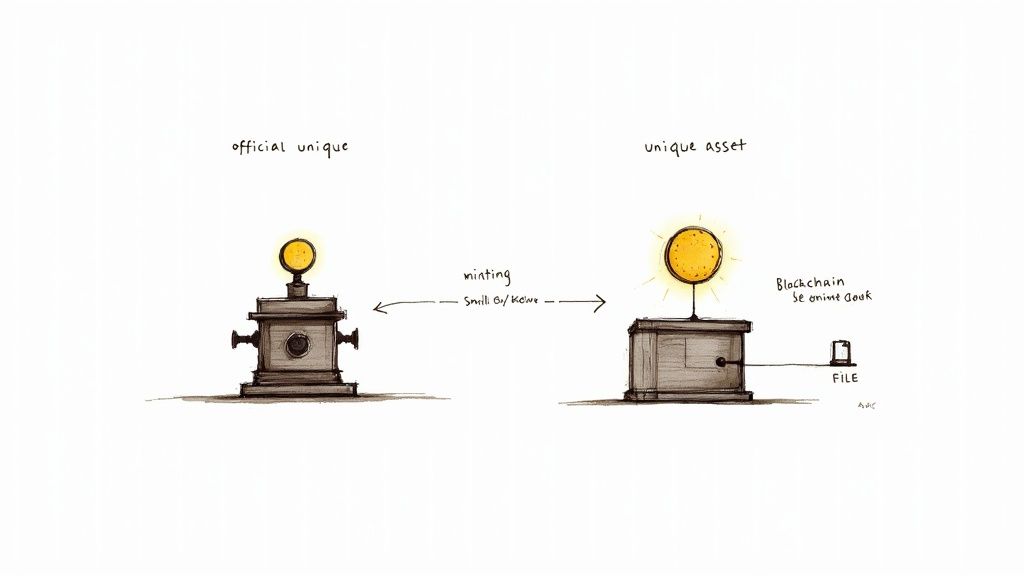
To really wrap your head around it, think about how real money is made. For centuries, special buildings called mints have been stamping metal to create coins. For example, The Royal Mint in the UK has been doing this for over 1,100 years, evolving from simple workshops into the high-tech place that produces Britain's cash today. That official process is what gives a physical coin its value.
Digital minting applies that same idea to the online world. Instead of stamping a bit of metal, you're "stamping" a digital file with a special, unchangeable identity on a public record book—the blockchain. This action creates what we call a non-fungible token, or NFT.
Why Is Minting Important?
So, why bother with all this? Minting is what gives a digital creation real scarcity and proves it's the real deal. Before the blockchain, anyone could right-click and save an image, making it nearly impossible to know which was the original.
Minting fixes this problem by creating a permanent, official record that no one can change. It's like an artist signing a limited-edition poster; that signature proves it’s authentic. In the same way, minting a digital file establishes a verifiable history and confirms who made it. You can learn more about the details in our step-by-step introduction for newcomers to NFTs.
To get the hang of it, let's look at some key terms.
Core Minting Concepts at a Glance
| Term | Simple Explanation |
|---|---|
| Blockchain | A secure, public digital notebook that records every transaction. It’s shared and can’t be erased. |
| Smart Contract | A bit of code on the blockchain that automatically does things when certain conditions are met. It’s the engine that powers minting. |
| Gas Fees | The cost of using a blockchain network's computer power to mint your asset. Think of it like paying for postage. |
| NFT (Non-Fungible Token) | A unique digital certificate of ownership for an item, recorded on the blockchain. "Non-fungible" just means it's one-of-a-kind. |
These ideas are the basic ingredients of the whole minting recipe.
Minting is the bridge between a simple digital file and a valuable, ownable asset. It's the moment a creation becomes a unique piece of digital property recorded on the blockchain forever.
This is a complete game-changer for creators. It lets artists, musicians, and innovators sell their digital work directly to fans, cutting out the traditional middlemen like record labels or art galleries. It gives them true control over what they make and opens up fresh ways to earn money from their talent.
A Look at the Different Flavours of Minting
When we talk about "minting" in the digital world, it's not a one-size-fits-all thing. The word can mean slightly different things depending on what's being created. Imagine a national mint: they make everyday coins, but they also create special, one-off medals for big events. Digital minting has its own versions, and understanding them helps you see the full picture.
The two main types you'll come across are token minting and NFT minting. They sound similar, but what they produce is totally different—as different as a pile of identical £1 coins versus a one-of-a-kind painting signed by the artist.
Token Minting: Creating Interchangeable Currency
Token minting is about making huge amounts of identical, interchangeable units of a cryptocurrency. This is how assets like meme coins, such as Dogecoin or Shiba Inu, are born. When these coins are created, the process mints millions or billions of identical tokens. Every single token is the same as the next, just like one penny is worth the same as any other penny in your wallet.
You can see a real-world example in how money is made. Back in the late 1960s, when the UK switched to decimal currency, the Royal Mint had a giant job on its hands: making hundreds of millions of new, identical coins to keep the economy going. This huge effort made sure there were enough 1p, 2p, and 5p coins for everyone. You can read about this massive project on the Royal Mint Museum website. Token minting works on the exact same idea—creating a massive supply of fungible, or interchangeable, assets.
NFT Minting: Crafting Unique Digital Collectibles
On the other side of the coin, NFT minting is the art of creating a single, unique, and non-interchangeable digital item. Here, the idea of an artist signing a painting is perfect. When a digital artist like Beeple mints a new piece, they’re creating the one and only official version, permanently logged on the blockchain.
This is the process that turns a simple digital file—a picture, a song, a video clip—into a verifiable, one-of-a-kind collectible. You see it happening everywhere:
- Digital Fashion: Big brands like Adidas have minted NFTs for virtual trainers that people can wear and show off in online worlds, or metaverses.
- Music: A band like Kings of Leon could mint their new album as an NFT, giving a fan exclusive ownership of a limited-edition release.
- Event Tickets: A special ticket for a festival could be an NFT, making it impossible to forge and easy to check.
Every single one of these NFTs gets its own unique ID on the blockchain, proving it's the genuine article and setting it apart from any copies.
The core difference is simple. Token minting makes lots of identical things (fungible), while NFT minting makes one unique thing (non-fungible).
Lazy Minting: An Easier Path for Creators
Recently, a creator-friendly method called lazy minting has become really popular. In the past, a creator had to pay a network fee—often called a gas fee—the moment they wanted to mint their NFT. Lazy minting flips this process on its head.
With lazy minting, the NFT isn't actually written to the blockchain until the moment it's sold. This is a huge deal. It means creators can list their work on a marketplace without paying anything upfront. The cost of minting is simply included in the final sale price and paid by the buyer. This lowers the barrier to entry, letting artists and creators try out NFTs without taking a financial risk.
How the Minting Process Actually Works
To really get what minting is, we need to lift the bonnet and look at the engine running the whole show. The star of this operation is something called a smart contract. Don't be put off by the word 'contract'; it's less like a legal document and more like a clever vending machine. You give it instructions, and it follows them perfectly.
This smart contract doesn't just hang out in cyberspace; it lives on a blockchain like Ethereum. Think of the blockchain as a global, un-hackable public record book. When you start the minting process, you're sending a request to that vending machine. You put in your digital file (like your artwork) and pay the fee, and the smart contract automatically pops out a brand-new, unique token right into your digital wallet.
The Role of Smart Contracts and Blockchains
If the smart contract is the brain, the blockchain is the spine. It’s a permanent record shared across the world, which means once your new NFT or token is minted and recorded on it, that record is there for good. It can't be changed, copied, or deleted.
This is what gives your digital item its authenticity and creates a clear history of ownership that anyone can check. It’s this powerful team-up of a smart contract and a blockchain that turns a simple digital file into a secure, verifiable asset.
Want to know more about the specific data that gets locked in? Our guide on understanding NFT metadata and storage breaks down exactly what information is recorded.
A smart contract is just an automated, self-running agreement. It works on simple "if this, then that" logic without needing anyone to supervise it. For minting, the logic is clear: "If the creator provides the file and pays the fee, then create a unique token and send it to their wallet."
Paying for the Process: Gas Fees Explained
Every single action on a blockchain, from minting an NFT to sending crypto to a friend, needs computer power. A whole network of computers has to work to check and record your transaction, and that work isn't free. The fee you pay for this service is called a gas fee.
A good way to think about it is paying for postage. You pay a small fee to make sure your parcel gets processed and delivered. On the blockchain, the gas fee makes sure your transaction is picked up by the network and successfully recorded. These fees aren't fixed; they go up and down based on how busy the network is. If thousands of people are all trying to mint at the same time, the cost of 'postage' goes up.
This infographic gives you a quick visual comparison of the different kinds of minting, from creating entire currencies to one-of-a-kind digital collectibles.
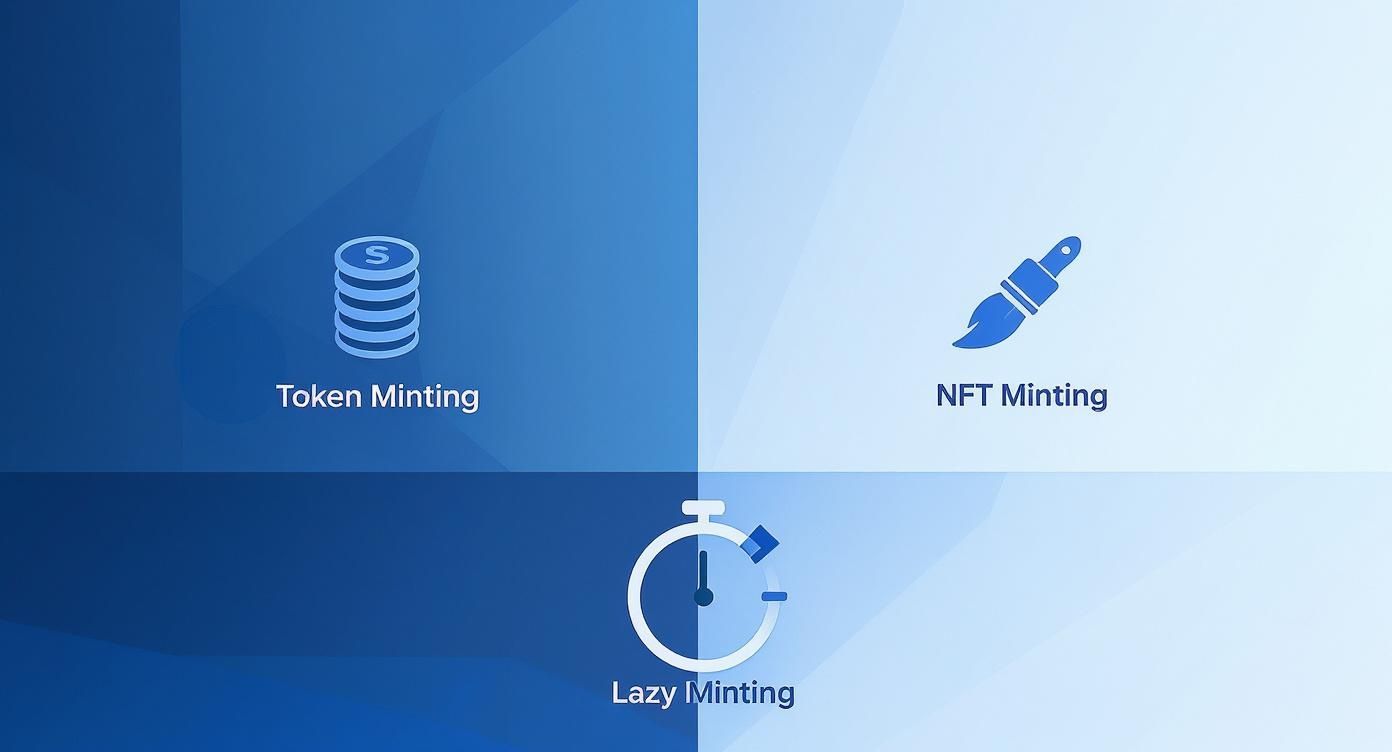
As you can see, standard token and NFT minting are for very different things, while 'lazy' minting gives a much easier starting point for creators who want to avoid paying fees upfront.
How Different Blockchains Affect Minting
The blockchain you choose to mint on really matters. It has a huge impact on everything from the cost to the environmental footprint of your creation. The key difference is how they keep their network secure.
- Proof-of-Work (PoW): This is the original system used by blockchains like Bitcoin. It relies on a network of powerful computers (called miners) solving incredibly tricky maths problems to approve transactions. It's super secure, but it also uses a massive amount of energy.
- Proof-of-Stake (PoS): Newer systems, including Ethereum since its big "Merge" upgrade, use a much greener method. Here, users lock up or "stake" their own crypto to help approve transactions. This approach massively cuts down on energy use and often means lower, more stable gas fees.
For most creators today, picking a blockchain that runs on a Proof-of-Stake system is a much more eco-friendly and affordable way to mint new digital assets.
Your Step-by-Step Guide to Minting an NFT
Okay, let's get our hands dirty. Turning theory into practice is where the real fun starts, and minting your first NFT is probably less scary than you think. This guide will walk you through the main steps, so you can turn your digital file into a genuine, one-of-a-kind blockchain asset.
First things first, what are you minting? It could be anything from a piece of digital art you’ve poured your heart into, a breathtaking photo, a song you produced, or even a digital ticket for an exclusive event. The most important rule is that you must own the rights to whatever you're about to mint.
Preparing for Your First Mint
With your file ready to go, you'll need a few tools to get started. Think of this as getting your workshop ready before you start creating.
Get a Crypto Wallet: This is your digital passport and bank account for all things crypto, and it's where you'll keep your future NFTs. For beginners, a browser-based wallet like MetaMask is a brilliant place to start. It’s simple to set up and gives you a safe home for your digital goodies.
Buy a Little Crypto: You'll need some fuel to power the minting process – those 'gas fees' we talked about earlier. The type of crypto you need depends on the blockchain you choose. If you're using Ethereum (the most popular choice), you’ll need some Ether (ETH). You can easily buy some on a crypto exchange and send it over to your new wallet.
Choose Your NFT Marketplace: This is the online gallery or shop where you’ll actually do the minting and, if you like, list your NFT for sale. Marketplaces like OpenSea or Rarible are designed for creators and don't need you to write any code. They handle all the complicated stuff for you. For more tips, check out our guide on designing and minting your debut NFT.
The Final Steps to Minting
Once your wallet is set up with some crypto and you've picked a marketplace, you're nearly there. Now you just need to upload your work and fill in the details.
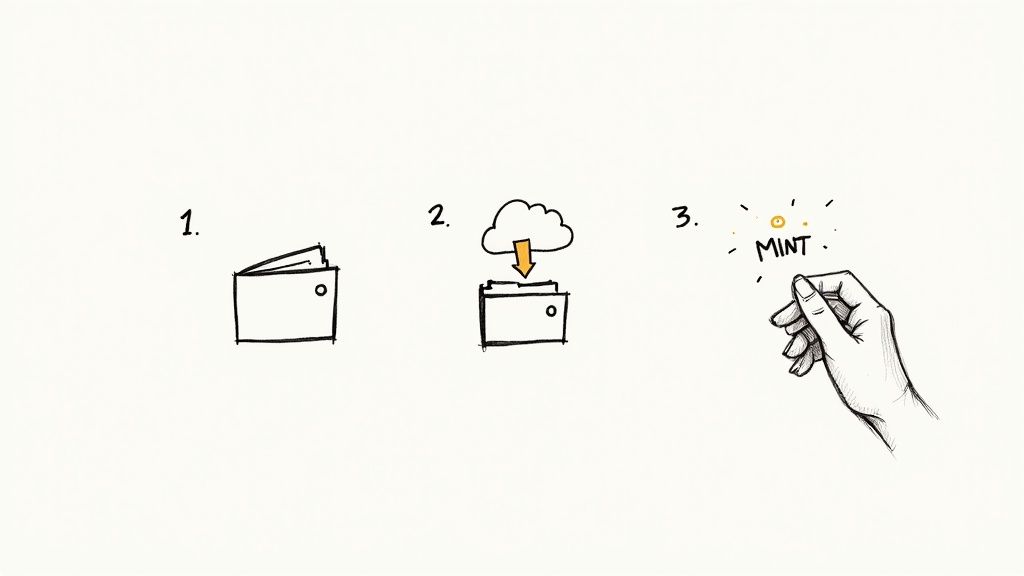
Most platforms have a simple 'Create' button. You’ll upload your file, give it a name, write a cool description, and maybe add some special traits or properties that make it stand out. For example, if you're minting art of a character, you could add properties for their hat, glasses, and background colour.
Once you’re happy with how it all looks, you'll hit a 'Create' or 'Mint' button. This is the big moment. Your crypto wallet will pop up, asking you to confirm the transaction and the gas fee that goes with it.
Once you approve that transaction, the smart contract gets to work. It officially writes your new NFT into the blockchain’s public record book and drops it straight into your wallet. And just like that, you've done it. You’ve minted your very first NFT.
Navigating the Costs and Risks of Minting
Minting your first digital asset is exciting, but it’s smart to go in with your eyes open. There are costs and possible traps along the way, and understanding the money and security side of things will save you a lot of trouble later. Let’s be honest, the journey isn’t always perfect, and being prepared is your best protection.
The biggest and most unpredictable cost you’ll face is gas fees. Think of gas as the toll you pay to use the blockchain’s computer power to process your transaction. These fees can swing wildly depending on how busy the network is. During peak times on a popular network like Ethereum, it's not unheard of for gas fees to cost more than the digital item you're trying to mint.
Understanding the Financial Hurdles
High gas fees are a major hurdle, but they're not the only money-related risk. One of the most annoying things that can happen, especially when you're new, is a failed transaction. This can happen for a few reasons, like not setting your gas limit high enough for the network to process it, or a simple timeout error.
Here's the painful part: even if your mint fails, you've still used the network's processing power. That means you can still lose your gas fee without getting an NFT in return. It’s like paying for postage on a parcel that never arrives.
It's a really good idea to check network traffic before you hit 'mint'. Using a tool like a gas tracker gives you a real-time estimate of current fees, helping you pick a cheaper time to create your asset.
Staying Safe From Common Scams
Unfortunately, wherever there's money to be made, scammers are never far behind. The crypto world is no different, and creators and collectors are top targets. Knowing what to look for is the first step in protecting your digital wallet and your creations.
Here are a few of the most common scams to watch out for:
- Phishing Attacks: Scammers are experts at disguise, creating fake websites that look identical to popular NFT marketplaces or wallet services. They’ll often tempt you with a great offer, tricking you into connecting your wallet and signing a transaction that empties your funds.
- Malicious Airdrops: You might suddenly find a “free” NFT in your wallet that you didn't ask for. Clicking on this seemingly harmless gift can sometimes trigger a malicious smart contract, giving scammers a backdoor to your other assets. A good rule of thumb: if it looks too good to be true, it almost certainly is.
- "Too Good to Be True" Offers: Be very wary of direct messages on platforms like Discord or X that promise free mints or guaranteed profits. These almost always lead to clicking a strange link or sharing private info, and they're designed to steal your assets.
To help you get a clearer picture, here’s a quick breakdown of the common costs and risks, plus some practical advice on how to handle them safely.
Minting Costs and Risks Breakdown
| Aspect | What to Expect | How to Stay Safe |
|---|---|---|
| Gas Fees | These are transaction costs that change based on network demand. They can be just a few pence or hundreds of pounds, especially on Ethereum. | Use a gas tracker to mint when the network is quiet. Consider using Layer 2 networks like Polygon or Arbitrum, which have much lower fees. |
| Failed Transactions | You might pay a gas fee even if the minting process fails because of network errors or not setting enough gas. | Always double-check your transaction details before you confirm. Some wallets let you simulate a transaction first to spot potential errors. |
| Phishing Scams | Scammers create convincing fake websites or send emails to trick you into connecting your wallet and approving bad transactions. | Always bookmark official websites and never click on suspicious links from emails or DMs. Carefully check website addresses before connecting your wallet. |
| Malicious Contracts | Interacting with a seemingly innocent airdropped NFT or a fake minting site can trigger a smart contract that steals everything in your wallet. | Do not interact with random NFTs that appear in your wallet. Use a 'burner' wallet with only a small amount of funds for new or untrusted mints to limit your risk. |
| Wallet Security | Your digital wallet holds the keys to your assets. If your private key or recovery phrase is stolen, you can lose everything. | Never, ever share your secret recovery phrase. Write it down and store it offline somewhere safe. For valuable assets, buy a hardware wallet like a Ledger or Trezor. |
At the end of the day, staying safe comes down to a few golden rules. Never, ever share your wallet's secret recovery phrase with anyone or any website. Always double-check URLs before connecting your wallet, and be suspicious of unsolicited offers. By staying careful and a little bit paranoid, you can navigate the minting world with confidence.
The Future of Minting: More Than Just Digital Art
While digital art and collectibles like CryptoPunks have grabbed most of the headlines, the real story of minting is just getting started. We're moving beyond cool digital pictures and into a world where this technology could completely change how we prove ownership of almost anything. The tech is growing up, fixing its early problems and setting the stage for some truly amazing uses.
A huge part of this evolution has been tackling the environmental issue head-on. Early on, minting on blockchains like Ethereum used a ton of energy. But the game has changed. The switch from Proof-of-Work to Proof-of-Stake systems—most famously with Ethereum's "Merge"—cut energy use by a massive 99%. This has made minting a much more sustainable and responsible process.
A New Deal for Creators
This greener way of doing things is a big deal, as it opens the door for creators to build direct connections with their fans like never before. Minting gives musicians, writers, and artists a way to bypass the usual gatekeepers—the record labels, publishers, and galleries. They can sell their work straight to their community, keeping a much bigger slice of the profit.
Even better, they can build in future earnings automatically. By programming royalties into the smart contract, an artist can automatically get paid a percentage every single time their work is resold on the secondary market. It's a fair, creator-first system that puts control back where it belongs.
Minting isn't just about making a digital file; it's a powerful tool for rebuilding the very idea of ownership. It lets anyone create a unique, verifiable digital asset that can represent anything of value, from a concert ticket to the deed for a house.
Looking ahead, the possibilities are truly massive. We're on the verge of a future where everyday items are minted on the blockchain, giving us absolute proof of who owns what.
Here are just a few areas where this could make a huge difference:
- Real Estate: Imagine property deeds being minted as NFTs. This could make buying and selling a house much faster, cheaper, and more transparent.
- Education: Universities could issue degrees as digital certificates that can't be faked, letting employers check qualifications instantly.
- Ticketing: By minting tickets for concerts and sports events, we could finally stop fraud and ticket touts.
- Medical Records: Your personal health records could be secured on the blockchain, giving you total control over who can see your sensitive information.
This idea of creating unique, verifiable items isn't new. Think of The Royal Mint in the UK and its production of gold Sovereign coins. Since 1817, the number of coins minted each year has changed based on what the economy needed—from over 3.2 million at the start to just a few thousand in quiet years, then back up to millions after the wars. You can explore these historic minting numbers over at BullionByPost. We're now taking that same old-school principle of creating provably scarce assets and applying it to our digital—and increasingly, our physical—lives.
Got Questions About Minting? Let's Clear Things Up
As we wrap up, it's normal to still have a few questions buzzing around. Let's go through some of the most common ones people ask when they're just starting out with minting. Think of this as a quick-fire round to make sure everything we've talked about really makes sense.
Can I Mint Something for Free?
Yes, you definitely can. The most popular way to do this is through something called lazy minting. This clever method waits to actually record the NFT on the blockchain until someone buys it. The buyer then pays the minting fee as part of the purchase, so there are no upfront costs for you as the creator.
It's also worth remembering that some blockchains are just naturally cheaper to use. Networks like Polygon or Solana have transaction costs that are a tiny fraction of Ethereum's, often costing just a few pence. This makes getting started much less of a financial hurdle.
The rise of lazy minting and low-fee blockchains has been a game-changer. It has effectively removed the financial barrier for many artists and creators, allowing anyone to mint their digital work without needing to first invest in cryptocurrency.
Do I Need to Be a Coder to Mint an NFT?
Not at all. While the technology behind it involves smart contracts and complex code, the platforms built on top of it are designed for everybody. Modern NFT marketplaces like OpenSea, Rarible, and Foundation have made the process incredibly easy.
Honestly, if you can upload a photo to Instagram, you have all the technical skills you need to mint an NFT on one of these websites. They handle all the complicated stuff in the background, leaving you to focus on your creative work.
What Happens to My NFT After I Mint It?
Once your NFT is minted, it officially exists on the blockchain and lives inside your crypto wallet. Your wallet is basically your personal, secure gallery where you have full ownership and control over your digital assets.
From there, you're in charge. You can:
- Hold it: Keep it as part of your personal collection.
- List it for sale: Put it on a marketplace for a fixed price or let people bid on it in an auction.
- Transfer it: Send it directly to someone else's wallet, maybe as a gift or as part of a private sale.
Is Minting the Same as Buying an NFT?
Nope, they're two sides of the same coin. Minting is the act of creation—it’s the moment a brand-new digital item is born on the blockchain. Buying is the act of acquisition—it's when you purchase an NFT that someone else has already minted.
A simple way to think about it: an artist mints a new sculpture, and a collector later buys it.
Ready to put this knowledge into action? The Coin Course has a full library of expert guides that will walk you through everything from setting up your first wallet to mastering advanced security. Start your learning journey with confidence at https://thecoincourse.com.