In August 2021, Logan Paul bought a rare NFT for 188 Ether, worth about $623,000, and by 2025 he said it was basically worthless. That one purchase captures the whole Logan Paul NFT story better than any headline does.
The Rise and Fall of a Multimillion-Dollar JPEG
Celebrity stories often make NFTs sound like glamour mixed with tech. The Logan Paul NFT saga shows something less glamorous but far more useful for ordinary investors. It shows how a digital asset can attract huge attention, command a life-changing price, and then collapse when hype fades.
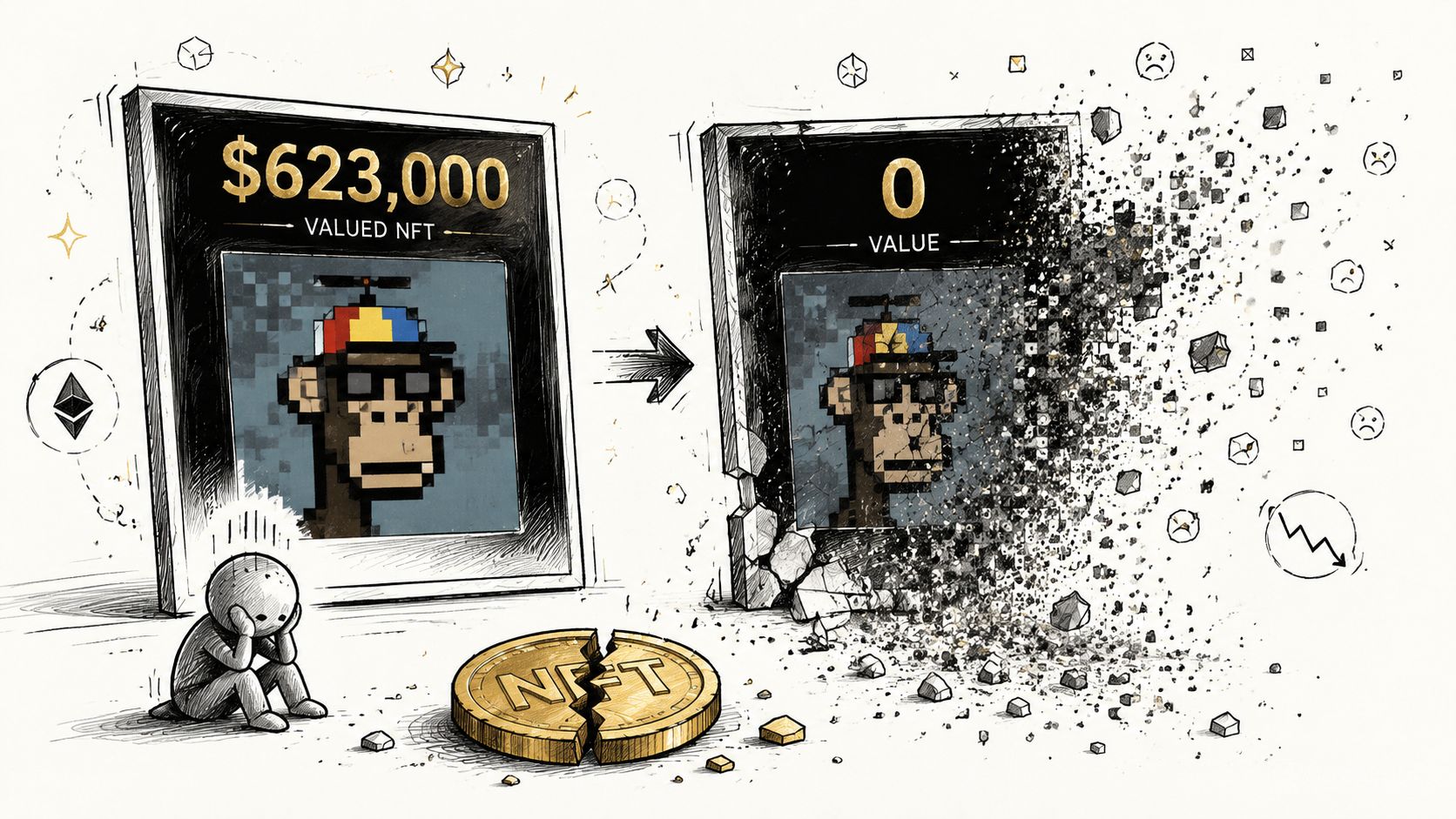
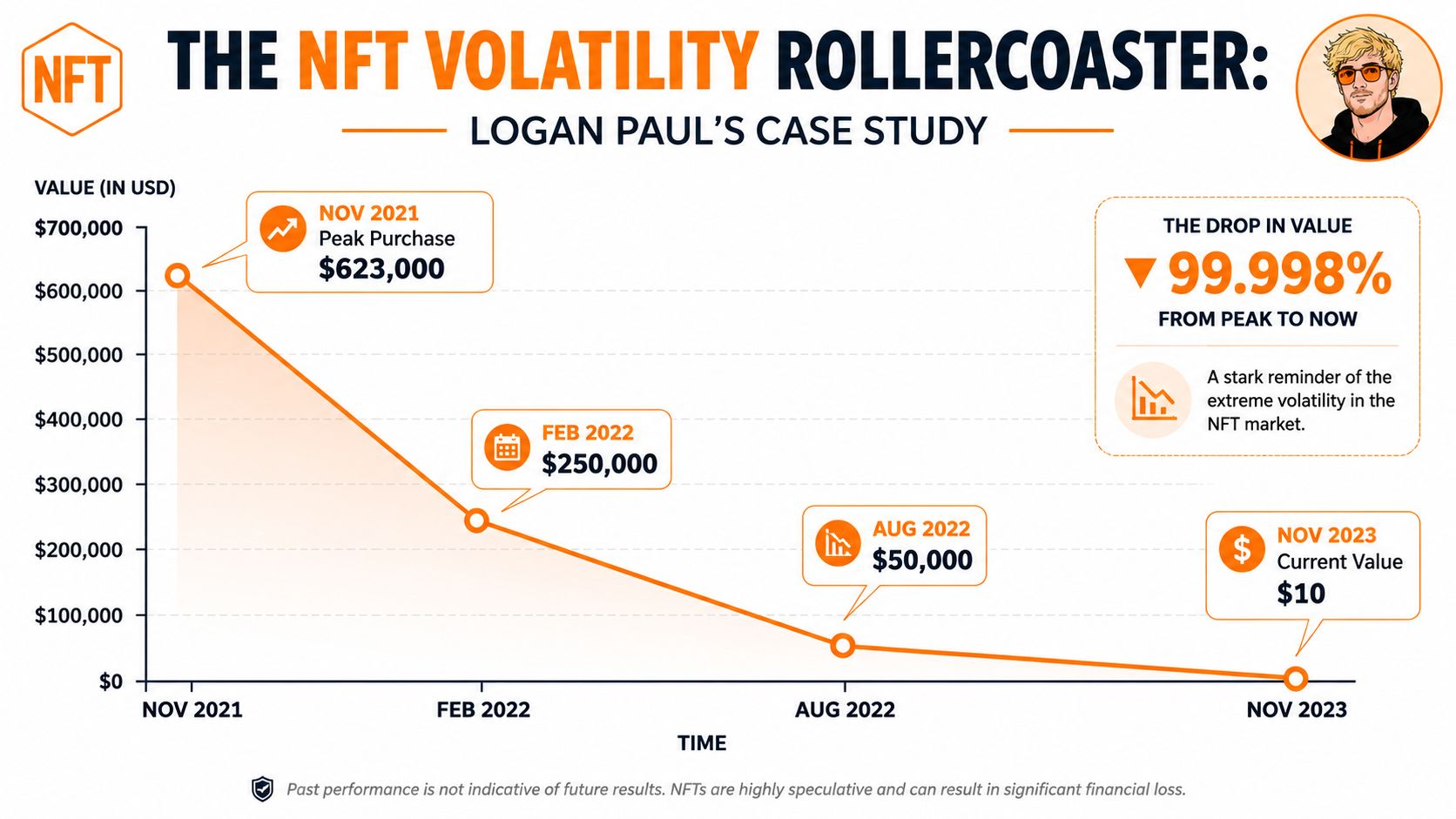
In Logan Paul's case, the starting point was a purchase that looked bold during the peak of NFT excitement. In August 2021, Logan Paul purchased a rare 0N1 Force NFT for 188 Ether, worth approximately $623,000, and by 2025 the asset's value had fallen by over 99%, with Paul admitting it had become worthless, according to CCN's report on the 0N1 Force purchase and collapse.
Why this example matters
An NFT is a token on a blockchain that points to a specific digital item or membership-like right. Many newcomers get stuck on the image itself. They ask, “Why would anyone pay that much for a JPEG?” The better question is, “What did buyers think they were getting besides the image?”
Sometimes the answer is status. Sometimes it's access to a community. Sometimes it's the hope that someone else will pay more later. That last reason is where trouble often starts.
Practical rule: If you can't explain the value of an NFT without talking about its future resale price, you're probably looking at speculation more than utility.
Why Logan Paul became a useful case study
Logan Paul wasn't just another buyer scrolling through OpenSea. He was already a major online personality with an audience large enough to shape attention. In crypto, attention can act like petrol near a bonfire. It doesn't create quality on its own, but it can make prices jump very quickly.
That's why the phrase Logan Paul NFT became bigger than one purchase. It came to represent three overlapping stories at once:
- A celebrity buyer story tied to expensive personal purchases
- A promoter story where fame could influence public interest
- A creator story where he launched NFT-linked products of his own
Each of those roles carries a different risk. Buying a volatile asset is one thing. Selling or promoting one to fans is something else entirely.
An Inventory of Logan Pauls NFT Projects
Logan Paul's involvement in NFTs wasn't one single move. It spread across personal collecting, branded digital products, and a game project. Looking at them side by side helps clear up a common confusion. People often lump every “Logan Paul NFT” headline together, even though the projects were very different.
Logan Paul's Key NFT Ventures
| Project Name | Role | Description | Outcome |
|---|---|---|---|
| 0N1 Force | Investor | Paul bought a rare NFT from the 0N1 Force collection during the 2021 boom. | The purchase became a symbol of severe value collapse in the NFT market. |
| Azuki | Investor | Paul was also reported as owning a specific Azuki NFT. | The reported value later fell sharply, reinforcing the volatility lesson around celebrity NFT buying. |
| Prime digital trading card NFTs | Creator | A limited digital trading card release tied to the Prime brand. | The sale raised substantial revenue in a short period and showed that celebrity-backed digital collectibles could still attract buyers. |
| CryptoZoo | Co-founder and promoter | An NFT-based game built around eggs, animals, tokens, and breeding mechanics. | It became the most controversial part of his NFT history due to project failure, backlash, and legal disputes. |
Two very different kinds of exposure
The first category was personal investment. That includes collection purchases such as 0N1 Force and Azuki. In those cases, Paul was exposed to the same market swings that hit many collectors. If the market dropped, the value of the asset dropped with it.
The second category was project creation. That's where the risk profile changes. When a celebrity launches a product, buyers aren't only judging the artwork or token mechanics. They're also placing trust in execution, promises, and long-term delivery.
One example stands out. Paul raised over $5,081,490 by selling 2,500 of 3,000 limited Prime digital trading card NFTs within a 36-hour sales window, with each card priced at over $2,000, according to the YouTube source covering the Prime NFT sale.
Why this inventory matters
A lot of public debate misses this distinction. If a celebrity buys an NFT that later crashes, that tells you something about market volatility. If a celebrity launches an NFT project that buyers say didn't deliver, that raises a different set of questions about trust and accountability.
A failed investment and a failed product aren't the same thing, even if the same famous person is involved in both.
That's why an organised list matters. It stops the conversation from becoming fuzzy. It also helps retail investors ask the right question at the right time:
- Was this a speculative purchase?
- Was this a collectible sale?
- Was this a product with promises attached?
Those are three separate categories, and each one deserves a different level of scrutiny.
The CryptoZoo Controversy Explained
CryptoZoo is the part of the Logan Paul NFT story that moved from hype into a full public controversy. It wasn't marketed as a simple profile-picture collection. It was presented as a game concept, which made buyers think in terms of future play, future rewards, and future utility.
Near the beginning, the pitch sounded straightforward enough. Users would buy NFT eggs using a project token called Zoo. Those eggs were meant to hatch into animals, and those animals could then be bred into hybrids that would gain value. If you've ever seen a mobile game economy mixed with crypto language, that's the basic idea.
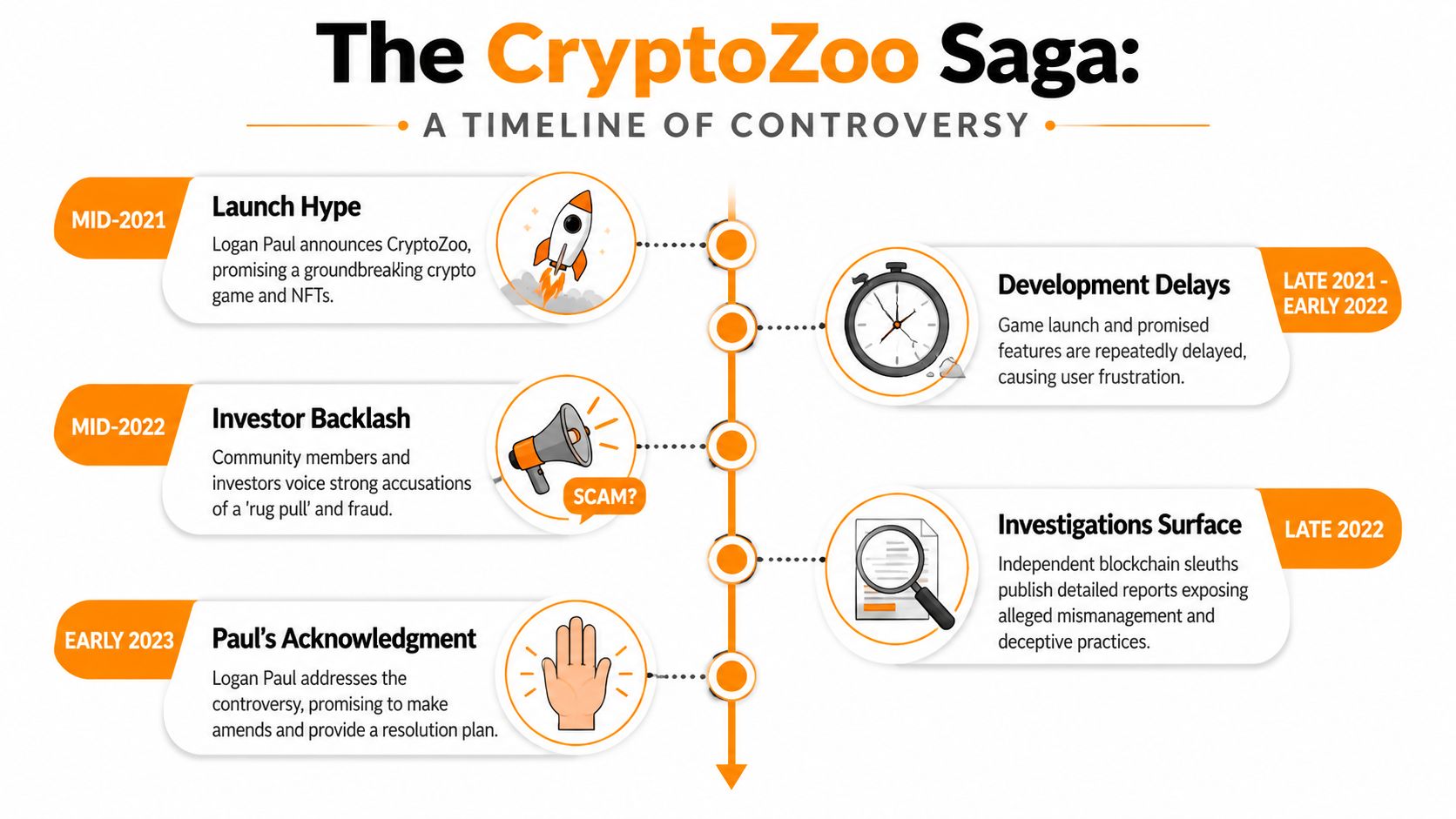
A timeline helps more than a long argument.
How the project launched
CryptoZoo launched on 3 September 2021 and sold out 10,000 Base Eggs in minutes, according to Time's coverage of the CryptoZoo launch and aftermath. That quick sell-out matters because it shows strong demand at the point of launch. Buyers weren't treating it like a niche experiment. They were buying into a vision.
For many retail investors, a fast sell-out feels like proof. It can look like market validation. But speed only proves demand in that moment. It doesn't prove the product works.
Where buyers became confused
A point of confusion for many arises with NFT projects tied to games. They hear “launch” and assume the game itself is ready. Often, what has launched is the sale, not the fully working product.
That distinction matters. Buying into a game NFT can be closer to backing an unfinished start-up than buying a finished game from a console store. You're often relying on future development, future delivery, and team competence.
Buying a game-related NFT before the game works is a bit like paying for a theme park because you liked the brochure while the rides are still being built.
Later scrutiny focused on whether CryptoZoo had delivered the functions buyers thought they were paying for. Criticism grew. The project became the subject of public investigation, and that drove the controversy far beyond the crypto niche.
For readers who want to see the surrounding public discussion in video form, this embed gives useful context:
The fallout and the buyback
The backlash didn't stay at the level of online disappointment. It moved into legal and financial consequences. According to the verified record, following accusations that the project was a scam, Paul later initiated a $2.3 million buyback programme in 2024, offering 0.1 ETH per eligible NFT for participants who agreed not to sue, as covered by NBC News on the CryptoZoo buyback terms.
That condition is important. A refund can sound simple in a headline, but the actual terms matter. If compensation requires waiving legal claims, investors have to decide whether immediate recovery is worth giving up other options.
Why CryptoZoo became a textbook example
CryptoZoo turned into a case study because it concentrated several common NFT risks into one project:
- A famous promoter created instant trust for some buyers
- A game narrative made the product feel bigger than a normal collectible
- Early sales success created momentum
- Delivery concerns undermined confidence later
- The remedy process introduced legal trade-offs for affected holders
Some NFT projects fail because the market loses interest. Others fail because the idea never becomes a working product in the way buyers expected. CryptoZoo is remembered mainly for the second problem.
Lessons in Volatility from the NFT Market
The easiest way to understand NFT volatility is to compare it with a concert ticket, a luxury watch, and a lottery ticket all mixed together. It can carry status, scarcity, and resale hope at the same time. That mixture can produce sharp price swings because people are valuing different things at once.
In the Logan Paul NFT story, the famous 0N1 Force purchase works as a clean example. A buyer paid a huge price during a hot market. Later, the market cooled, attention shifted, and the asset no longer held that earlier price in the eyes of buyers. The token still existed on-chain, but the market value changed dramatically.
Why prices can move so violently
NFT prices often depend on a thin market. That means there may not be many active buyers at the exact moment someone wants to sell. In a thin market, one enthusiastic buyer can push prices up fast, and one absence of buyers can make prices fall just as fast.
Another factor is cost friction. Trading NFTs usually involves blockchain transaction costs. If you're still learning that part, this guide on what gas fees are and how they work for NFTs helps explain one practical layer that affects buying and selling behaviour.
Hype value versus durable value
A strong NFT price can come from at least three things:
- Status value. People want to own something recognisable.
- Community value. Owners want access, identity, or belonging.
- Functional value. The token enables something useful.
The problem is that these don't carry equal weight over time. Status can fade quickly. Communities can cool off. Utility is harder to build than market excitement.
Market lesson: Blockchain records ownership. They don't guarantee demand.
That's one of the biggest misconceptions among beginners. People sometimes think on-chain ownership makes an asset automatically secure in market terms. It doesn't. The chain can confirm that you own the token. It can't force another person to want it.
The broader market context
Paul's NFT loss was dramatic, but it wasn't isolated. The broader NFT market also contracted after the boom. Global NFT sales revenue fell by around 37% from 2022 to approximately $4.63 billion in 2024, and many high-profile collections such as BAYC and CryptoPunks saw declines of more than 90%, as reported in the earlier CCN coverage already noted above.
That matters because it stops people from drawing the wrong lesson. This wasn't only about one celebrity making one bad call. It was also part of a wider reset in how the market priced digital collectibles.
For retail investors, the lesson is plain. If the main reason an NFT seems valuable is that everyone is talking about it right now, the price may be built on very weak ground.
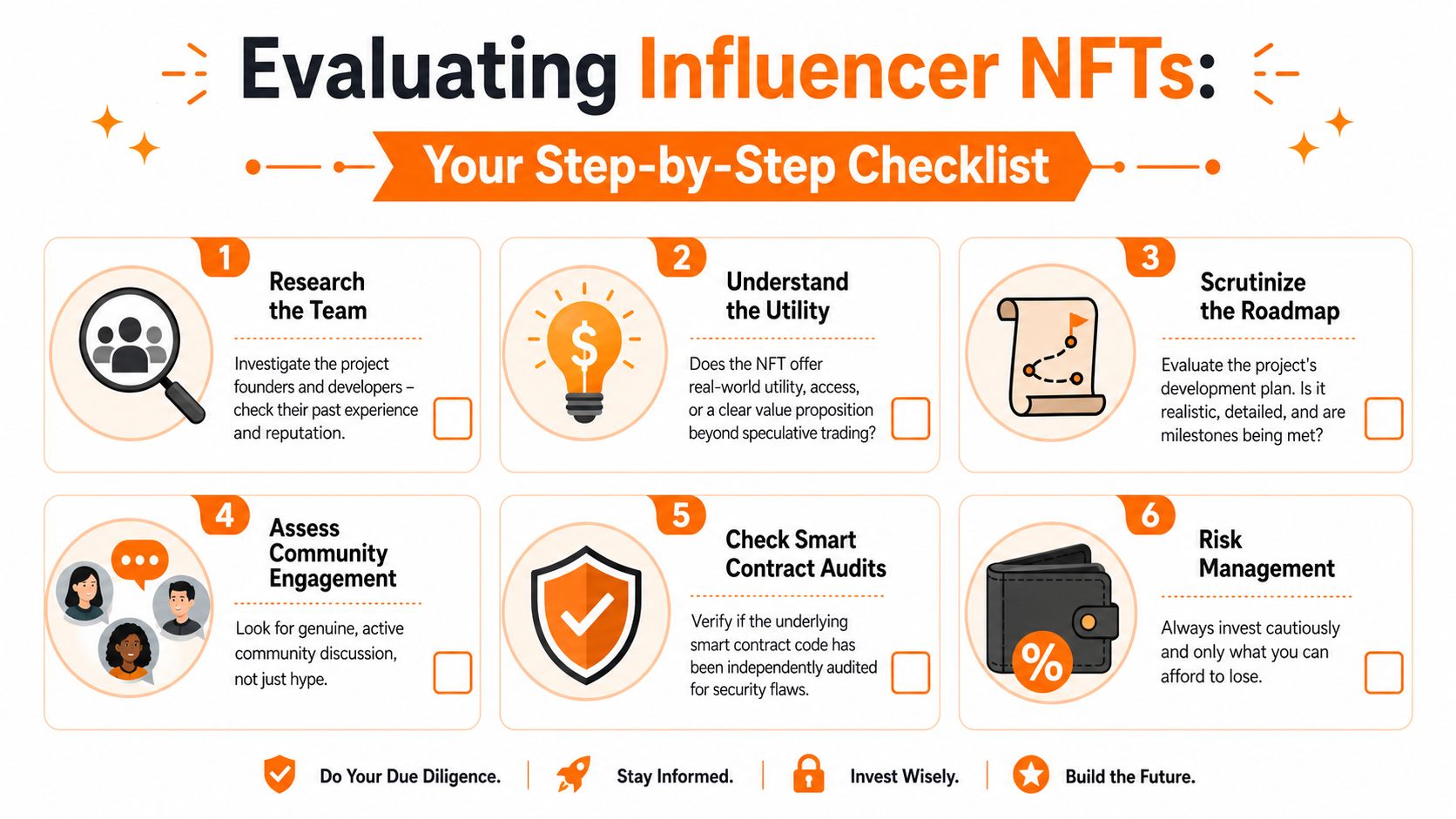
How to Analyse an Influencer NFT Project
Celebrity involvement can make a project look safer than it is. That's because fame creates a shortcut in the mind. People think, “This person has a reputation to protect, so the project must be credible.” Sometimes that may be true. Sometimes it isn't. A smart review process treats the famous face as one data point, not the whole case.
Start with the people behind the project
Look beyond the influencer. Find out who's building the thing. If it's a game, who are the developers? If it's a marketplace item, who wrote the smart contract? If the names are public, search their previous work. If the names are hidden, treat that as a risk factor rather than a quirky crypto norm.
A useful next step is to learn a repeatable process. This guide on how to research an NFT project before investing is a strong place to build that habit.
Check the promise, not just the artwork
A lot of projects use polished visuals to distract from weak substance. Ask simple questions in plain language:
- What do holders receive? Access, perks, game use, licensing rights, or just the token itself?
- What has already been built? Screenshots and trailers aren't the same as a working product.
- What depends on future delivery? The more future promises there are, the more execution risk you carry.
If the roadmap reads like a wishlist, slow down. A roadmap should feel like a construction plan, not fan fiction.
Look for signs of an artificial crowd
An influencer project can fill a Discord or X timeline with noise very quickly. Don't confuse noise with trust.
Watch for patterns such as:
- Repeated generic praise that sounds copied and pasted
- Moderators dodging practical questions about timelines or rights
- Conversation focused only on floor price instead of product progress
- Sudden urgency pushing you to buy before you've verified anything
If every question about delivery gets answered with memes, countdowns, or “community vibes”, that's not community. That's deflection.
Use a basic due diligence checklist
Different investors like different methods, so it helps to mix fast checks with deeper ones:
- Reverse-search the art: If images appear in older collections or stock libraries, the project may be recycling assets.
- Read the smart contract summary: Even if you can't audit code yourself, check whether an independent audit is mentioned and whether the report is accessible.
- Check wallet activity: See whether project wallets show signs of organised movement that matches public claims.
- Review terms carefully: Rights around refunds, access, and future promises can be narrower than the marketing suggests.
- Set your own risk cap: Decide your maximum loss before you buy, not after the market turns.
The central lesson from the Logan Paul NFT case study isn't “never buy influencer projects”. It's simpler. Don't outsource your judgement to fame.
Navigating Investment Risks and Legal Grey Areas
NFT risk isn't only about price. It's also about what happens when a project disappoints, stalls, or collapses. Many buyers assume that if something goes wrong, there will be a clear complaint path, a refund system, or a regulator ready to step in. In practice, that path can be messy.
Why the legal side feels unclear
NFTs often sit between categories. They can look like collectibles, investments, memberships, game items, or software-linked assets depending on how they're marketed. That creates confusion for buyers because rights that feel obvious in ordinary commerce may not map neatly onto token sales.
If you want a broader grounding in that area, this explainer on navigating NFT ownership and understanding your legal rights and responsibilities is worth reading before you buy anything expensive.
The UK angle
For UK readers, the Logan Paul NFT story also points to a gap between public controversy and clear local enforcement signals. Despite BBC reporting on Logan Paul's UK legal troubles, there is no public record of specific UK FCA enforcement actions or updated guidance directly tied to his case, which leaves UK investors without clear region-specific safety insight, according to the BBC report on Logan Paul's UK-related legal scrutiny.
That doesn't mean regulators are unaware. It means investors shouldn't assume a headline involving a public figure automatically produces a new rulebook they can rely on.
What retail investors should take from that
This grey area creates practical problems:
- Promises may be hard to enforce if project language is vague
- Cross-border issues can complicate disputes
- Platform terms may favour the issuer more than the buyer
- Consumer expectations from normal online shopping may not apply cleanly
For ordinary buyers, that means personal caution matters more than many people expect. Before buying, ask yourself what your fallback plan is if the project never ships, the community fades, or the founders stop communicating. If the answer is “I assumed someone would sort it out,” that's not really a plan.
Legal uncertainty doesn't remove risk. It often increases it, because investors discover the limits of protection only after something goes wrong.
The hard truth is that in NFT markets, due diligence is not optional admin. It's part of the asset itself.
Key Takeaways from the Logan Paul NFT Saga
The Logan Paul NFT story is useful because it compresses several crypto lessons into one public case. It includes market hype, celebrity influence, unfinished product risk, and unclear investor protection. That makes it more than gossip. It becomes a teaching example.
The first lesson is simple. Fame is not the same as due diligence. A large audience can create trust fast, but trust and execution are different things. The second lesson is that NFT prices can fall far faster than newcomers expect, especially when the value depends on attention rather than durable use. The third is that project structure matters. Buying a collectible, backing a game concept, and purchasing access rights are not the same transaction.
There's also a wider point about contracts and disclosures. When digital products are promoted by creators or public figures, the fine print matters just as much as the marketing. Readers interested in the business side of creator deals may find this guide to understanding Israeli influencer agreements helpful as a parallel resource for thinking about how influencer relationships can be structured behind the scenes.
If there's one habit worth keeping, it's this: slow down. Read the terms. Check the builders. Separate community excitement from actual delivery. In a market full of novelty, caution isn't cynicism. It's competence.
If you want a calmer, safer way to build your crypto knowledge, The Coin Course offers structured education on blockchain, NFTs, wallets, security, and risk management in plain English. It's a strong next step if you want to understand the market before putting money into it.