Your wallet is only as safe as its weakest key. You might keep long-term holdings in cold storage, then lose funds because a recovery phrase was photographed, an exchange account was compromised, or an address was approved without a proper check. Crypto security isn't one device or one password. It combines ownership, storage, recovery, access control, transaction discipline, and regular maintenance.
The right setup depends on what you do. A beginner needs a clear recovery plan and protected accounts. An active trader needs a controlled hot wallet. A developer needs separation between production systems and personal credentials. A shared team needs agreed approval rules, while an institution needs documented ownership, monitoring, and tested recovery. The private key security guidance from Blocsys Technologies provides useful technical background, and The Coin Course offers structured learning for building crypto security knowledge from first principles.
These eight key management best practices turn wallet security into a practical operating system. Start with ownership and recovery, then match storage, access controls, transaction checks, and maintenance to your real activity.
1. Use Hardware Wallets for Long-Term Holdings
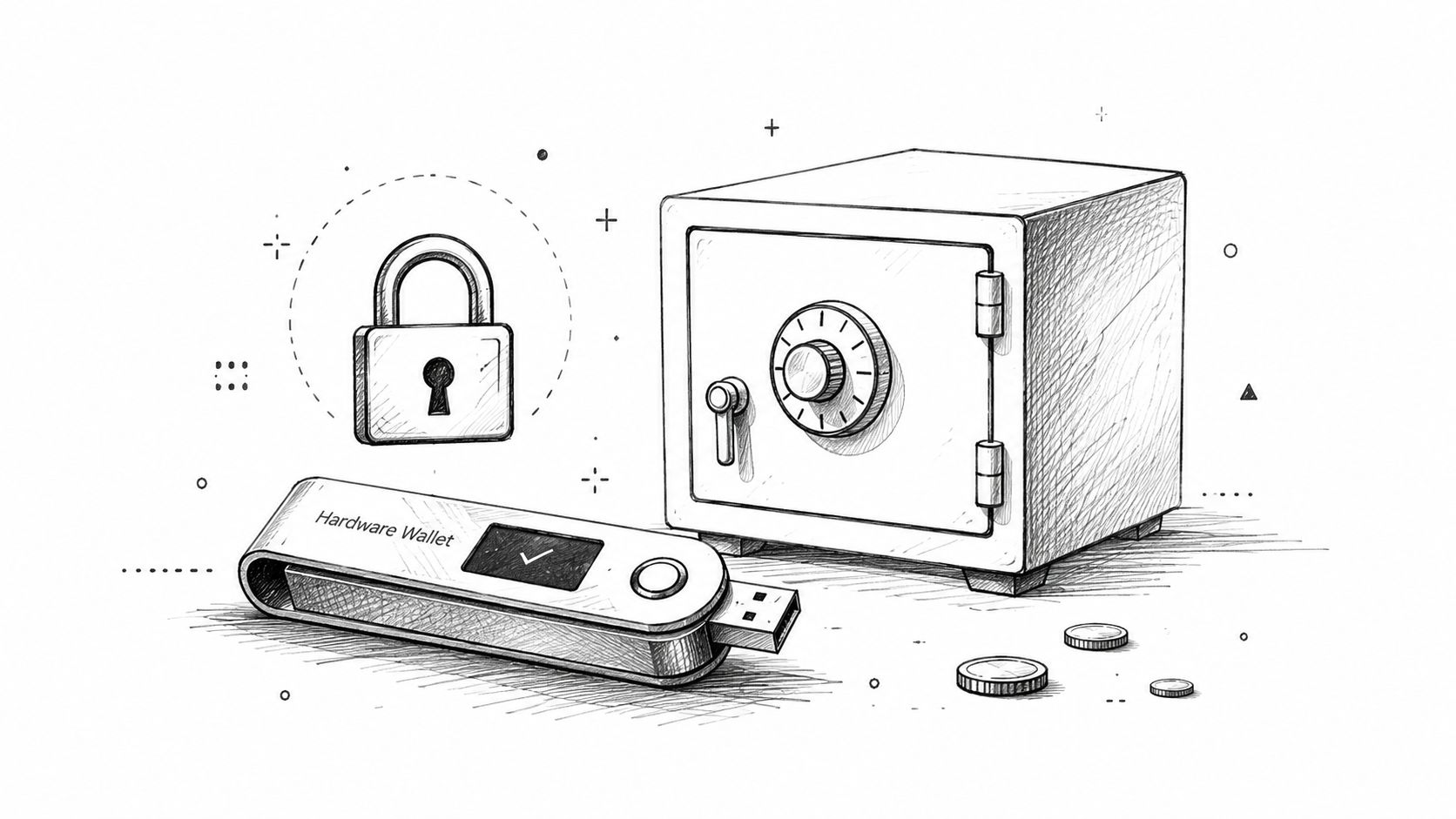
A hardware wallet keeps private keys inside a physical device rather than exposing them to an internet-connected computer. You connect it when signing a transaction, but the signing process is designed to keep the private key isolated from the computer handling the online connection. That separation makes hardware wallets a sensible choice for holdings you don't move often.
A Bitcoin investor in Germany who plans to hold Bitcoin for years might buy a Ledger Nano S and keep the device secured at home. An Ethereum holder using DeFi could keep the main portfolio on a Trezor while using a separate wallet for contracts and routine activity. A European trader might keep most holdings in a Coldcard and leave only working funds in a hot wallet.
Practical rule: Buy the device directly from the manufacturer. A genuine device can still be undermined if someone else has interfered with the setup or recovery material.
Protect the device and the recovery material
Keep the device in a home safe or another controlled location. Store its recovery phrase separately, preferably on paper or a purpose-built metal backup. Never photograph the phrase, type it into a phone, or disclose it to customer support. Anyone with the phrase may be able to recreate the wallet without possessing the hardware device.
Before transferring a meaningful balance, practise recovery on a new device with a small amount. The hardware wallet security tutorial from The Coin Course can help beginners understand that process. Treat reports of cold-wallet data exposure, such as this cold wallet breach summary, as a reminder that offline storage doesn't protect careless handling of personal information.
Watch the device screen before approving every transaction. A hardware wallet protects the signing key, but it can't decide whether you've chosen the right recipient or connected to a malicious application.
2. Implement Multi-Signature Wallets for Shared Control
A multi-signature wallet spreads approval across multiple keys. A 2-of-3 arrangement, for example, requires any two of three key holders to approve a transaction. One lost or compromised key doesn't automatically hand control to an attacker, but the arrangement also creates a recovery obligation. If too many signers become unavailable, legitimate users can be locked out.
This is useful for organisations, investment groups, and families managing shared assets. A cryptocurrency investment club in Amsterdam might use a 3-of-5 wallet for pooled funds. A small blockchain company in Berlin could require approval from both its chief executive and finance lead for a large payment. Three friends in Stockholm might use 2-of-3 control so two can act if one person is unavailable.
Design the signing policy before creating the wallet
Don't choose a signing threshold because it sounds secure. Decide who can approve payments, who can replace an unavailable signer, and how an emergency decision gets recorded. Each key should sit with a different person, device, or location. Avoid placing every key in one office or under one administrator account.
A written agreement should cover:
- Signer responsibilities: Record who holds each key and what authority that person has.
- Approval records: Decide how requests are submitted, checked, and retained.
- Emergency recovery: State what happens after a lost device, suspected compromise, or staff departure.
- Routine testing: Move a small amount first, then confirm that the required signers can complete recovery and approval.
Combining hardware wallets with secure backups can reduce single-device failure, but paper backups still need physical protection. Document the wallet configuration and key locations without recording the secret material itself.
The best threshold balances security with availability. More signers can improve separation, but they also make coordination harder. A setup that nobody can operate during an incident is not a resilient setup.
3. Separate Hot and Cold Wallets by Purpose
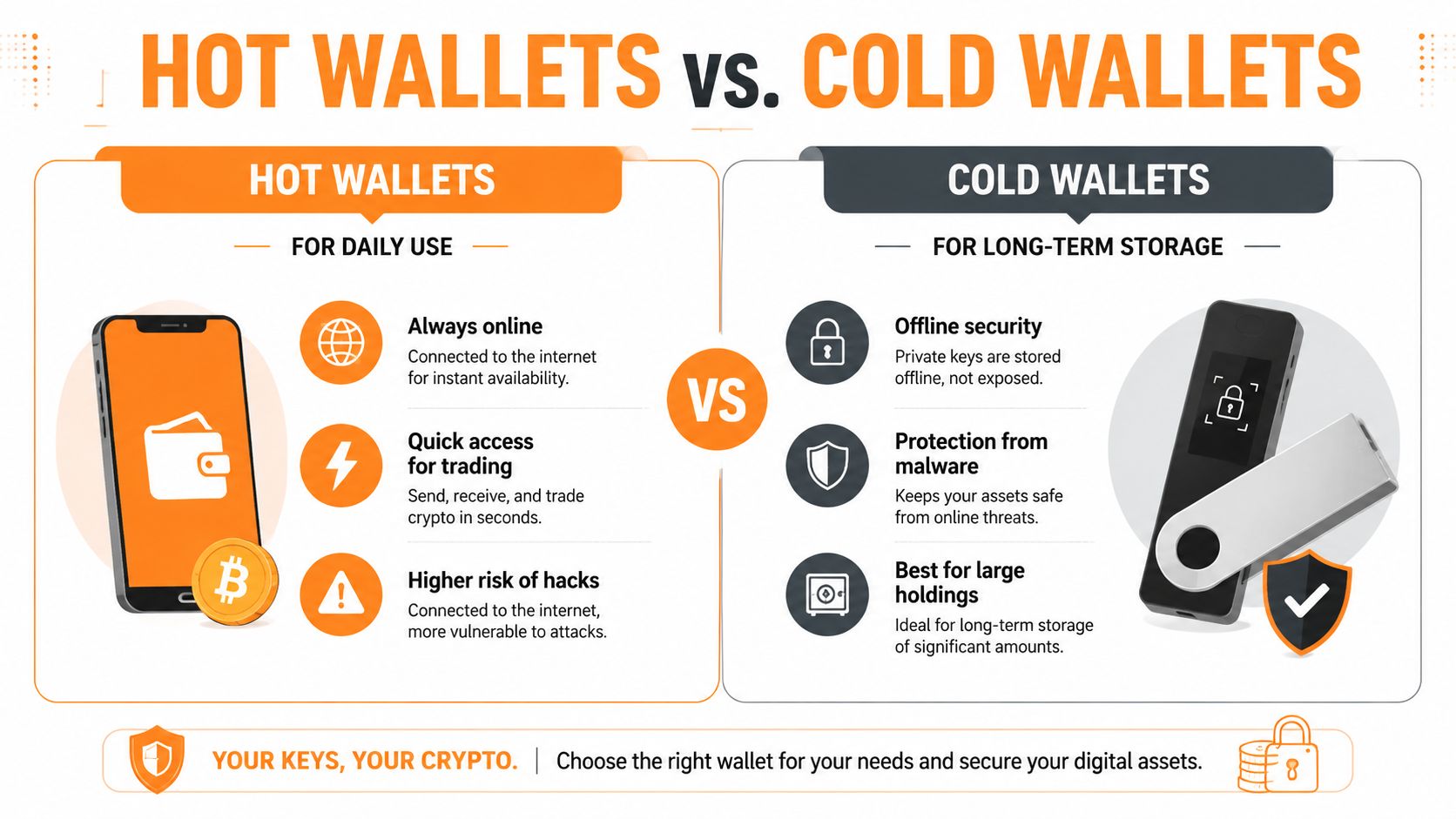
A hot wallet is convenient because it stays connected to online services and applications. That convenience increases exposure. A cold wallet is slower to use, but it gives long-term holdings a stronger boundary from websites, browser extensions, malware, and rushed decisions.
Use the hot wallet as a working account, not as a warehouse. A London trader might keep a trading balance in a phone wallet while storing the main Bitcoin position on a Ledger. A Paris DeFi user could keep routine interaction funds in MetaMask and protect the larger Ethereum balance offline. A Swedish investor who rarely transacts should keep most assets offline and use an exchange account only for planned activity.
Match the wallet to the task
Separate wallets by purpose, not just by asset. A wallet used for experimental DeFi contracts shouldn't also hold savings. A wallet connected to a trading platform shouldn't contain the recovery material for an offline vault. Clear labels make it easier to understand what an address may interact with and what damage a compromised connection could cause.
A simple operating routine works well:
- Set a transfer limit: Decide how much may move into the hot wallet during a normal period.
- Review the balance: Check the hot wallet regularly and return surplus funds to cold storage.
- Track connections: Keep a record of exchanges, decentralised applications, and services authorised to interact with the hot wallet.
- Reduce unnecessary movement: Frequent transfers create more chances to approve the wrong address or interact with the wrong contract.
Don't treat a popular wallet as automatically safe. Check permissions, disconnect applications you no longer use, and use separate browser profiles or devices where practical. The right balance depends on your activity, risk tolerance, and ability to review transactions. Convenience is valuable, but it shouldn't decide where your core holdings live.
4. Create and Safely Store Recovery Phrases
A recovery phrase can recreate a wallet when a device is lost, damaged, or replaced. It is therefore both a recovery tool and a master credential. Anyone who obtains it may be able to control the assets linked to it, so the phrase deserves stronger protection than an ordinary password.
Write the phrase by hand on durable paper using permanent ink, then store it in a secure location separate from the wallet device. For greater protection against fire or physical damage, a metal backup designed for recovery phrases can be appropriate. Never take a screenshot, save the words in cloud storage, or type them into a computer or phone.
Plan for loss, succession, and recovery
A Berlin investor might place a written phrase in a sealed container inside a secure deposit facility. A family in Stockholm might keep protected copies in separate locations and create an inheritance guide that explains the recovery process without exposing the phrase to unnecessary people. Splitting words between trusted people can reduce single-person access, but it also introduces coordination, disclosure, and loss risks. Use such designs only when everyone understands the recovery method.
Keep an inventory of where backups are stored, but don't put the secret words in that inventory. Review the condition of physical backups and confirm that trusted heirs know which device or compatible wallet they would need. A recovery plan should answer practical questions, including who can find the device, who can locate the backup, and how the wallet's assets can be identified.
A recovery phrase isn't a note to file away and forget. It needs a controlled storage plan, a tested restoration process, and a clear answer to the question of who can recover the assets if the owner can't.
Test restoration with a new device and a small balance before relying on the process for larger holdings. The secure physical seed phrase storage guide offers further practical guidance.
5. Use Strong Passwords and Password Managers
A password protects access to exchanges, email accounts, password managers, and some wallet applications. Reusing one password across those services creates a chain of failure. If an attacker obtains the password from a less protected website, they may try it against the accounts that control your crypto activity.
Use a different, randomly generated password for every account. A Munich professional might use Bitwarden to manage credentials across several wallets and services. A Dublin trader could generate unique passwords for each exchange and let the manager fill them automatically. KeePass can suit users who prefer a locally controlled vault, provided they understand how to protect and back up its database.
Protect the password manager itself
The password manager becomes a high-value account, so secure it with a strong master password and multi-factor authentication. The master password should be memorable without relying on birthdays, names, addresses, or dictionary phrases that reflect personal information. Store a recovery method separately, and test it before an emergency.
Useful controls include:
- Unique credentials: Generate a separate password for every exchange, email account, and wallet service.
- Protected backups: Keep encrypted manager backups in a secure location separate from the primary device.
- Updated software: Install security updates for the manager and the devices that access it.
- Recovery testing: Confirm that you can regain access without writing the master password in an exposed location.
Changing every password on a calendar can create confusion if it leads to poor record-keeping. Rotate credentials after suspected exposure, staff changes, or a service incident, and review important access regularly. A password manager reduces memory pressure, but it doesn't remove the need for careful device security and phishing awareness.
6. Enable Two-Factor Authentication on All Accounts
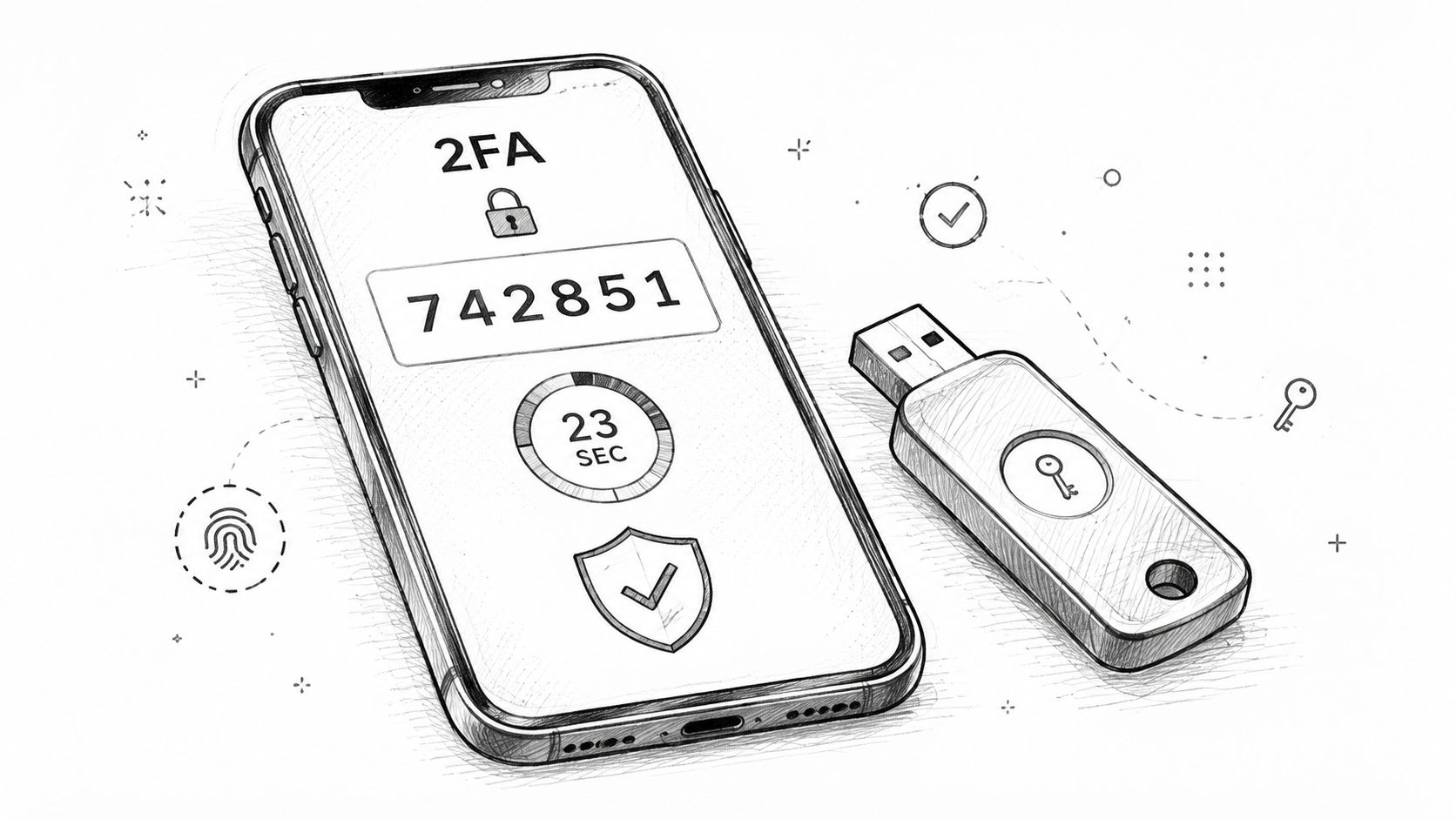
Two-factor authentication adds a second proof of access after the password. If someone steals a password, they still need the additional method. That extra check should protect not only an exchange or wallet account, but also the email address and password manager used to reset or administer it.
Authenticator apps such as Authy and Google Authenticator are usually preferable to SMS where available, because phone-number takeover can undermine text messages. A Frankfurt trader might use a YubiKey on major exchange accounts, while a Stockholm user could keep backup codes in a secure place separate from the phone. A Paris exchange user should also protect the email account connected to the exchange.
Choose a method you can recover
The strongest method isn't useful if you lose it and can't restore access. Save backup codes offline, protect authenticator backups where supported, and keep a documented recovery route. Don't store all recovery methods on the same phone or inside the same account protected by the factor you're trying to recover.
Enable 2FA on:
- Exchange accounts: Protect withdrawals, account changes, and sign-in activity.
- Email accounts: Prevent an attacker from resetting exchange credentials.
- Password managers: Guard the vault containing your other account passwords.
- Financial services: Add another barrier around connected payment or banking access.
Never share a one-time code or backup code with someone who contacts you unexpectedly. Legitimate support staff won't need your current authentication code to prove who you are. The crypto 2FA security guide from The Coin Course explains how to configure these layers without losing sight of recovery.
7. Regularly Update and Patch Wallet Software
An old wallet application, firmware package, or operating system may contain a weakness that later updates address. Patching doesn't make every transaction safe, but delaying a security update leaves a known weakness in place for longer. The rule applies to hardware wallet firmware, mobile wallets, desktop software, browsers, and the operating systems they run on.
An Amsterdam Bitcoin holder should verify Ledger firmware updates through the official application and manufacturer channels. A Vienna trader needs a current phone operating system before relying on a mobile wallet. A Barcelona investor using a desktop wallet should review update notifications instead of dismissing them indefinitely.
Build updates into normal operations
Automatic updates can reduce missed patches, but only use them where the source and process are trustworthy. For hardware wallets and critical desktop applications, check the publisher's official announcement and release notes before installing. Never follow an update link from an unsolicited message or search advertisement without verifying the domain.
A practical maintenance routine includes:
- Monthly review: Check every wallet, device, browser extension, and operating system if automatic updates aren't enabled.
- Small test transaction: Confirm that the wallet still displays balances and signs correctly after a major update.
- Version inventory: Record which wallet software and firmware each device uses.
- Official alerts: Follow the wallet provider's verified security channels, not unknown accounts offering urgent fixes.
Keep recovery material available before performing significant firmware work, but never enter it into an unverified website or application. A patch can fix software risk while creating operational risk if you haven't confirmed your recovery path. Good maintenance handles both.
8. Verify Addresses and Use Address Whitelisting
A blockchain transaction can be irreversible, so a correct-looking transfer isn't enough. Compare the destination address on the device you trust, not only in the browser or email that supplied it. Malware can replace copied addresses, phishing messages can display a similar address, and autocomplete can select the wrong recipient.
A Berlin user sending Bitcoin should compare the receiving address carefully and confirm it on the hardware wallet screen. A Milan exchange customer can add a verified hardware-wallet address to the exchange whitelist before making a larger transfer. A Lisbon trader who receives a payment request by email should treat the message as untrusted and confirm the address through another channel.
Create a repeatable transaction check
Address whitelisting limits withdrawals to destinations you've approved, but it isn't a substitute for verification. An attacker who gains authorised access may try to add its own destination, and a mistake during the original approval can be preserved by the list.
Use this sequence before sending:
- Confirm identity: Match the recipient, network, and purpose of the transfer.
- Compare characters: Check the beginning and end of the address, then review the full address where possible.
- Use a QR code carefully: Scanning can reduce typing errors, but still compare the result on the signing device.
- Test first: Send a small amount when the destination is new or the transfer is significant.
- Delay large withdrawals: Apply the exchange's whitelist waiting period where available.
- Label addresses: Record who controls each approved destination and remove obsolete entries.
Don't trust a wallet suggestion because it appeared automatically. Verify addresses from a known source, especially when a request arrives through email, direct message, or an unfamiliar application.
8 Key Management Best Practices Compared
| Practice | Implementation Complexity 🔄 | Resource Requirements ⚡ | Expected Outcomes ⭐ | Ideal Use Cases 📊 | Key Advantages & Practical Tips 💡 |
|---|---|---|---|---|---|
| Use Hardware Wallets for Long-Term Holdings | 🔄 Moderate, initial setup & learning | ⚡ One-time device purchase (€50–150), firmware updates | ⭐⭐⭐⭐⭐ Offline key storage greatly reduces remote-theft risk | Long-term holders / large balances | ⭐ Strong protection vs. hacks. 💡 Buy from official source, store recovery phrase offline, test recovery. |
| Implement Multi-Signature Wallets for Shared Control | 🔄 High, setup, coordination & governance | ⚡ Multiple keys/devices; coordination overhead; possible higher fees | ⭐⭐⭐⭐ High security + redundancy; prevents single point of failure | Teams, businesses, shared treasuries | ⭐ Prevents unilateral transfers. 💡 Distribute keys, document procedures, test with small amounts. |
| Separate Hot and Cold Wallets by Purpose | 🔄 Low–Moderate, process discipline required | ⚡ Hot wallet apps + cold device(s); occasional transfer fees | ⭐⭐⭐⭐ Balanced security and accessibility for daily use | Active traders with long-term savings | ⭐ Limits exposure of long-term funds. 💡 Use 95/5 rule, limit transfers, review hot wallet weekly. |
| Create and Safely Store Recovery Phrases | 🔄 Low, generation is simple but handling is critical | ⚡ Paper or metal backups; secure storage sites (safe, deposit box) | ⭐⭐⭐⭐⭐ Enables full wallet recovery; single critical secret | All wallet users, essential for hardware wallets | ⭐ Universal backup method. 💡 Never store digitally, use metal backups, test restore, keep copies separate. |
| Use Strong Passwords and Password Managers | 🔄 Low, easy with a manager | ⚡ Password manager software; secure master password; backups | ⭐⭐⭐⭐ Reduces credential-related breaches significantly | Users with multiple exchanges/wallets | ⭐ Eliminates password reuse. 💡 Use open-source managers, enable 2FA, secure backups of manager data. |
| Enable Two-Factor Authentication on All Accounts | 🔄 Low, quick to enable | ⚡ Authenticator apps or hardware keys; store backup codes | ⭐⭐⭐⭐ Blocks access even if password is compromised | Exchanges, email, password managers, critical services | ⭐ Simple high-impact protection. 💡 Prefer authenticator apps/hardware keys, save backup codes offline. |
| Regularly Update and Patch Wallet Software | 🔄 Low, routine maintenance | ⚡ Time and connectivity; occasional backups before major updates | ⭐⭐⭐ Prevents known vulnerabilities and bugs | All users and devices running wallet software | ⭐ Keeps defenses current. 💡 Enable auto-updates, check release notes, test with small transactions after updates. |
| Verify Addresses and Use Address Whitelisting | 🔄 Low–Moderate, requires consistent attention | ⚡ Time to verify; platform whitelisting features | ⭐⭐⭐⭐ Prevents irreversible send-to-wrong-address errors | Frequent senders, exchanges, business payments | ⭐ Reduces phishing and typo risk. 💡 Verify first/last 4 chars, use QR codes, whitelist addresses and test small transfers. |
Turn These Practices Into a Key Management Routine
Good key management isn't a collection of expensive devices. It's a routine that assigns ownership, limits exposure, preserves recovery options, and gives people a reliable way to check what they're approving. The National Cyber Security Centre recommends hardware-based protection such as an HSM, TPM, or another secure key store for private keys, with access monitored, authenticated, and authorised. It also says exported keys should be encrypted in transit and at rest, while root CA keys should be securely backed up for recovery after failure. NCSC cloud key-management guidance makes an important distinction too, an end-entity key may often be regenerated, while a root CA key may require carefully protected backup.
For a beginner, the first actions are simple. Write the recovery phrase offline, store it separately from the device, and enable 2FA on the exchange, email account, and password manager. Learn how recovery works before moving meaningful funds. The aim is not to own every security product, but to remove the obvious single points of failure.
Traders need a different operating rhythm. Keep active funds in a controlled hot wallet and move longer-term holdings to cold storage. Review connected applications, verify each destination on the signing device, and use whitelisting where it fits the exchange workflow. Speed matters during trading, but a rushed address approval can create a permanent loss.
Developers and small teams should document access and keep production keys separate from development credentials. Use managed key stores or protected vaults rather than placing secrets in code or shared chat. Apply role separation, maintain an inventory that records key identities without storing secret or private material, and define what happens when a key is compromised, retired, or no longer needed. UK government standards also support single-purpose key use, so one key shouldn't become a signing, encryption, and access credential at the same time. The DWP cryptographic key-management policy provides a practical UK benchmark for backup, escrow, inventory, revocation, and destruction controls.
Institutions need stronger governance around the same basic habits. Assign owners, restrict access to the fewest people who need it, define validity dates, review access, and test recovery with the people who would respond during an outage. UK public-sector management evidence shows the value of structured oversight, including a management-practice mean of 0.56 on a 0-to-1 scale, while local government organisations reported 71% prevalence of best practice for target-setting and 63% of central government organisations set stretch targets described as fairly difficult to achieve, according to the Office for National Statistics evidence base. These figures aren't crypto measurements, but they reinforce a useful operational lesson, written responsibility and repeatable review are security controls.
Crypto firms also need a sanctions-aware response process. The UK Office of Financial Sanctions Implementation advises firms to restrict access and freeze assets where required, report suspected sanctions breaches to OFSI, and submit SARs to the NCA in regulated cases. Its cryptoassets threat assessment identifies warning signs including dormant wallets becoming active, high-volume microtransactions, proxy payments, and mixing. Key-control procedures should therefore preserve evidence and support rapid triage, not only protect against theft.
Legal custody questions matter too. The UK Jurisdiction Taskforce's July 2026 report followed the Property (Digital Assets etc) Act 2025 and addressed control of digital assets, while the UK's 2025 National Risk Assessment assesses cryptoasset money-laundering risk as high. Organisations should document who controls each wallet, how custody transfers are evidenced, and how recovery records support ownership claims.
The strongest setup is the one people can operate consistently. Review your storage, recovery phrase, signers, passwords, 2FA, software versions, and address controls, then write down the process and test it with a small transaction. For broader guidance on key-management tools and operational controls, explore this key management tools resource from PushOps, alongside The Coin Course's practical wallet and security education.
The Coin Course offers structured lessons on wallets, key management, account security, DeFi, trading, and blockchain fundamentals, with practical guidance for beginners and experienced users. Visit The Coin Course to build a safer crypto routine from first principles and apply these controls with greater confidence.