
You've probably encountered cryptocurrency in a familiar way: you download an app, transfer pounds from your bank account, tap “buy”, and see a digital asset appear on your screen. The experience feels similar to using online banking, yet the system underneath works differently. A bank doesn't create the final record of ownership, and a central payment operator may not approve every transfer.
That contrast explains why how does cryptocurrency work can seem confusing. The technology is decentralised in some respects, but users often enter it through centralised companies. To understand crypto properly, follow the journey from exchange to wallet, from private key to blockchain, and from transaction request to network confirmation.
What Is Cryptocurrency and Why It Matters
Cryptocurrency is a digital representation of value or contractual rights secured with cryptography. Unlike pounds in a UK current account, it isn't a bank balance recorded by one institution. A network of computers maintains the transaction history, while cryptographic signatures help prove that the person sending an asset controls the relevant private key.
A simple transaction looks like this:
- You transfer pounds to a crypto exchange.
- You use the exchange to buy a token.
- The exchange records your purchase in its own account system.
- You either leave the asset with the exchange or send it to your own wallet.
- The blockchain records the movement when the network validates it.
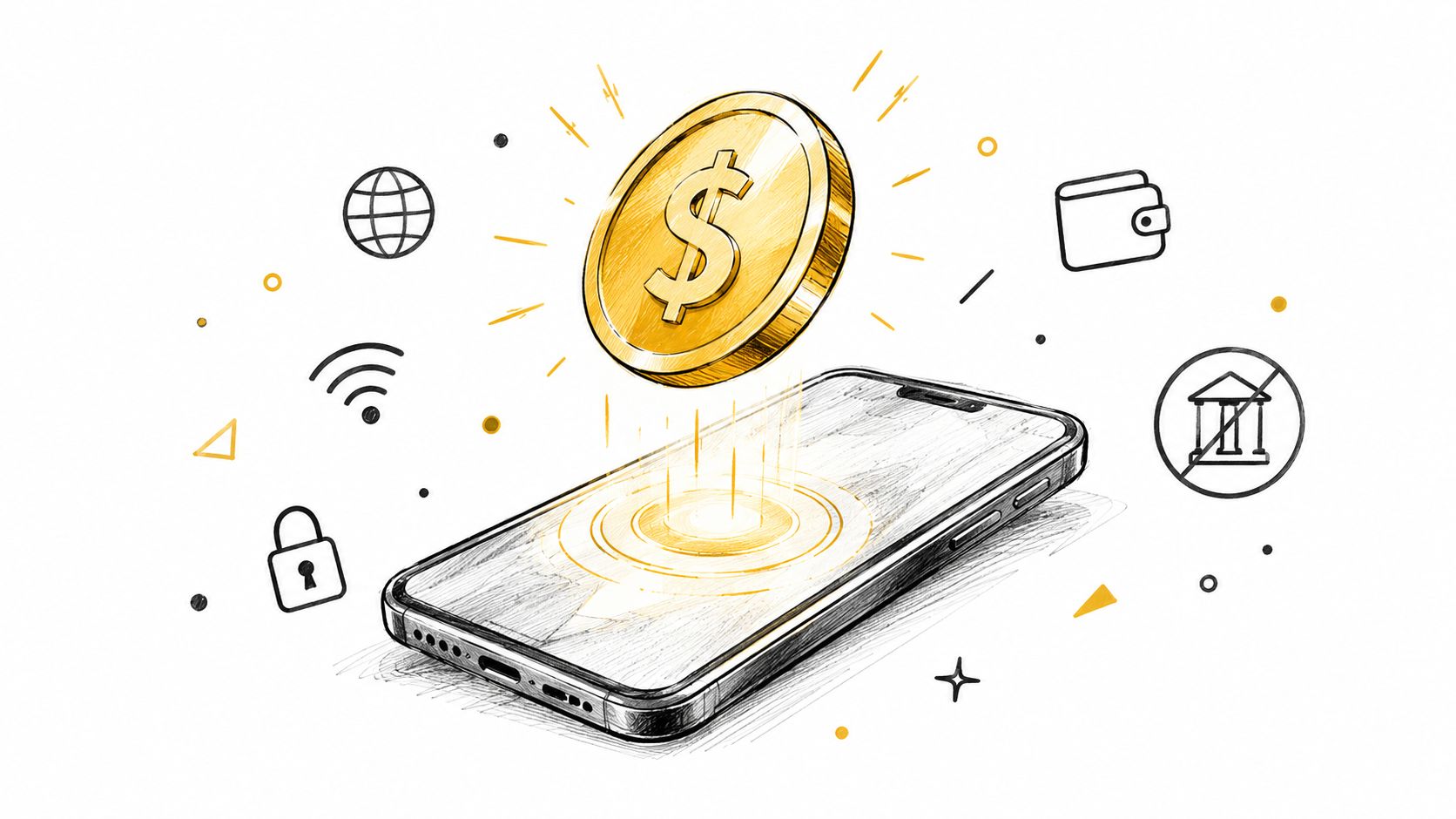
The important distinction is between the asset itself and the service you use to access it. The blockchain can operate without a conventional bank clearing each payment, but an exchange may still handle identity checks, pound deposits, trading orders, custody and customer support. In 2025, 73% of UK cryptoasset users reported using a centralised exchange to obtain cryptoassets, according to FCA research on UK cryptoasset consumers.
That figure highlights a practical contradiction. People often hear that crypto removes intermediaries, yet the normal beginner experience includes an intermediary. The exchange may control the private keys while you hold an account showing how much crypto you're entitled to withdraw.
Practical rule: Treat an exchange account as access to a service, not automatically as the same thing as direct control of an on-chain asset.
Cryptocurrency also differs from ordinary electronic money because its rules can be built into software. A network can define how transactions are checked, how new units are issued and how participants agree on the valid version of the ledger. Before opening an account, it helps to understand the basic terminology and order types covered in cryptocurrency trading basics for beginners.
The result is a system that can transfer value digitally without relying on one central ledger owner. It doesn't remove trust altogether. Instead, trust shifts towards code, cryptographic keys, network participants and the company handling your access.
Understanding the Blockchain Ledger
A UK customer can approve a crypto transfer through a familiar app, while the record of that transfer is maintained by a network of computers rather than by one bank's database. The screen feels centralised. The underlying ledger can be distributed. Understanding that gap helps explain how cryptocurrency works in practice.
A blockchain works like a shared notebook. Many participants keep copies, and the network follows agreed rules about which entries are valid. No single participant needs to own the only master copy, although a company may still provide the interface through which a person accesses the network.
When you send crypto, your wallet creates a transaction request. It usually includes the recipient's address, the amount and a digital signature made with your private key. The signature allows the network to check your authority to move the asset without exposing the private key itself.
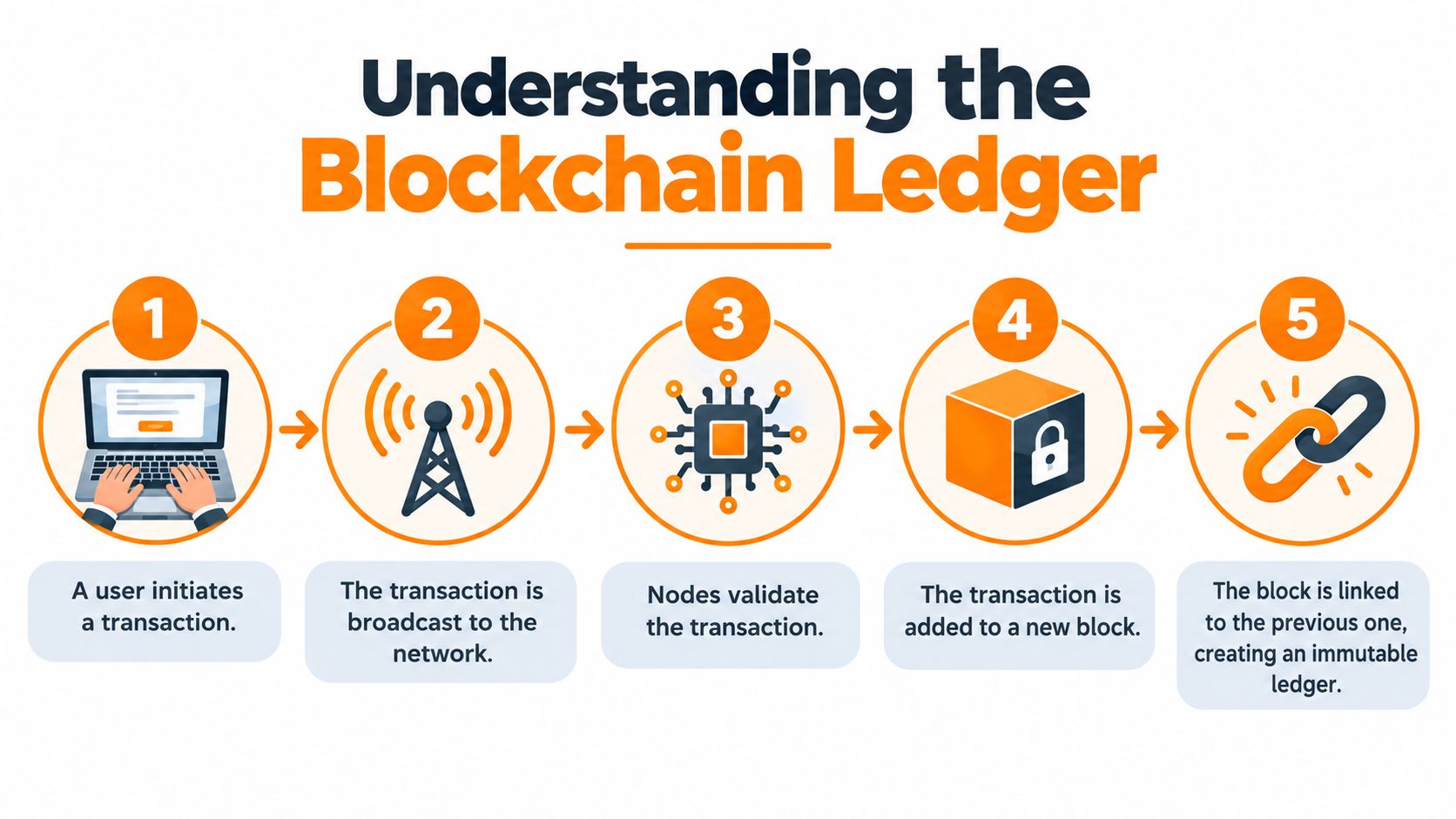
The transaction passes through several stages:
- Initiation: You approve the transfer in a wallet or through an exchange.
- Broadcasting: The request travels to network participants called nodes.
- Validation: Nodes check the signature, the address and whether the sender has enough balance under the network's rules.
- Ordering: A validator or miner selects valid transactions for a block.
- Recording: The network accepts the block and links it to the previous block.
A cryptoasset is a cryptographically secured digital representation of value. Transactions are grouped into timestamped blocks, and cryptographic links connect each block to its predecessor. The Bank of England's guide to the future of money explains why changing an earlier entry would also require changes to the later blocks connected to it.
Why the ledger is difficult to rewrite
A paper notebook can be changed by rubbing out a line. A blockchain stores a continuing history, so an altered entry must fit the references in later blocks and the copies held across the network. A mismatch can expose the attempted change, making the history difficult to revise.
The design still has limits. Its reliability depends on the network's consensus rules, software, participating nodes and the security of users' keys. A valid transaction sent to the wrong address can remain recorded as an error. The ledger preserves what the network accepted, not what the sender intended.
Visibility versus identity is another important distinction. A public blockchain may display transaction records and wallet addresses, while an address does not automatically reveal a person's name. A UK exchange may connect activity to an account through its checks, whereas a self-custody transfer can appear as movement between addresses.
Watch the process in action through the embedded overview below.
The ledger also provides a way to assess projects that promise to earn yield with automation on blockchain. Ask which ledger records the activity, who can change the surrounding rules and what happens if the transaction or its input data is wrong. For a further explanation, see this guide to blockchain technology.
Proof of Work vs Proof of Stake
A blockchain needs a shared method for deciding which transactions enter the next block. That method is consensus. Two common approaches are Proof of Work, associated with mining, and Proof of Stake, which uses validators that commit tokens to the network.
| Feature | Proof of Work | Proof of Stake |
|---|---|---|
| Who proposes blocks | Miners compete with computing equipment | Validators are selected by the protocol |
| What participants commit | Computing power and electricity | Cryptoassets placed at stake |
| Main security idea | Rewriting history requires enormous computing power | Dishonest behaviour can put staked assets at risk |
| Practical trade-off | Resource-intensive competition | Less dependent on mining hardware |
Proof of Work
Proof of Work turns block creation into a computing competition. Miners try to solve a mathematical challenge, and the successful miner proposes a block. Other participants check that it follows the network's rules before accepting it.
Changing an established history would require an attacker to control more computing power than the miners securing the network, as described in the Bank of England's explanation of blockchain consensus. That makes large-scale revision expensive and difficult, although the system uses substantial energy and specialist equipment.
Bitcoin is the best-known example. Mining does not mean extracting coins from the ground. Computers perform work that helps order transactions and protect the shared record.
Proof of Stake
Proof of Stake replaces the hardware race with a financial commitment. Validators lock or delegate cryptoassets under the network's rules, then take part in proposing or approving blocks. The protocol determines how participants are selected and what penalties apply. The basic safeguard is straightforward: dishonest behaviour can put the validator's staked assets at risk.
Proof of Stake generally uses less energy than a mining competition because participants do not need to compete through the same computing process. It still carries risks. Users need to examine validator performance, software errors, lock-up conditions, concentration of control and changes in the token's price.
The technical design also affects the experience of UK users. A network may be decentralised underneath, while a person buys, stakes or withdraws through a centralised exchange. The exchange can simplify the interface and manage much of the technical process, but users then depend on its custody, account checks, withdrawal procedures and operational decisions. The underlying consensus model does not remove that intermediary risk.
A consensus mechanism protects the record, but it does not guarantee that the asset will hold its value or that every application built on the network is safe.
Staking rewards need careful interpretation. Staking relates to network validation and token economics, rather than operating like a bank savings account. UK tax treatment may also apply when a person receives tokens through staking. HMRC's cryptoassets guidance explains that tokens received through staking can count as income when the person is not carrying on a trade, with their sterling value generally considered when received.
For a clearer beginner comparison, read this guide to Proof of Work vs Proof of Stake. Neither label gives the full picture. Check how each network selects participants, handles faults and distributes control.
How Wallets and Keys Work
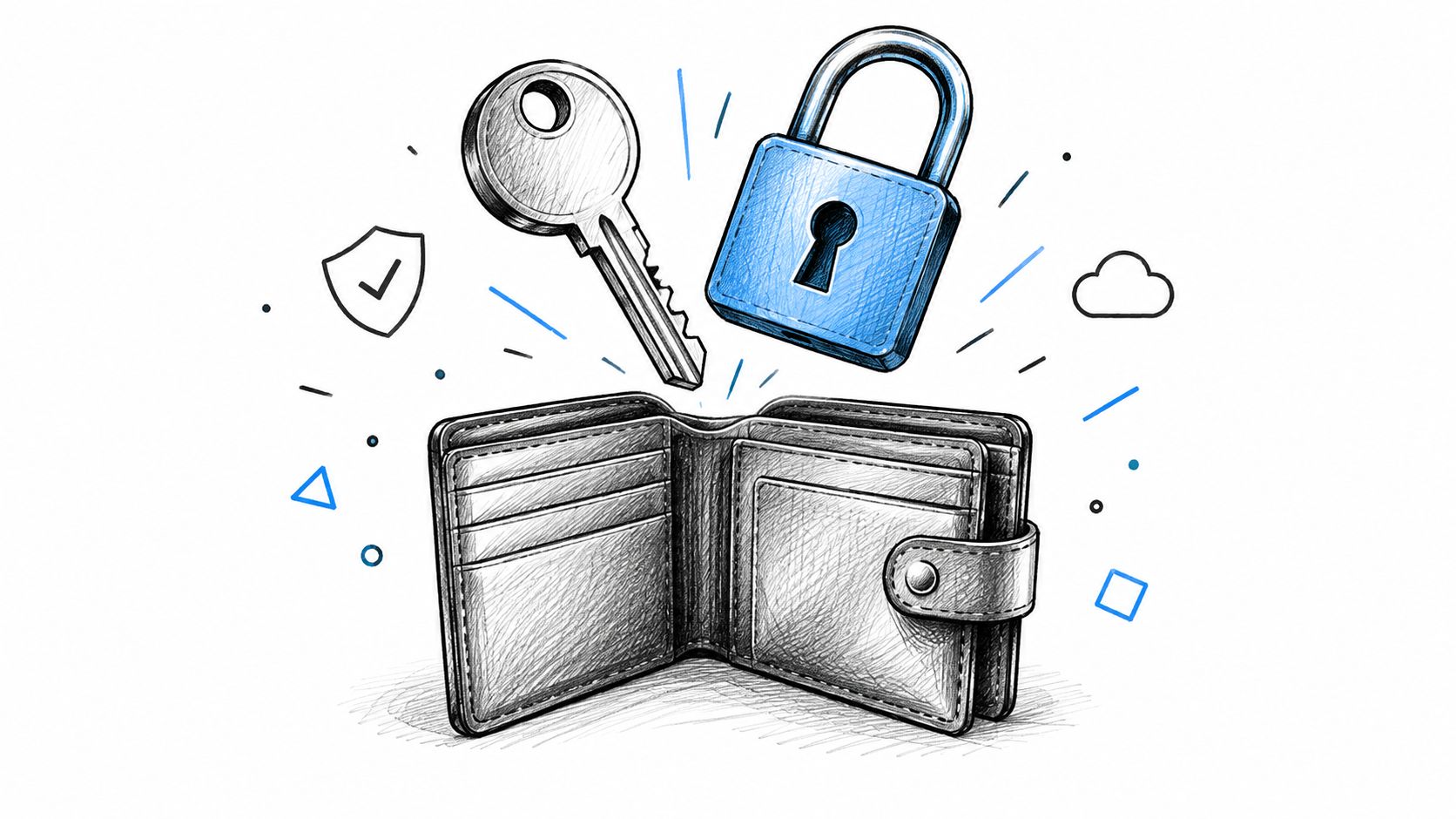
A crypto wallet doesn't physically contain coins. The blockchain holds the transaction record, while the wallet stores or manages the credentials that let you authorise transactions. Those credentials normally include a private key or a seed phrase from which keys can be generated.
Use this analogy:
- Your public address is like an account number that you can share so someone can send you crypto.
- Your private key is like a secret signing instrument that proves you can authorise a transfer.
- Your seed phrase is a backup for recreating wallet access, so it must be protected like the master key to a safe.
When you receive crypto into a self-custody wallet, the blockchain records an asset balance associated with your address. When you send it, the wallet signs a transaction. The network checks the signature, then records the transfer if it meets the protocol's rules.
Exchange custody and self-custody
With an exchange account, the company may hold the private keys and show you an internal balance. This can make buying and selling easier, because the exchange manages much of the technical process. You still depend on its security, withdrawal procedures, account access and operational decisions.
With self-custody, you control the signing keys directly. That gives you more direct authority over transactions, but it also gives you more responsibility. There may be no central organisation that can reset access if you lose the recovery information.
The FCA reported that 9% of surveyed UK cryptoasset holders had forgotten their private key and consequently lost access to their wallet in its crypto market description. The lesson is practical, not abstract. A wallet address can remain visible on the blockchain while the owner can no longer move the associated assets.
Keep these habits in mind:
- Never share a private key or seed phrase: A genuine support team won't need the secret that controls your wallet.
- Check the network and address: Sending an asset on the wrong network or to a mistaken address can create a recovery problem.
- Separate convenience from control: A simple app may reduce technical friction without giving you direct custody.
- Protect backups offline: Store recovery information privately and avoid putting it into messages, screenshots or online documents.
Readers who want more technical context can explore how encryption keys work in zero-knowledge systems, then compare it with this practical guide to private keys, public addresses and seed phrases.
Real-World Examples and Adoption
A UK newcomer may encounter crypto through a familiar route: see Bitcoin mentioned online, open an exchange account, transfer pounds, buy a fraction of an asset and track its value in an app. The screen feels similar to online banking. Behind it, however, ownership and transaction settlement follow blockchain rules rather than only the exchange's internal records. This gap between decentralised infrastructure and centralised user experience shapes how crypto is adopted.
The UK's early figures show how quickly awareness changed. In 2018, an FCA-commissioned survey found that only 3% of UK consumers had ever bought cryptoassets, while 73% either did not know what a cryptocurrency was or could not define it, according to the FCA's consumer attitudes research.
By 2020, the FCA estimated that 2.6 million UK consumers had bought cryptoassets and 1.9 million still held them. Half of those holders had more than £260 invested. The research also found that 83% of purchasers used exchanges based outside the UK, indicating that overseas platforms were a common entry point for UK users.
Bitcoin and Ethereum as useful examples
Bitcoin provides a clear example of digital scarcity and Proof of Work. A user authorises a transaction, the network receives and checks it, and the transaction is placed into a block through the network's validation process. An exchange may hide these steps behind a simple button, but the blockchain still handles the underlying record.
Ethereum demonstrates a wider use of blockchain technology. Its network can run programmable applications, allowing users to exchange tokens, arrange lending or coordinate other financial activity through software. The interface may look like an ordinary app, yet the result depends on blockchain validation and the application's instructions. Poor code, compromised access or a misleading action can affect the outcome.
UK ownership continued to grow after those earlier FCA milestones. 12% of UK adults owned cryptoassets in 2024, compared with about 10% in 2022 and 4.4% in 2021, according to the FCA's 2024 consumer research.
These figures describe ownership, not identical behaviour. One person may hold Bitcoin as a long-term asset, another may trade tokens through an exchange, and someone else may use a wallet to access a decentralised application. Ownership, usage, custody and risk remain separate questions.
“Decentralised” therefore describes the network more accurately than the complete customer journey. A distributed system may validate the final transaction, while a company handles the interface, identity checks, account access and customer support at the beginning.
Common Misconceptions and Risks
A purchase can look familiar while the risks remain different. Someone in the UK may buy cryptocurrency through an exchange that resembles a banking app, then assume the same protections apply. The interface is centralised, even when the underlying network is decentralised.
Cryptocurrency isn't automatically anonymous. A blockchain usually records transactions publicly, connecting them to wallet addresses rather than ordinary names. If an exchange account, payment record or investigation links an address to a person, activity connected with that address may become easier to trace and interpret.
A confirmed transaction isn't the same as a reversible payment. Banks may investigate or reverse some payment problems through their systems. A blockchain normally follows its protocol. If you approve a transfer to the wrong address, the ledger can record it correctly even though the instruction was a mistake.
Where the centralisation paradox appears
The user experience can hide who controls each part of the transaction. The main pressure points are:
- The exchange can hold the keys: An account balance may depend on the company's custody arrangements, not on the user directly controlling the assets.
- The platform can be targeted: Fraudsters may copy support teams, investment schemes or trading services to obtain money or account access.
- The user can approve the wrong action: A convincing website or unclear wallet prompt can make a valid signature authorise an unwanted transfer.
- The protocol can have technical weaknesses: Smart contracts, price feeds and transaction ordering create risks beyond ordinary price movement.
The FCA's research recorded an estimated 9,000 cryptoasset scams or frauds reported in both 2022 and 2023, compared with roughly 3,000 in 2020. The FCA 2024 consumer research, cited earlier, also found that 10% of UK cryptoasset consumers had lost money through cryptoasset fraud, while a further 17% had been targeted but avoided a loss. These figures show why a polished platform interface should not be mistaken for protection against fraud.
Technical risks beyond price movement
Decentralised finance can introduce maximal extractable value, or MEV. A participant who can influence transaction ordering may place a trade before a large decentralised exchange transaction and sell afterwards. The user's transaction can follow the network's rules while receiving a worse execution. The FCA's research on MEV and blockchain oracles examines these mechanisms and their vulnerabilities.
Oracles create a separate dependency. A smart contract cannot directly observe an exchange price or a real-world event, so it relies on an external data source. If that source is delayed, manipulated or unavailable, the software may act on an incorrect value.
Check wallet prompts carefully, set slippage controls, compare data sources and treat platform compliance as limited protection rather than a guarantee against loss. Regulation may improve conduct and information, but market, technology and custody risks remain.
Your Next Steps in Crypto
You open a polished UK exchange app, send pounds from your bank, and receive a few clicks later. The underlying system is decentralised, but your first experience is usually centralised: the exchange manages the account, interface and often the custody. Trace one transfer from your bank to the exchange, then to a wallet and finally to blockchain confirmation. At each stage, ask who controls the account, who holds the keys and whether the action can be reversed.
Use this learning path:
- Learn the vocabulary: Understand addresses, private keys, seed phrases, nodes, blocks and consensus.
- Compare custody options: Decide whether exchange custody or self-custody matches your technical ability and security habits.
- Study each transaction: Check the network, recipient address, fees and confirmation status before approving it.
- Keep tax records: HMRC guidance covers income from mining, staking, lending and decentralised finance. Record the sterling value and date of relevant receipts.
- Use small, deliberate steps: Risk only money you can afford to lose. Treat urgent promises of guaranteed returns as a warning sign.
The Coin Course provides guides on blockchain fundamentals, wallets, security, cryptocurrencies, DeFi and trading. Its beginner material can connect records, consensus, wallets and private-key security before you use real funds. Choose the guide that fits your next question, and practise checking each decision rather than trusting a convenient interface.