
If you've spent any time in crypto circles, you've probably seen the term FUD thrown around. It's a three-letter word that stands for Fear, Uncertainty, and Doubt, and it’s one of the most powerful forces shaking up the market.
At its core, FUD is the intentional spread of negative information—whether it’s true, false, or a mix of both—to spook people into selling their assets. Think of it less as a genuine debate and more like a calculated rumour campaign, crafted to start a panic and drag prices down.
What FUD Actually Means in Crypto

It’s really important to get that FUD isn't just healthy scepticism or a normal discussion about a project's weaknesses. When people cry "FUD!" in crypto, they’re usually talking about a more spiteful, often organised effort to poison the well.
This tidal wave of bad news can feel like it appears from nowhere, flooding social media and news sites all at once. It’s built to play on your emotions, creating just enough worry to make you question your choices and, in the end, panic-sell your holdings.
The Three Faces of FUD
FUD is so effective because it’s a mind game, cleverly mixing three different emotional triggers to sway the market. Once you learn to spot these separate parts, it gets a lot easier to see FUD for what it really is: just noise, not a real signal.
Here’s a simple look at how each piece does its dirty work.
| Component | How It Affects Your Mindset |
|---|---|
| Fear | This is the gut punch. It’s set off by scary headlines, like a rumour that a big exchange is about to go bust or that a government is launching a sudden crackdown. It’s fast and hits you hard. |
| Uncertainty | This is the slow burn. It creeps in with vague but worrying news—imagine unconfirmed reports of a country "thinking about" a crypto ban. It creates a confusing fog where you can’t tell what’s real. |
| Doubt | This is the little voice in your head. It makes you question your own research after you read a post from a so-called "expert" claiming your investment is basically worthless. |
Seeing these three ingredients working together is the key.
For anyone in the crypto market, particularly here in the UK, learning to tune out this manufactured panic is a crucial skill. By understanding how FUD is built, you can develop a stronger mindset and make choices based on your own plan, not someone else's hidden agenda.
Where Does Crypto FUD Actually Come From?
To truly grasp what FUD means in crypto, you have to see where it begins. FUD doesn't just appear from thin air; it’s usually a planned move to get a specific result. Finding the source is the first step to taking away its power over your decisions.
This flood of negative info can hit the market from a few directions at once, brewing up a perfect storm of panic. The people behind it know that fear is a much stronger motivator than logic, and they use that to their advantage.
Governments and Regulators
Some of the most powerful FUD comes straight from official sources. A single press release from a big government or a financial watchdog can send tremors through the entire crypto market. This could be anything from a proposed new tax, a public warning about risks, or even whispers of a complete ban.
For instance, a headline like "UK Treasury Considers Strict New Crypto Rules" can easily push investors to sell first and ask questions later. The uncertainty by itself is often enough to trigger a big price drop, no matter what the final rules actually look like.
Influential Figures and Whales
In the crypto world, a single tweet can move billions. Big-shot investors, often called "whales" because they hold so much crypto, can start a FUD campaign all on their own. When a famous billionaire like Elon Musk publicly questions a specific coin or the market in general, their words have huge influence.
Their reasons can be shady. Sometimes they might have real concerns, but other times, they could be trying to push the price down so they can buy more for cheaper. It’s always smart to ask why someone is sharing negative news at that exact moment.
The Media and Coordinated Disinformation
News outlets are in the business of getting clicks and views, which means dramatic headlines often win over calm, balanced reporting. A story about a small security issue can easily be blown up to sound like a total disaster.
On top of that, rival projects or bad actors might launch deliberate fake news campaigns to ruin a project’s reputation. This could involve spreading false rumours on social media or even creating fake news articles. This is exactly why you need to check several trustworthy sources before you react. Some topics, like worries over the environmental impact of cryptocurrency, are genuinely complicated and can be easily twisted to stir up FUD.
How FUD Creates Real-World Panic for UK Investors
It’s one thing to know what FUD is in theory, but it’s another thing to watch it empty real bank accounts. The crypto market is truly global, which means a rumour starting thousands of miles away can spark real financial panic for investors right here in the UK.
A perfect example of this was the Chinese regulatory crackdown in May 2021. News that China was banning cryptocurrency trading and mining sent a massive wave of fear across the world, and British investors were hit hard.
The 2021 Bitcoin Price Collapse
The domino effect was quick and brutal. Bitcoin's price, which had been flying high, collapsed from a peak of around $64,895 to under $29,000 in less than two months. That’s a shocking drop of over 55%, and it demonstrates just how powerfully FUD can control where the market goes.
For UK investors, the news was inescapable. Major British news channels amplified the panic, running headlines that warned of a coming "crypto winter." This constant stream of negativity created an atmosphere where selling felt like the only smart move, even for people not directly affected by China’s new regulations.
The real lesson here is how quickly global FUD turns into a local problem. News from one country can kick off a chain reaction, leading to serious financial losses for everyday investors who get caught up in the panic.
The financial fallout was huge. One survey found that almost 40% of UK crypto investors admitted to either selling off their crypto or seriously cutting back their holdings during that time, specifically mentioning fears about regulation. This panic selling turned into a massive exit of money. Blockchain data showed that UK-based crypto exchanges saw outflows of over £380 million in Bitcoin alone during the June 2021 sell-off. You can find more details about this crypto FUD event on litefinance.org.
This timeline really highlights how FUD is often a mix of government moves, media hype, and influential voices all hitting at once.
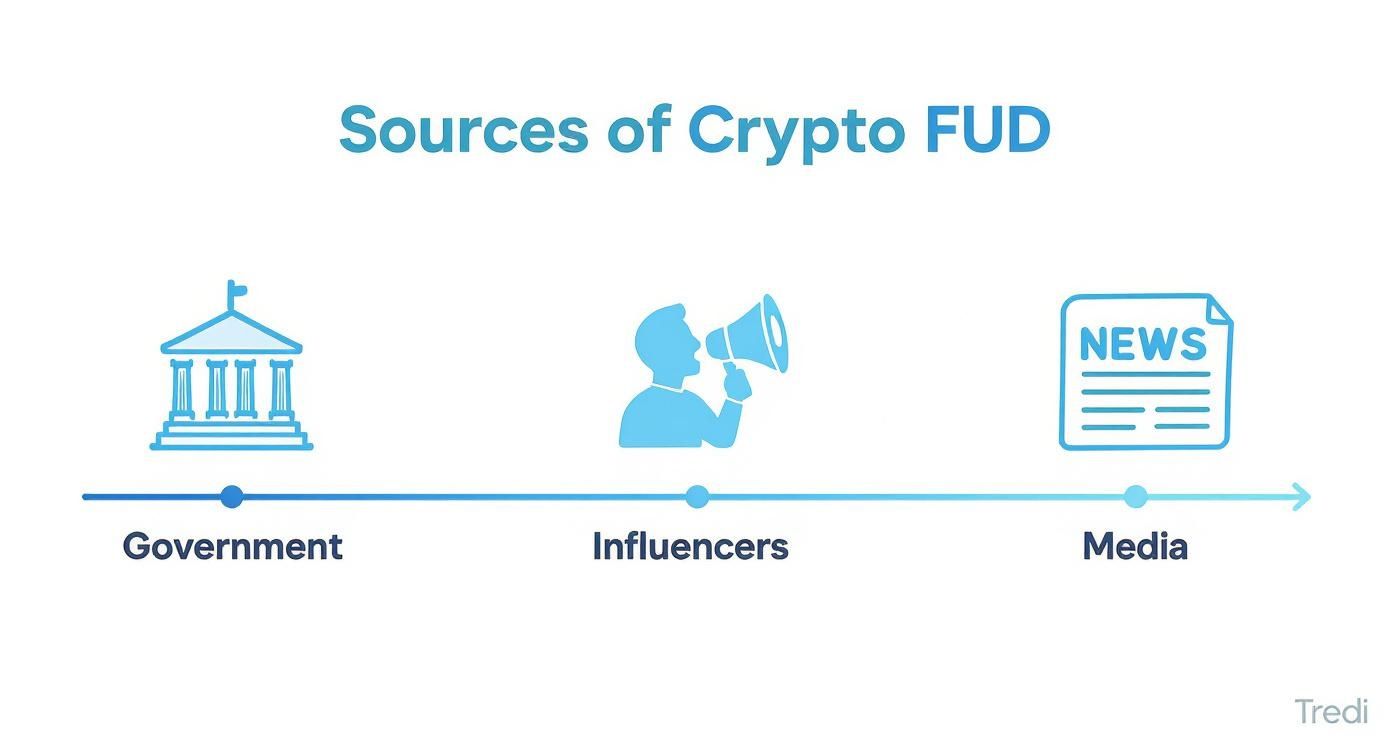
As you can see, the kind of FUD that rocks the entire market rarely comes from just one place. It's more like a perfect storm of bad signals all arriving together.
The Slow Burn of Long-Term FUD on UK Crypto
While a sudden market crash grabs all the headlines, FUD can also play a much longer, more sneaky game. Forget the lightning storm; think of it more like a constant, grey drizzle of negativity that slowly soaks into the market’s foundations, washing away confidence piece by piece.
This “slow burn” FUD has a real, lasting effect on the UK’s crypto industry. It’s a non-stop drip-feed of scary media headlines, stern warnings from regulators like the Financial Conduct Authority (FCA), and a general sense of unease that makes it harder for real innovation to grow.
How Slow Burn FUD Chills Investment
This ongoing negativity doesn’t just frighten individual investors. It poisons the water for the entire industry, making it much tougher for good ideas to get the money they need. When venture capitalists and other big investors are constantly hit with headlines that question crypto's legitimacy, they naturally become more cautious about backing promising UK-based startups.
This isn't just a guess; the numbers confirm it. In the last half of 2023, UK fintech funding for crypto projects dropped by a massive 48% compared to the year before, falling from £326 million to just £170 million. This slide happened at the same time as repeated FCA warnings and major news reports about crypto "bubbles," which directly soured investor mood. You can dig deeper into this trend at Crypternon.com.
The constant negativity also changes how the public sees crypto. An early 2024 YouGov survey found that 62% of UK adults now view cryptocurrencies as “high-risk,” a big jump from 54% just a year earlier.
This shows how FUD is more than just a headache for traders. It acts as a brake on the whole industry, slowing down progress and making the UK a less attractive place for the developers and entrepreneurs who are trying to build the future. In the same way, complex but valid concerns, like the quantum computing threats to cryptocurrency, can easily be twisted into FUD, scaring off long-term investment.
Your Toolkit for Spotting and Managing FUD

Knowing what FUD means in crypto is one thing, but knowing how to defend against it is where the real power is. When panic starts to spread through the market, having a clear plan can keep you grounded and protect your money from emotional decisions. Think of this as your practical guide to building up that defence.
The best weapon you have is a healthy dose of scepticism. Instead of reacting immediately to a dramatic headline, just stop. Take a breath and start digging. Where is this information really coming from? Is it an official announcement from the project, or an angry rant on an anonymous blog?
How to Verify Information and Stay Grounded
Remember, a single negative story hardly ever tells the whole story. A smart first move is to check the news across several independent sources. If only one little-known website is reporting a "catastrophic" bug, that should make you suspicious.
It's also worth asking a simple question: who benefits from this panic? Could it be a rival project trying to get ahead, or maybe a big investor looking to push the price down so they can buy in for less? Understanding the motives behind the noise helps you see FUD for the manipulative trick it often is.
It's so easy to get obsessed with short-term price moves. A 10% drop in an hour feels like a disaster, but if you zoom out and look at the six-month or one-year chart, you'll often see it's just a small dip in a much bigger upward trend.
Master the Golden Rule: DYOR
Your strongest defence is summed up in one simple acronym: DYOR, or "Do Your Own Research." This isn't about becoming a blockchain genius overnight. It’s about creating a simple, repeatable process to check information before you act on it.
So, what does putting DYOR into action actually look like?
- Read the Whitepaper: Go straight to the source. Get a feel for the project's real aims and the technology behind it. Is it trying to solve a real problem, like making international payments faster, or is it just hype?
- Check the Team: Who are the founders? Are they public figures with a believable track record in the industry, or are they hiding behind fake names?
- Analyse Community Activity: Jump into the project's official Discord or Telegram channels. Is the community genuinely active and are the developers communicating openly and answering tough questions?
Building these simple habits is a key part of good risk management in cryptocurrency trading and will give you the confidence to handle the market's unavoidable ups and downs.
A Few Final Thoughts on FUD
To finish up, let's go over a few common questions that come up when people first learn about FUD. Think of this as a quick-fire round to lock in your understanding before you head back out into the crypto world.
Is All Negative Crypto News FUD?
Definitely not, and it’s a vital difference to understand. The real distinction is about intent and substance.
Real criticism is essential for a healthy market. A well-researched report pointing out a project’s security flaws or a thoughtful analysis of its economics isn't FUD; it's due diligence. This kind of information helps everyone make smarter choices.
FUD, on the other hand, is all about creating panic. It uses exaggeration, rumours, or straight-up lies to scare people into selling. The next time you see a scary headline, just ask yourself: is this helping me understand a risk, or is it just trying to make me afraid?
What's the Opposite of FUD in Crypto?
If FUD is the devil on one shoulder, FOMO is the devil on the other. It stands for “Fear Of Missing Out,” and it's the total opposite of FUD.
While FUD uses fear to drive prices down, FOMO uses hype and the dream of easy money to pump prices to crazy heights. It’s that feeling in your gut telling you to buy a coin that’s already shot up 100%, just in case it does another 100%.
Both FUD and FOMO are emotional traps that play on our most basic instincts. A smart investor learns to spot and ignore both the irrational fear and the wild hype.
How Can I Protect My Portfolio from Panic Selling?
Your best protection against a FUD-driven market crash is a plan you made with a cool head, long before the panic kicked off. Having a clear strategy based on your own goals and how much risk you're comfortable with is the only way to stay steady when things get wild.
Here are a few practical ways to protect your investments:
- Set Stop-Loss Orders: This is an automatic instruction to sell an asset if it drops to a certain price. It takes the emotional, split-second decision out of your hands.
- Don't Put All Your Eggs in One Basket: Spreading your money across several different assets means that a targeted FUD attack on one project won't wipe out your whole portfolio.
- Invest What You Can Afford to Lose: This is the golden rule for a reason. If you only invest money you're truly prepared to part with, you'll never be forced into a decision driven by pure fear.
At The Coin Course, our mission is to empower you with the knowledge to invest with confidence, not fear. Dive into our library of expert-written guides to build a solid foundation for your crypto journey. Find out more at https://thecoincourse.com.