Ever feel like everyone's talking about cryptocurrency and you've missed the memo? It can seem that way, but diving into crypto as a beginner is a lot less complicated than you might think.
At its heart, cryptocurrency is just digital money. Picture it like the pounds in your bank account, but instead of being stored by a bank, you can send it to anyone, anywhere in the world, without needing a middleman to give it the green light.
Your First Steps into the World of Crypto
Heard terms like Bitcoin or blockchain thrown around and felt like they were from another planet? Don't worry, you're in good company. Let's strip away the technical language and begin with a simple comparison.
Imagine a digital notebook that's shared with everyone online. Anyone can look at it, but nobody can go back and secretly scribble out what's already been written. This shared notebook is the blockchain, and it's where every single crypto transaction gets logged. When you send digital cash to a friend—say, 0.001 Bitcoin—a new line is added to this notebook, creating a permanent, see-through record. It’s this clever setup that allows crypto to work without a central authority like HSBC or Barclays.
Why Are People in the UK Interested?
So, why are your mates and colleagues suddenly chatting about crypto? It's not just about trying to get rich quick. The buzz comes from a few different places that are genuinely changing how we view finance.
- Game-Changing Tech: For many, the fascination is with the blockchain technology itself. They see it as a powerful new way to build more open and honest financial systems for everyone. For example, some projects are using it to make international payments faster and cheaper than traditional bank transfers.
- Taking Back Control: With crypto, you're essentially your own bank. This idea of having direct control over your own funds, without needing permission from a third party, really appeals to people.
- Future Growth: Let's be honest, the potential for financial growth is a big driver. Many see it as an early investment in what could be the future of finance and technology, similar to investing in early internet companies back in the 90s.
The aim here isn't to make you an expert overnight. It's about pulling back the curtain, showing you that crypto isn't some secret club, and giving you the confidence to start learning more.
This groundswell of interest isn't just talk; the numbers back it up right here in the UK. Cryptocurrency ownership is on the up, particularly with younger, tech-savvy Brits. In fact, some research suggests the UK is at the forefront of crypto adoption in Europe, with 23% of UK consumers having purchased it at some point. It’s a trend powered by a mix of curiosity, social media buzz, and a classic case of FOMO on the next big thing in finance. You can read more about the rise of cryptocurrency in the United Kingdom.
By getting these core ideas down, you're already building a solid foundation. The world of crypto for beginners doesn't have to be scary. With the right explanations and a clear path, you'll be navigating this new landscape in no time.
Understanding the Big Ideas Behind Crypto
Diving into crypto for the first time means getting your head around a few big ideas that make it all tick. Before you even think about investing your first pound, it’s worth taking the time to build a solid foundation of knowledge. Let’s unpack the core tech that powers it all.
At the very centre of everything is the blockchain. We touched on this earlier as a kind of shared digital notebook, and that’s a perfect way to think about it. It’s a clever ledger system where every transaction is recorded in a "block" and then chained to the one before it, creating a permanent and unchangeable history.
This concept map breaks down how it all fits together, showing how crypto acts as digital cash on a public ledger, all without needing a bank.
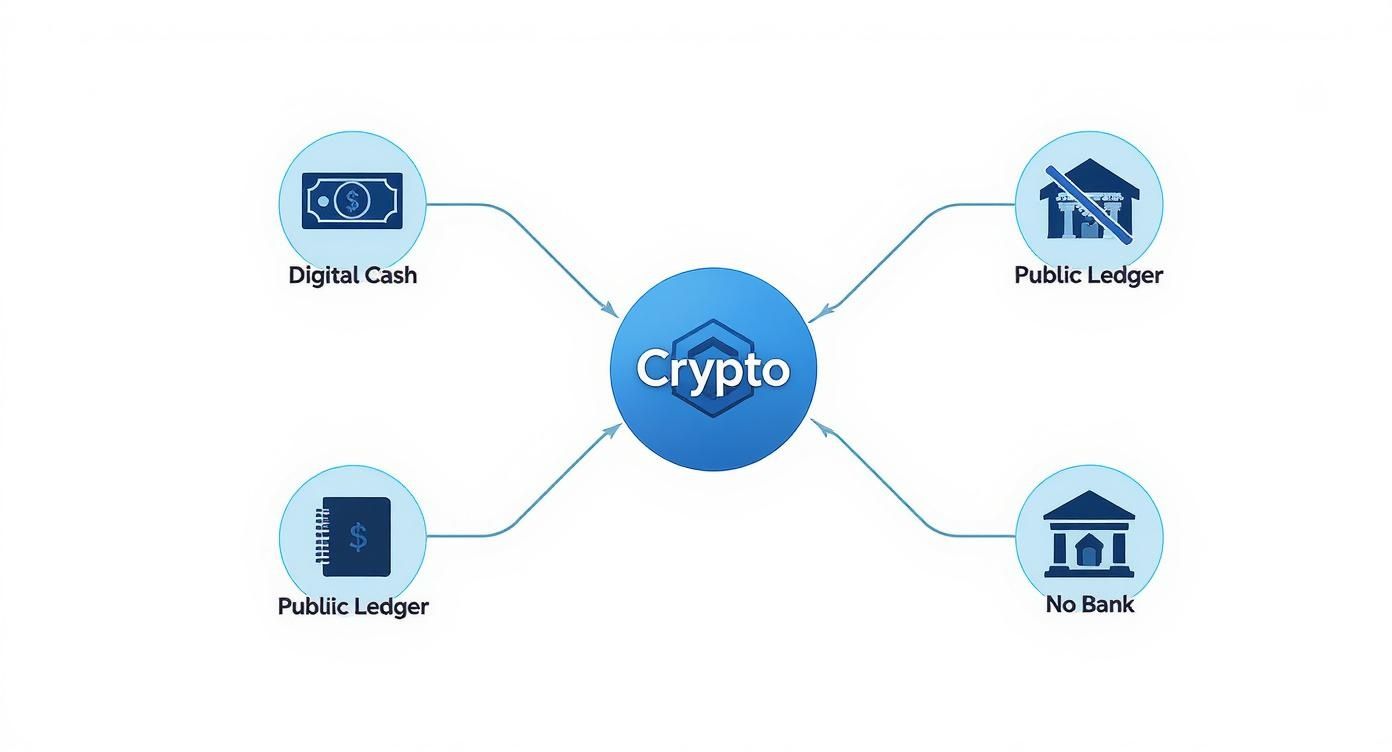
As you can see, the real power of crypto comes from weaving these simple but powerful concepts into a single system.
The Power of Decentralisation
This brings us to another game-changing idea: decentralisation. In the traditional financial world, a central authority like a bank or government controls the ledger. They verify transactions, hold your money, and can even freeze your account if they choose to.
Cryptocurrency flips that on its head. Instead of one company in charge, the blockchain is managed by a huge network of thousands of computers spread all over the world. For a new transaction to be added, these computers must all agree that it's valid. This shared agreement removes the need for a single point of control, making the system more open and resistant to censorship. It’s like having thousands of independent witnesses all confirming the same story, rather than just trusting a single person.
Coins vs Tokens: What's the Difference?
You'll often hear the words 'coin' and 'token' used as if they’re the same thing, but there’s a distinct difference that’s important for beginners to grasp.
- Coins have their very own, unique blockchain. Think of Bitcoin (BTC) and Ethereum (ETH); they are the native currencies of their respective networks and act as the foundation.
- Tokens are built on top of an existing blockchain. For example, thousands of different tokens, like Shiba Inu (SHIB) or Chainlink (LINK), are built on the Ethereum blockchain. They piggyback on its security and infrastructure instead of creating their own from scratch.
Think of a blockchain like a country's railway system. A 'coin' is the actual train that runs on those specific tracks. A 'token' is like a passenger ticket that's valid for that train journey—it uses the existing railway but serves a completely different purpose.
Your Digital Keys: Public and Private
So, how do you actually prove you own your crypto? This is where public and private keys come into play. They are just long, unique strings of letters and numbers that control access to your digital assets.
The easiest way to understand this is to compare it to your bank account.
- Public Key: This is like your bank account number. It's safe to share with others so they can send you money. Nobody can access your funds with this information alone. For instance, you would give this key to a friend so they could send you some Ethereum.
- Private Key: This is your secret PIN or password. You use it to authorise transactions from your account. This key proves you are the owner, and it must be kept secret at all costs. If someone gets your private key, they have full control of your crypto.
These concepts are the essential building blocks of the entire crypto space. To dig deeper, you can learn more about what cryptocurrency is and how it works in our detailed guide. Understanding these fundamentals will give you a clear mental model of how everything fits together, making you a much smarter and more confident beginner.
How to Choose Your First Cryptocurrency
Walking into the world of crypto feels a bit like standing in a sweet shop with thousands of options. It's easy to get overwhelmed. The trick is to sidestep the hype and find a cryptocurrency that actually fits what you want to do and how much risk you're comfortable with.
Let’s be clear: not all cryptocurrencies are the same. They're built for different reasons and come with their own unique strengths and weaknesses. Let's break down the main categories to help you make a smart first move.
The Original Giant: Bitcoin (BTC)
Bitcoin is the one that started it all. As the first and most famous cryptocurrency, people often call it "digital gold". Much like real gold, many people buy Bitcoin simply to hold onto it, hoping its value will grow or at least hold steady over time. It’s what’s known as a store of value.
With the largest market value of any crypto, its network is incredibly secure and well-established. For anyone just starting out, Bitcoin is often the most straightforward entry point because of its long track record. Its goal is simple: to be a decentralised, digital form of money.
The Global Computer: Ethereum (ETH)
If Bitcoin is digital gold, think of Ethereum as a global computer that anyone can use. While its coin, Ether (ETH), can be used for payments, the real magic of the Ethereum network is its ability to run smart contracts. These are the building blocks for decentralised applications, or "dApps".
Here's what that really means in practice:
- Developers build on it: Thousands of other crypto projects, from finance tools (like Aave, for lending and borrowing) to digital art marketplaces (like OpenSea for NFTs), are built right on top of Ethereum's blockchain.
- It’s the fuel for a massive ecosystem: This makes ETH a utility token. You need it to pay for actions on the network, a bit like putting petrol in a car. Every time you want to do something on Ethereum, you pay a small "gas fee" in ETH.
If you're fascinated by the technology behind crypto and what the future of the internet might look like, Ethereum is an incredible place to start.
The Low-Volatility Option: Stablecoins
What if you want to dip your toes in the water without diving into wild price swings? That's exactly what stablecoins are for. They are a special kind of crypto designed to hold a steady value because they are pegged to a real-world asset, most commonly a currency like the US dollar.
For example, a major stablecoin like USD Coin (USDC) is designed to always be worth $1. This makes them a fantastic, low-stress way to get started. You can practise sending, receiving, and holding crypto without the fear of your funds halving in value overnight.
The High-Risk Frontier: Altcoins and Meme Coins
Basically, any cryptocurrency that isn't Bitcoin is called an altcoin (short for 'alternative coin'). This is a huge and wild category, covering everything from serious projects with ground-breaking technology (like Solana or Cardano) to joke currencies known as meme coins (like Dogecoin or Shiba Inu).
While some altcoins solve genuine problems, meme coins are often powered by social media hype and community excitement. The potential rewards can be massive, but they carry extreme risk and can lose all their value just as fast.
Interestingly, these high-risk options are becoming a popular entry point. A 2025 Gemini report found that 24% of UK respondents now own crypto, with meme coins being a major factor. In fact, 28% of UK investors who hold both traditional crypto and meme coins said they bought the meme coins first. This shows a real shift, with many newcomers drawn in by the buzz of newer projects. You can read more about it in the full 2025 Global State of Crypto Report.
To help you visualise the differences, here’s a simple breakdown of the main crypto types.
Comparing Beginner-Friendly Cryptocurrencies
This table gives you a quick look at the core differences between these categories, helping you match a crypto type to your personal goals.
| Crypto Type | Primary Example | Main Purpose | Best For Beginners Who... |
|---|---|---|---|
| Store of Value | Bitcoin (BTC) | To act as "digital gold"; a long-term holding. | ...want the most established and straightforward starting point. |
| Smart Contract Platform | Ethereum (ETH) | To power a global computer for decentralised apps (dApps). | ...are interested in the technology and future of Web3. |
| Stablecoin | USD Coin (USDC) | To maintain a stable value, pegged 1:1 with the US Dollar. | ...want to learn the ropes without exposure to price volatility. |
| Meme Coin | Dogecoin (DOGE) | To be a fun, community-driven currency, often speculative. | ...understand and are comfortable with very high-risk, high-reward assets. |
Ultimately, which one you choose is down to what you want to achieve. For most people, starting with a well-established project like Bitcoin or Ethereum is a sensible and popular path.
Setting Up Your First Secure Crypto Wallet
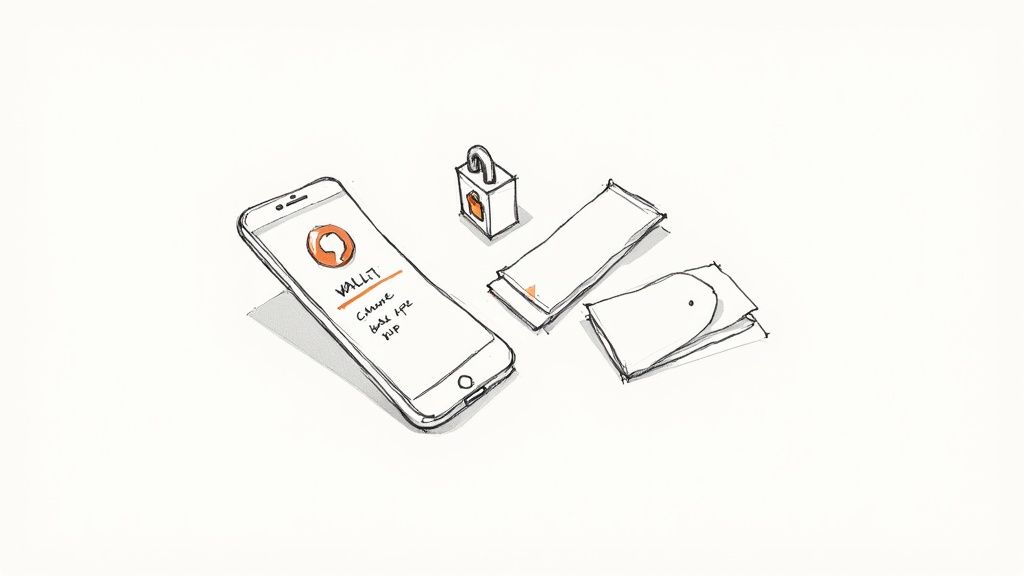
Think of your crypto wallet as your personal digital vault for the new world of finance. It’s where you’ll keep your assets, and making sure it's secure is your number one priority. A common misconception is that wallets hold your coins like a physical wallet holds cash. In reality, they hold the secret keys—the passwords—that give you access to your crypto on the blockchain.
Getting this first step right is absolutely crucial. A secure wallet is the bedrock of your entire crypto experience, giving you total control and peace of mind over your digital funds.
Hot Wallets vs Cold Wallets
The first big decision you'll face is choosing between a "hot" and a "cold" wallet. The difference is pretty simple: one is connected to the internet, and the other isn't.
Hot Wallets: These are software programs on your phone or computer, or even handy browser extensions. Popular examples include MetaMask or Trust Wallet. Because they’re always online, they are incredibly convenient for making frequent transactions. They're a great starting point for beginners who want to manage small amounts of crypto without much fuss.
Cold Wallets: These are physical devices, often looking like a USB stick, from brands like Ledger or Trezor. They keep your private keys completely offline, which makes them the gold standard for security. They're the best choice for storing larger amounts of crypto for the long haul, as they’re completely shielded from online threats.
When you're just starting out, a user-friendly hot wallet is usually the way to go. Most are free and offer a smooth way to learn the ropes.
A Step-by-Step Guide to Setting Up a Software Wallet
Let's walk through the general process of setting up a typical software wallet. While the exact steps might differ slightly from app to app, the core principles are the same everywhere.
- Choose and Download: Pick a well-regarded wallet and download it only from the official app store or the provider’s website. Steer clear of unofficial links to protect yourself from scams.
- Create Your Wallet: Open the app and choose the option to create a new wallet. The software will then generate your unique private and public keys behind the scenes.
- Secure Your Seed Phrase (The Most Important Step!): The wallet will now display a seed phrase, which is sometimes called a recovery phrase. This is a list of 12 to 24 random words, and it's the master key to all your crypto.
This sequence of words is your only backup. If your phone is lost or your computer dies, you can use this phrase to restore your entire wallet and all its assets on a new device.
Crucial Security Rule: Write your seed phrase down on paper and store it somewhere incredibly safe and offline. Never, ever save it as a screenshot, in a text file on your computer, or in a cloud service like Google Drive. If anyone else gets access to this phrase, they get access to all of your crypto.
- Confirm and Verify: The wallet will almost certainly ask you to re-enter your seed phrase to confirm you've written it down correctly. Don't skip this check.
- Set a Password: Finally, you’ll create a local password or PIN for day-to-day access to the app on your device. This password only protects the app itself; your seed phrase is what protects your actual funds on the blockchain.
And that’s it! Your wallet is set up and ready to go. You can now find your "public address" to receive your first bit of crypto. To dive deeper into the different types of wallets and find the perfect one for you, check out our cryptocurrency wallets complete guide.
A Step-by-Step Guide to Buying Crypto in the UK
Right, you’ve wrapped your head around the core ideas and even set up your own wallet. Now for the exciting bit: turning that knowledge into action. This is your practical guide to buying your first cryptocurrency here in the UK, broken down into simple, clear steps.
Your first port of call is a reputable cryptocurrency exchange. Think of an exchange as a digital marketplace where you can swap your British Pounds (GBP) for assets like Bitcoin or Ethereum. It’s the bridge connecting the traditional world of finance with crypto.
Choosing a UK-Friendly Exchange
When you're picking a platform, you're looking for something reliable, secure, and genuinely easy to use for a newcomer. A great starting point is to check if the exchange is registered with the UK's Financial Conduct Authority (FCA). This isn't an endorsement, but it does add a layer of reassurance that the platform meets certain operational standards.
A few key things to look out for:
- GBP Deposits: Can you easily deposit pounds directly from your UK bank account? This is a must-have, as it saves you the headache and cost of converting your money into another currency first. Platforms like Coinbase or Kraken are popular choices for this.
- A Simple Interface: Some exchanges are built for professional traders and can feel overwhelming. As a beginner, you want a clean, simple layout that makes buying crypto a straightforward process.
- Solid Security: Look for platforms offering features like Two-Factor Authentication (2FA). This adds a crucial second layer of protection to your account, a bit like needing your bank card and your PIN.
Once you’ve found an exchange that ticks these boxes, it’s time to get your account set up.
Creating and Verifying Your Account
Signing up is usually pretty painless and feels a lot like opening an online bank account. You’ll need to provide your email and create a good, strong password. But to comply with regulations, all reputable exchanges will need to verify who you are.
This process is known as Know Your Customer (KYC). You'll typically be asked to provide:
- A photo of a government-issued ID, like your passport or driving licence.
- Proof of your address, such as a recent utility bill or bank statement.
- Sometimes, you might need to take a quick selfie to prove you're a real person.
It might feel a bit intrusive, but KYC is a vital security measure. It's there to prevent fraud and protect everyone using the platform.
Don't be alarmed by the identity checks. They're a standard and necessary part of operating securely in the financial world, and it shows the exchange takes its legal duties seriously.
Making Your First Purchase
With a verified account, you’re ready to go. First up, you'll need to deposit some money. Find the "deposit" section, link your UK bank account, and transfer some pounds. It's wise to start small—an amount you're completely comfortable with, maybe just £20 or £50.
Next, head to the "buy" or "trade" area. For your first purchase, a simple "buy" option is all you need. Select the cryptocurrency you want to buy (Bitcoin or Ethereum are common starting points) and type in how much GBP you'd like to spend. The platform will show you a final preview, including any fees, before you commit.
Click "confirm," and that's it! Congratulations, you officially own some crypto. But hold on, there’s one last, crucial step.
Securing Your Crypto in Your Personal Wallet
Remember that wallet you set up earlier? It’s time to put it to use. While leaving your crypto on an exchange is convenient, it’s a bit like leaving your cash with the shopkeeper—you don't truly control it because the exchange holds the private keys for you. For maximum security, you should always move your new assets to your own personal wallet.
To do this, go to the "withdraw" section on the exchange. Select the crypto you just bought and carefully paste in the public address from your personal wallet. Double, then triple-check the address is correct. Once you confirm the transaction, your crypto will be on its way and should appear in your wallet shortly. Now, you and only you have full control.
The UK crypto scene is buzzing with activity. Between July 2023 and June 2025, the market saw a 32% jump in activity, driven by a lively mix of stablecoin and altcoin trading. As new rules for consumer protection come into play, some traders are exploring different platforms, but mastering these fundamentals is the best way to get started safely. You can discover more insights about European crypto adoption to get a sense of the wider trends.
Key Safety Rules and Common Mistakes to Avoid
Knowing how to keep your crypto safe is just as crucial as knowing how to buy it. While the potential is exciting, the crypto world can also be a minefield of scams and easy-to-make mistakes. Protecting your investment boils down to building a few simple, yet powerful, security habits from the get-go.
The golden rule, not just for crypto but for any investment, is to never invest more than you can comfortably afford to lose. The market is notoriously volatile; profits are never guaranteed. Seriously. Think of it as money you can set aside without it affecting your daily life.
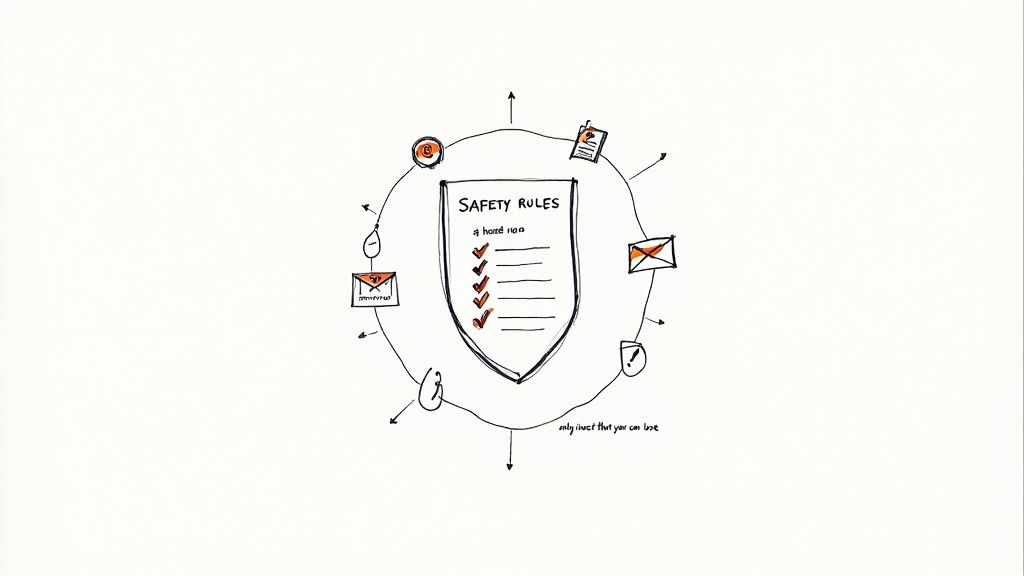
Adopting this mindset helps you make clear-headed decisions instead of emotional ones driven by the fear of missing out (FOMO).
Spotting and Dodging Common Scams
Scammers are always on the lookout for newcomers, often luring them in with offers that sound too good to be true. And that’s because they always are. Your best defence is a healthy dose of scepticism.
Keep an eye out for these massive red flags:
- Guaranteed High Returns: If someone promises you guaranteed or "risk-free" high returns on crypto, they are a scammer. For example, a stranger messaging you on Instagram promising a 10% daily return on your investment is a classic scam. There are no exceptions to this rule.
- Fake Giveaways: You’ll inevitably see posts on social media from accounts pretending to be celebrities or major exchanges. They’ll offer to double any crypto you send them—it's a classic trick to get you to hand over your funds.
- Urgent Demands: Scammers try to create a sense of panic, telling you an offer is for a "limited time only" to rush you into making a bad decision. Real opportunities don't force you to act in a frenzy.
Always, always verify information through official sources. If a deal seems incredible, it almost certainly isn't real.
A common pitfall for beginners is jumping on a trend without doing their homework. Just because a coin is all over social media doesn’t make it a solid investment. Always step back and research the project for yourself.
Building Your Crypto Security Checklist
Getting into good security habits from day one will save you a world of pain later. It's not nearly as complicated as it sounds; it's just about creating layers of protection around your accounts and assets.
Here are a few essential practices to put in place immediately:
- Enable Two-Factor Authentication (2FA): This one is non-negotiable. On every exchange or crypto service you sign up for, turn on 2FA. It means that even if a thief gets your password, they can't log in without a second code, usually from an app on your phone like Google Authenticator.
- Verify Website Addresses: Before you type in a single password, double-check that you're on the correct, official website. Scammers are brilliant at creating fake sites that look identical to the real thing (e.g.,
coinnbase.cominstead ofcoinbase.com) to steal your login details. Bookmark your trusted sites. - Be Wary of Unsolicited Offers: If a random person contacts you on social media or by email with a hot investment tip, just assume it’s a scam. Block them, delete the message, and move on.
These simple habits form a strong foundation for keeping your crypto safe. For a deeper dive, you can learn more about cryptocurrency security best practices in our dedicated guide. By learning to spot the common traps and being proactive with your security, you can explore the world of crypto with confidence.
Common Questions Newcomers Ask About Crypto
Even after you've got a handle on the basics, there are always a few niggling questions that pop up. Getting straight answers to these is often the final piece of the puzzle, giving you the confidence to actually get started. Let's run through some of the most common things people wonder about.
Think of this as your practical FAQ. We're going to clear up those last few uncertainties so you can feel ready to make your first move.
How Much Money Do I Need to Get Started?
This is a big one, but the answer should put your mind at ease: you really don't need much at all. Ignore the hype you see online about people throwing huge sums of money around. Most crypto exchanges here in the UK will let you open an account and make your first purchase with as little as £10 or £20.
The key here is to start with an amount you'd be genuinely okay with losing. Seriously. This takes all the pressure off. It allows you to focus purely on learning the process—from the click of the 'buy' button to the feeling of sending crypto to your very own wallet for the first time.
Your first crypto purchase isn't about making a profit; it's about education. Treat it as a small cost to gain valuable, hands-on experience in a new financial world.
Is Cryptocurrency Legal and Is It Taxed in the UK?
In short, yes. It's perfectly legal for any individual in the United Kingdom to own and trade cryptocurrencies like Bitcoin. While the regulations are still evolving, you are entirely within your rights to buy, sell, and hold these digital assets.
Where you need to be careful, though, is with taxes. When you sell your crypto for more than you paid, that profit might be liable for Capital Gains Tax. HMRC expects you to keep detailed records of every transaction: what you bought, when you bought it, and the price at which you sold it. The rules can get a bit tricky, so checking the official HMRC guidance is always a smart move, especially as your portfolio grows.
What Happens If I Lose My Seed Phrase?
This is arguably the most important question of all, and the answer is brutal. If you lose the seed phrase to your personal, non-custodial wallet, your crypto is almost certainly gone forever.
There’s no "forgot your password?" link to click or a support team you can phone. That sequence of words is the only master key that can unlock your funds on the blockchain. This is precisely why we bang on about it so much. You absolutely must write it down, store it somewhere safe and offline, and ideally, have a backup copy in another secure, physical location. In the world of self-custody, you are the bank.
Ready to continue your learning journey with confidence? At The Coin Course, we provide clear, expert-led articles and guides to help you master everything from fundamental concepts to advanced security. Explore our resources and build your crypto knowledge on a trusted platform. Start learning today at https://thecoincourse.com.