I remember it like yesterday, sitting in a dimly lit conference room back in 2017, listening to Vitalik Buterin himself describe the future of Ethereum. He spoke of a bustling metropolis, a global computer humming with decentralized applications, finance, and creativity. The vision was intoxicating, but even then, a nagging question lingered in the air, one that industry veterans had been whispering since Bitcoin’s early days: can it actually scale? Can a decentralized network handle the transaction throughput of a global financial system, or even just a popular mobile game, without buckling under its own weight? Fast forward to today, and that qudecentralizationger a philosophical musing but a pressing engineering challenge, one that has given rise to one of the most exciting and complex frontiers in blockchain development: Layer 2 solutions.
For years, blockchain enthusiasts, myself included, grappled with the "blockchain trilemma" – the idea that a decentralized network can only achieve two out of three desirable properties: decentralization, security, and scalability. Bitcoin, the progenitor, prioritized security and decentralization above all else, sacrificing transaction speed and capacity. Ethereum followed a similar path, aiming for a more programmable, turing-complete blockchain, but still bumping against the same throughput limitations. We saw this manifest in exorbitant gas fees, particularly during peak network congestion, like the CryptoKitties craze of late 2017, or the DeFi summer of 2020. Users were literally paying hundreds of dollars for a single transaction, essentially making the network unusable for smaller, everyday interactions. The dream of mass adoption, of blockchain being silently integrated into our daily lives, seemed to recede into the distance as block space became a luxury few could afford.
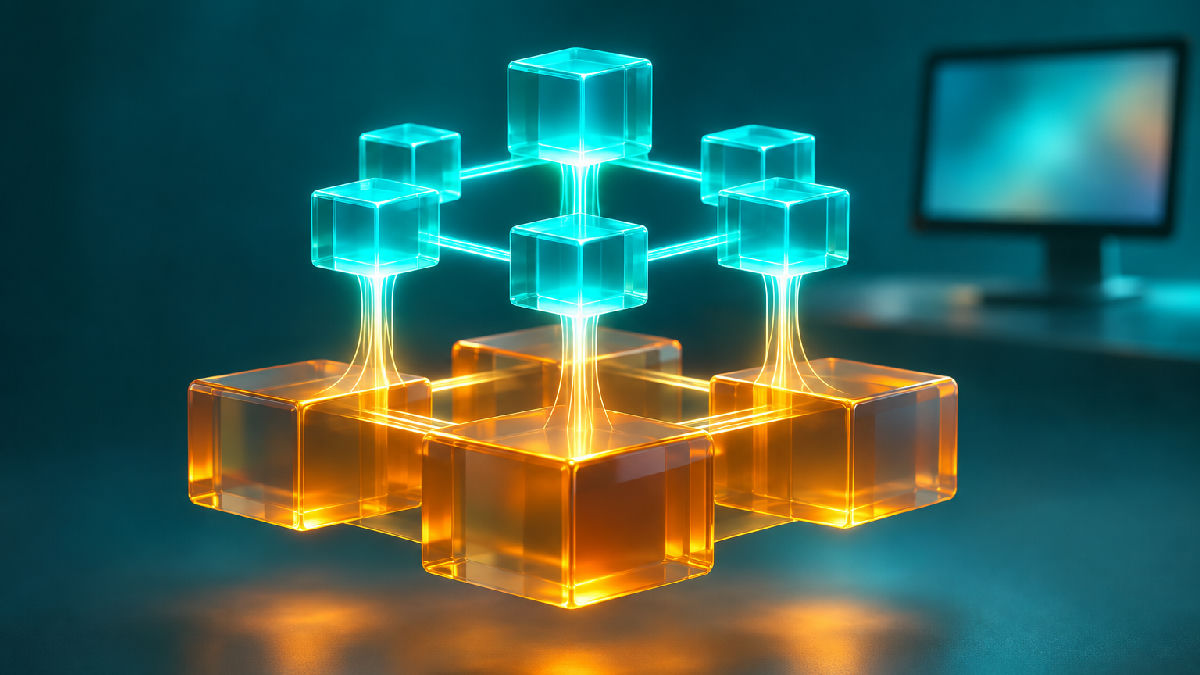
This wasn't just an inconvenience; it was a fundamental barrier to growth. Imagine trying to use the internet if every tweet cost $50, or every online purchase incurred a $100 service charge. It simply wouldn't work. Industry insiders knew we needed a breakthrough, a way to expand the network's capacity without compromising the foundational security and decentralization that made these chains so revolutionary in the first place. This is where Layer 2 solutions come into play, offering a pragmatic yet elegant approach to scaling. They don't try to fundamentally alter the underlying (Layer 1) blockchain; instead, they build on top of it, offloading transaction processing to a secondary layer while still inheriting the security guarantees of the main chain. It's akin to building a network of superhighways above local roads – the local roads handle the initial entry and final exit, but the heavy traffic zips along the dedicated expressways. The financial implications are massive: lower transaction costs, faster confirmations, and the potential to unlock entirely new applications that were previously unfeasible due to Layer 1’s constraints. As of my last check, the Layer 2 ecosystem boasts a collective market capitalization north of $45 billion with a daily trading volume around $2.3 billion across over 150 active projects – and it's growing at an astonishing pace. This isn't just a niche corner of crypto anymore; it's becoming the cornerstone for the next generation of decentralized innovation. Let's peel back the layers and understand how this crucial technology is reshaping the blockchain landscape.
The Genesis of Scaling: From Bitcoin's Constraints to Ethereum's Bottlenecks
To truly appreciate Layer 2 solutions, we need to understand the historical context that necessitated their creation. Blockchain technology, at its core, is a marvel of distributed consensus, offering unparalleled security and censorship resistance. However, this inherent design choice – requiring every node in the network to validate every transaction – comes at a cost, speed. Bitcoin, for instance, processes transactions roughly every 10 minutes, with an average throughput of about 7 transactions per second (TPS). Compare this to Visa, which can handle upwards of 24,000 TPS. It's a stark difference, one that simply couldn't sustain global adoption.
Bitcoin's Early Headaches: The Block Size Debate and Lightning Network
I remember sitting in coffee shops with early Bitcoin developers, debating the infamous "block size limit." Satoshi Nakamoto, in his infinite wisdom, initially set an arbitrary 1MB block size limit to prevent spam attacks and keep the network manageable in its infancy. As Bitcoin gained traction, especially around 2015-2016, this limit became a major point of contention. One faction, often called "big blockers," argued for increasing the block size to accommodate more transactions on the main chain. This led to contentious forks like Bitcoin Cash. Another faction, known as "small blockers," believed that scaling should happen off-chain, preserving the decentralization and security of the main chain by keeping blocks small. This latter camp championed technologies like SegWit (Segregated Witness), which restructured transaction data to allow for more transactions per block, and more importantly, the Lightning Network, a pioneering Layer 2 solution.
The Lightning Network, first proposed in 2015, aimed to allow users to conduct near-instant, low-cost Bitcoin transactions off-chain, only settling the net result onto the main blockchain. It was a revolutionary concept – payment channels allowing participants to transact multiple times without touching Layer 1 until the channel was closed. While its initial adoption was slow, it's gained significant traction, especially for micro-payments and in regions with high inflation where Bitcoin serves as a practical currency. I recall a conversation with a Blockstream engineer in late 2018 who confidently predicted, "Lightning will be how billions pay for coffee." While we're not quite there globally, it's certainly moving in that direction, especially with integrations from companies like Strike.
Ethereum's Scaling Crisis: Gas Fees and the DeFi Boom
Ethereum faced a different, yet equally urgent, scaling problem. Its turing-complete virtual machine (EVM) allowed for complex smart contracts, leading to the explosion of decentralized applications (dApps), DeFi protocols, and NFTs. This innovation, while incredible, put immense strain on the network. The aforementioned CryptoKitties in 2017 brought the network to a crawl. Then came the Decentralized Finance (DeFi) summer of 2020, and later the NFT boom of 2021. Gas fees – the transaction costs on Ethereum – skyrocketed. I personally saw transactions exceed $500 for a simple token swap on Uniswap during peak times. This effectively priced out smaller users and made many promising dApps economically unviable.
The Ethereum community recognized this problem early on. While significant efforts were, and still are, being poured into Ethereum 2.0 (now called the Consensus Layer and Execution Layer upgrades), which aims to improve Layer 1 scalability through sharding and proof-of-stake, these solutions were years away, and the problem was here now. This urgency spurred intense development in Layer 2 solutions, particularly for Ethereum. The goal was simple: provide immediate relief to users and developers, ensuring the ecosystem could continue to grow without being choked by its own success. This drive gave birth to state channels, sidechains, optimistic rollups, and zero-knowledge rollups – the diverse toolkit we now have at our disposal.
Historical Context is Key!
Understanding why Layer 2s were developed helps grasp their design choices. They weren't just theoretical constructs; they were desperate measures born from critical network congestion and user frustration. This problem-solution dynamic is a recurring theme in blockchain innovation.
Peeling Back the Layers: A Technical Deep Dive into Layer 2 Architectures
So, what exactly are these Layer 2 solutions, and how do they work their magic? Fundamentally, they all share a common goal: to move transaction execution off the main chain (Layer 1) while still periodically anchoring transactions or state changes back to Layer 1 for security and finality. The main chain acts as the ultimate arbiter, the source of truth, and the security anchor. Different Layer 2 approaches achieve this in varying ways, each with its own trade-offs regarding security, speed, and decentralization.
Understanding the Core Mechanics: Off-Chain Processing & On-Chain Settlement
Imagine Layer 1 as a secure, but slow, vault. Every transaction requires multiple checks by bank tellers (nodes) and careful entry into a ledger. Now, imagine Layer 2 as a fast-paced, high-volume trading floor inside the vault. Trades happen quickly among participants, with only the net changes or disputes being brought to the tellers for final recording in the secure ledger. This analogy, while simplified, captures the essence. Layer 2s process transactions faster and cheaper because they don't require every single network node to validate every single operation. They batch transactions, use cryptographic proofs, or rely on smaller, dedicated sets of validators.
The key insight is that Layer 2 solutions don't sacrifice Layer 1's security. They leverage it. When you interact with a Layer 2, you're not abandoning the security of, say, Ethereum; you're just using a more efficient "express lane" that’s ultimately secured by Ethereum itself. This elegant design allows for massive scalability gains without compromising the fundamental principles of decentralization and security that make blockchains so valuable.
State Channels: The OG Off-Chain Solution
State channels, pioneered by the Lightning Network for Bitcoin and projects like Raiden Network for Ethereum, were one of the earliest Layer 2 concepts. They work by creating a direct, off-chain communication channel between two or more participants. Think of it like opening a tab at a bar. You deposit some funds (a "state") into a multi-signature contract on Layer 1. Then, you and the other party can conduct an unlimited number of transactions off-chain, updating a shared ledger without ever touching the main blockchain. Only when you decide to close the tab, or if there's a dispute, is the final state settled back to Layer 1. The security comes from the initial deposit and the ability for either party to publish the latest valid state to Layer 1 at any time.
Pros: Extremely fast, near-instant finality within the channel, very low transaction costs. Cons: Primarily suited for fixed sets of participants; liquidity needs to be locked; not ideal for open, permissionless applications.
Sidechains: Independent Chains for Scaling
Sidechains are essentially independent blockchains with their own consensus mechanisms, often EVM-compatible, that run parallel to a main chain. They're connected to the main chain via a two-way peg, allowing assets to be moved between them. Users "lock" assets on the main chain, which are then "minted" or made available on the sidechain, and vice versa. Projects like Polygon's PoS Chain (formerly Matic Network) are often described as sidechains or "commit chains" because they have their own validators and security model separate from Ethereum.
Pros: High throughput, lower fees, often EVM-compatible for easy dApp migration. Cons: Their security is independent of the main chain. If the sidechain's validators are compromised, the funds on the sidechain are at risk. Less decentralized than other Layer 2s due to their validator sets.
Rollups: The Current Darling of Ethereum Scaling
Rollups are by far the most popular and promising Layer 2 scaling solution for Ethereum. They execute transactions off-chain, bundle (or "rollup") hundreds or thousands of these transactions into a single, compressed batch, and then submit this batch to Layer 1. The critical innovation here is that rollups post all transaction data (or a cryptographic commitment to it) to Layer 1, allowing the main chain to verify its integrity. This is crucial: rollups derive their security directly from Layer 1. There are two primary types of rollups, distinguished by their verification mechanism:
Optimistic Rollups
Optimistic rollups operate on the assumption that all transactions executed off-chain are valid, hence the "optimistic" in their name. When a batch of transactions is submitted to Layer 1, there's a "challenge period" (typically 7 days). During this period, anyone can submit a fraud proof if they detect an invalid transaction within the batch. If a fraud proof is successfully submitted and validated by Layer 1, the invalid batch is reverted, and the sequencer (the entity that bundled the transactions) is penalized. Projects like Optimism and Arbitrum are leading optimistic rollups.
Pros: Relatively simpler to implement, offers significant throughput increases and cost reductions. Cons: Long withdrawal delays (the 7-day challenge period) due to the need for fraud proofs. This can be mitigated by liquidity providers offering "fast withdrawals" for a fee. The security relies on at least one honest participant monitoring the chain for fraud.
Zero-Knowledge (ZK) Rollups
ZK-rollups use sophisticated cryptography, specifically zero-knowledge proofs (ZKPs), to prove the validity of off-chain transactions. Instead of waiting for a challenge period, ZK-rollups generate a cryptographic proof (called a SNARK or STARK) for every batch of off-chain transactions. This proof is then submitted to Layer 1, which can quickly and cryptographically verify that all transactions in the batch are valid, without needing to re-execute them. It's like having a mathematically irrefutable receipt for every batch. zkSync, StarkWare's StarkNet, and Polygon zkEVM are prominent ZK-rollup implementations.
Pros: Near-instant finality on Layer 1 (once the proof is verified), superior security guarantees as validity is proven mathematically, not assumed. No long withdrawal delays. Cons: Cryptographically complex to implement, especially for EVM compatibility. Generating ZKPs can be computationally intensive, though this is improving rapidly. Still an evolving technology, but widely considered the "holy grail" of scaling by many in the community.
Don't Mix Up Security Models!
It's crucial to understand the difference in security assumptions. Rollups inherit Layer 1 security by posting data to it and proving validity. Sidechains typically have their own, separate security model, which can be less robust than the main chain's if not designed carefully. Always check the specific security guarantees of any Layer 2 you use.
Other Notable Layer 2 Approaches: Validium, Volition, and Plasma
While rollups dominate the discussion, it’s worth noting other approaches that have contributed to the Layer 2 landscape:
Plasma
Plasma was an early scaling solution proposed by Vitalik Buterin and Joseph Poon (of Lightning Network fame). It uses a tree of smaller blockchains (child chains) that periodically anchor their roots to the main chain. While promising, Plasma has largely fallen out of favor due to its complexity and challenges in securely withdrawing funds (the "mass exit" problem). It primarily focused on simple payments and asset transfers, making it less versatile for generalized smart contract execution.
Validium
Validiums are similar to ZK-rollups in that they use zero-knowledge proofs to verify transaction validity. However, unlike ZK-rollups, Validiums do not post all transaction data to Layer 1. Instead, they store it off-chain, often with a data availability committee. While this significantly increases throughput, it introduces an additional trust assumption: you have to trust the data availability committee to publish the data if needed. dYdX, a popular decentralized exchange, uses a Validium solution by StarkWare.
Volition
Volition combines elements of ZK-rollups and Validiums, allowing dApps or users to choose their data availability model on a transaction-by-transaction basis. They can opt for the higher security of Layer 1 data availability (ZK-rollup mode) or the higher throughput/lower cost of off-chain data availability (Validium mode). This offers greater flexibility for developers.
As you can see, the landscape is nuanced and deeply technical. The choice of Layer 2 solution depends heavily on the specific application's needs for security, throughput, cost, and developer experience. For generalized computation, rollups are clearly winning the race, with a strong competition between optimistic and ZK solutions.
The Layer 2 Industry Ecosystem: A Multibillion-Dollar Battleground
The Layer 2 space is not just a technological playground; it's a vibrant, competitive, and rapidly expanding industry ecosystem. Hundreds of projects are vying for developer and user attention, backed by significant venture capital funding and featuring some of the brightest minds in crypto. As of early 2024, the total value locked (TVL) across Layer 2 protocols frequently hovers in the tens of billions of dollars, a testament to their utility and adoption.
Major Players and Their Offerings
Optimistic Rollups: Arbitrum & Optimism
These two are the undisputed titans of the optimistic rollup world, especially on Ethereum. Both offer EVM equivalence (meaning dApps can largely migrate with minimal code changes), significant transaction speed improvements, and drastically lower gas fees compared to Layer 1 Ethereum. They've captured the lion's share of market activity on Layer 2.
- Arbitrum (Arbitrum One, Nova, Stylus): Developed by Offchain Labs, Arbitrum is currently the largest Layer 2 by TVL. They've focused on attracting a wide range of dApps, boasting a robust ecosystem of DeFi protocols (GMX, Radiant Capital) and NFT marketplaces. Their recent ARB token airdrop was a major event in the crypto calendar, further decentralizing their governance. What many don't realize is their nuanced approach to execution environments with Arbitrum Nova catering to high-throughput gaming/social dApps and Stylus bringing C, C++ and Rust to the EVM environment.
- Optimism (OP Mainnet, Base, OP Stack): Optimism, true to its name, became a beacon of hope for many developers struggling with Ethereum's congestion. They've also seen massive adoption, integrating with major DeFi protocols and attracting significant investment. Their innovative OP Stack, a modular framework for building optimistic rollups, has been a game-changer. Coinbase's Base network, for instance, is built using the OP Stack, signifying a trend towards "superchains" or interconnected app-specific rollups.
ZK-Rollup Pioneers: zkSync, StarkWare (StarkNet), and Polygon zkEVM
The ZK-rollup race is arguably the most intense in the Layer 2 landscape. While more complex to build, the superior security and instant finality offered by ZKPs are highly desirable.
- zkSync (Matter Labs): zkSync has been a long-standing player in the ZK space, focusing on making ZK-rollups developer-friendly and EVM-compatible. Their zkSync Era launched on mainnet and attracted considerable developer interest, paving the way for a new generation of dApps that leverage ZK technology.
- StarkWare (StarkNet): StarkWare is another heavyweight, building StarkNet, a permissionless ZK-rollup using STARK proofs. They’ve developed their own programming language, Cairo, optimized for STARK-proof generation. While not natively EVM-compatible, they provide tools for Solidity translation, and their tech powers major applications like dYdX and Immutable X (for NFTs). I’ve spoken to their team multiple times, and their commitment to pushing the boundaries of ZK cryptography is truly impressive.
- Polygon (Polygon zkEVM, Avail): Polygon, initially known for its PoS sidechain, has made a massive strategic pivot and investment into ZK technology. Their Polygon zkEVM is a major contender, aiming for full EVM equivalence and tapping into Polygon's extensive network of developers and partnerships. They’re essentially hedging their bets across multiple scaling solutions.
Sidechains & Others: Polygon PoS, Avalanche C-Chain, BNB Chain
While not strictly Layer 2s in the rollup sense (as they don't derive security from Ethereum's Layer 1), these chains serve a similar function of providing high-throughput, low-cost transaction environments.
- Polygon PoS: As mentioned, Polygon's original PoS chain has been immensely successful, onboarding millions of users and thousands of dApps. It acts as an independent blockchain, secured by its own set of validators, with a bridge to Ethereum.
- Avalanche C-Chain, BNB Chain: These are other Layer 1 blockchains that offer high throughput and low fees, often attracting users seeking alternatives to Ethereum's mainnet. While competitive with Layer 2s in terms of attracting dApps, they offer completely different security and decentralization tradeoffs, operating as separate Layer 1s rather than building on top of Ethereum.
The Rise of Superchains and Modular Blockchains
A fascinating trend emerging from the Layer 2 ecosystem is the concept of "superchains" or "modular blockchains." The OP Stack from Optimism is a prime example. It allows anyone to launch their own optimistic rollup, tailored for specific use cases (e.g., a gaming rollup, a social media rollup), which can then be interconnected within a broader "superchain" network, sharing security and potentially liquidity. Coinbase's Base network is a direct beneficiary of this, leveraging Optimism's technology to offer a scalable, developer-friendly environment. Similarly, Polygon is building out a comprehensive "Polygon 2.0" vision focused on interconnected ZK-powered chains. This modular approach suggests a future where specialized blockchains thrive, all benefiting from the underlying security of a powerful Layer 1 like Ethereum.
It's a testament to the ingenuity of this space. What started as a need to reduce gas fees has blossomed into a sophisticated network of interconnected solutions, each pushing the boundaries of what's possible with decentralized technology. The initial competition has, in many ways, spurred collaboration and a shared vision for a truly scalable blockchain future.
Real-World Applications and the Impact on User Experience
The technical elegance of Layer 2 solutions would be meaningless if they didn't translate into tangible benefits for users and developers. Thankfully, they do, profoundly altering the user experience and enabling applications that were previously impossible on congested Layer 1 chains.
DeFi: Lower Fees, Faster Swaps, and New Possibilities
Decentralized Finance (DeFi) was arguably the most immediate and significant beneficiary of Layer 2 adoption. During peak network congestion on Ethereum Layer 1, a simple token swap on Uniswap could cost hundreds of dollars. This made micro-transactions, active trading, or even just adding liquidity for smaller amounts completely uneconomical. With Layer 2s, developers could re-deploy their protocols, offering users a dramatically improved experience.
- Uniswap V3 on Arbitrum and Optimism: One of the first major DeFi protocols to embrace Layer 2, Uniswap's deployment on Arbitrum and Optimism brought gas fees down to pennies and transaction speeds to seconds. This unlocked a new wave of users who were previously priced out. Similarly, lending protocols like Aave and collateralized debt platforms like MakerDAO (through their bridge integrations) have seen significant activity on Layer 2s.
- GMX on Arbitrum: This decentralized perpetual exchange became a runaway success, largely due to its ability to offer a CEX-like trading experience on-chain with low fees and high throughput – all thanks to Arbitrum's scalability.
- New Markets and Financial Tools: Think about options trading, high-frequency trading strategies, or even decentralized insurance – these require frequent, low-cost interactions that were simply not possible on Layer 1. Layer 2s are enabling these more sophisticated financial tools to flourish in a decentralized environment.
Gaming & NFTs: Mass Adoption Through Seamless Experiences
The gaming and NFT sectors, both naturally high-transaction environments, have been crying out for Layer 2 solutions. Imagine buying in-game items, breeding digital pets, or minting NFTs without waiting minutes for confirmation and paying exorbitant fees. Layer 2s are making this a reality.
- Immutable X (StarkNet): Built on StarkWare's StarkNet (a ZK-rollup), Immutable X provides zero-gas, instant NFT minting and trading for games like Gods Unchained and Illuvium. This is a perfect example of how Layer 2s are removing friction and bringing blockchain gaming closer to mainstream adoption.
- Polygon for Gaming: Polygon's PoS chain has attracted numerous gaming projects and NFT platforms, including major brands bringing their Web2 IP into Web3. Its low fees and fast finality make it an attractive environment for interactive experiences.
- OpenSea and Other Marketplaces: Leading NFT marketplaces have integrated Layer 2 support (OpenSea, for instance, supports Polygon, Arbitrum, and Optimism), allowing users to trade NFTs more efficiently. This is crucial for mass adoption because it removes the sticker shock of transaction fees.
Enterprise and Institutional Adoption: Base and Custom Rollups
The enterprise world, traditionally wary of public blockchain's performance limitations, is now taking a serious look at Layer 2s. The ability to leverage the immense security of Layer 1 Ethereum while maintaining operational privacy and scalability is incredibly attractive.
- Coinbase's Base: When one of the largest cryptocurrency exchanges launches its own Layer 2 built on Optimism's OP Stack, it sends a clear message. Base provides a familiar, low-cost environment for developers and users, acting as a crucial on-ramp for mainstream adoption. Its existence signifies that even major centralized entities see the value and necessity of Layer 2 scaling.
- Custom Enterprise Rollups: We're starting to see enterprises exploring the creation of their own dedicated rollups for specific business needs, often leveraging OP Stack or ZK-rollup frameworks. This allows them to build highly specialized, high-throughput environments while still maintaining the trustless security guarantee of a Layer 1. Imagine supply chain tracking, carbon credit marketplaces, or interbank settlement systems running on such bespoke Layer 2s – the possibilities are enormous.
In essence, Layer 2s are bridging the gap between blockchain's foundational ideals and the practical demands of real-world usage. They are converting aspirational concepts into functional, efficient systems that can power the next generation of decentralized applications. It's a pragmatic approach that has truly accelerated the industry's trajectory.
Challenges and the Road Ahead: Bridging the Gaps and Future Visions
While Layer 2 solutions have been a monumental leap forward, the journey is far from over. There are still significant challenges to address, and the landscape continues to evolve at a blistering pace.
Current Limitations and How Companies Are Addressing Them
Fragmented Liquidity
One of the most persistent issues is fragmented liquidity. As dApps deploy across multiple Layer 2s, liquidity gets spread thin, making large trades or complex DeFi strategies more difficult across different networks. Imagine having to move your money from one bank branch to another just to access a different interest rate. Companies are tackling this through:
- Cross-Chain Bridges: Projects like Synapse, Celer cBridge, and Li.Fi are building more efficient and secure bridges to move assets between Layer 1 and various Layer 2s, and even between different Layer 2s.
- Intent-based Architectures: Newer protocols are exploring "intent-based" designs where users express what they want to achieve (e.g., "swap X token for Y token on any chain"), and the protocol handles the underlying bridging and routing.
Developer Experience and Tools
Despite progress, developing on Layer 2s can still be more complex than on Layer 1. Differences in tooling, RPC endpoints, and specific rollup nuances can create hurdles. The ecosystem is working on:
- Standardization (OP Stack, Proto-Danksharding): Initiatives like Optimism's OP Stack aim to standardize rollup development, making it easier to launch new chains and ensuring compatibility. Ethereum's EIP-4844 (Proto-Danksharding), while a Layer 1 upgrade, is specifically designed to reduce data storage costs for rollups, greatly benefiting their economics.
- Improved Infrastructure: Providers like Infura and Alchemy are expanding their support for various Layer 2s, offering familiar APIs and developer tools.
Security Risks: Bridges and Centralization Points
While rollups derive security from Layer 1, bridges between chains remain a common attack vector. Centralized sequencers (the entities that bundle transactions) in some rollups also present a point of centralization risk, however temporary. Solutions include:
- Decentralizing Sequencers: Rollup projects are actively working on decentralizing their sequencer networks to mitigate single points of failure and censorship risks.
- Better Bridge Security: Ongoing research and development are focused on building more robust and decentralized bridging mechanisms, often leveraging ZKP technology.
Expert Predictions and Roadmaps
The general consensus among industry thought leaders is that the future of Ethereum (and potentially other blockchains) is multi-layered. We will live in a world where most user activity happens on Layer 2s, with Layer 1 acting as a secure, decentralized settlement layer. As one prominent researcher told me over coffee recently, "Layer 1 will become mostly a data availability and security layer; Layer 2s will be the execution engines."
- ZK-Rollup Dominance: Many believe that ZK-rollups, once they achieve full EVM equivalence and further optimize proof generation, will ultimately become the dominant Layer 2 technology due to their superior security model (validity proofs vs. fraud proofs). The race to a truly scalable, decentralized, and seamless ZK-EVM is the holy grail.
- Interconnected Ecosystems: The trend of "superchains" and modular blockchains, exemplified by Optimism's OP Stack and Polygon's 2.0 vision, suggests a future where different Layer 2s specialize for various applications but can seamlessly communicate and transfer assets.
- Abstracted User Experience: Ultimately, users shouldn't have to concern themselves with which Layer 2 they're on. Wallets and dApps will likely abstract away this complexity, automatically routing transactions to the most efficient and cost-effective Layer 2 in the background.
The roadmap is clear: more efficient Layer 1s (like Ethereum's continued upgrades), more robust Layer 2s, and better interoperability between them. This iterative improvement is what drives real innovation in this space.
Practical Guide: Navigating the Layer 2 Landscape as a User
For those looking to actually use Layer 2 solutions, the good news is that it's becoming increasingly straightforward. Here's a practical guide to getting started:
Step-by-Step Instructions for Getting Started
Choose a Layer 2 Network:
- For DeFi & General Use: Arbitrum One or OP Mainnet are excellent starting points due to their large ecosystems and liquidity. Polygon PoS is also very popular.
- For NFTs & Gaming: Immutable X or Polygon PoS are strong contenders.
- For bleeding edge ZK tech: Explore zkSync Era or StarkNet, but be aware these might have fewer dApps migrated initially.
Add the Network to Your Wallet:
- Most Layer 2s are EVM-compatible, meaning you can use popular wallets like MetaMask.
- You'll need to manually add the network's RPC details (network name, new RPC URL, Chain ID, Currency Symbol, Block Explorer URL). Websites like Chainlist.org can help you do this automatically for many EVM chains.
Bridge Funds from Layer 1 to Layer 2:
- This is the most crucial step. You'll need to send your ETH or other tokens from the Layer 1 chain (e.g., Ethereum mainnet) to the chosen Layer 2.
- Use the official bridge provided by the Layer 2 project (e.g., Arbitrum Bridge, Optimism Bridge, Polygon Bridge).
- Be aware of potential withdrawal periods (especially for optimistic rollups, which can be 7 days). Fast bridges (like Synapse or Celer cBridge) exist, but often charge a fee for instant liquidity.
Start Using dApps on Layer 2:
- Once your funds are on the Layer 2, you can interact with dApps much faster and cheaper.
- Visit aggregators like DeFiLlama to find popular protocols on your chosen Layer 2.
Recommended Tools and Platforms
- Wallets: MetaMask (most popular), Coinbase Wallet, Phantom (for Solana and compatible chains).
- Block Explorers: Arbiscan (for Arbitrum), Optimism Etherscan, Polygonscan – indispensable for tracking transactions.
- Analytics & Aggregators: L2Beat (for rollup-specific data and security info), Dune Analytics (for custom dashboards), DeFiLlama (for TVL and dApp listings).
- Bridges: Always use official bridges first. For faster or cross-L2 transfers, explore reputable third-party bridges, but exercise caution.
Security Best Practices: Your Funds, Your Responsibility!
Transferring funds between chains can be risky if not done carefully. Always double-check URLs, ensure you're using official bridges, and understand the implications (e.g., withdrawal periods). Never send funds to addresses you're unsure about. Educate yourself on common phishing scams!
The world of Layer 2s, while complex from an engineering standpoint, is designed to simplify the user experience and unlock the true potential of decentralized applications. It's a testament to the relentless innovation within the crypto space, always pushing for greater efficiency, accessibility, and utility. The promise of a global, scalable, and decentralized internet is becoming a tangible reality, one Layer 2 transaction at a time.